
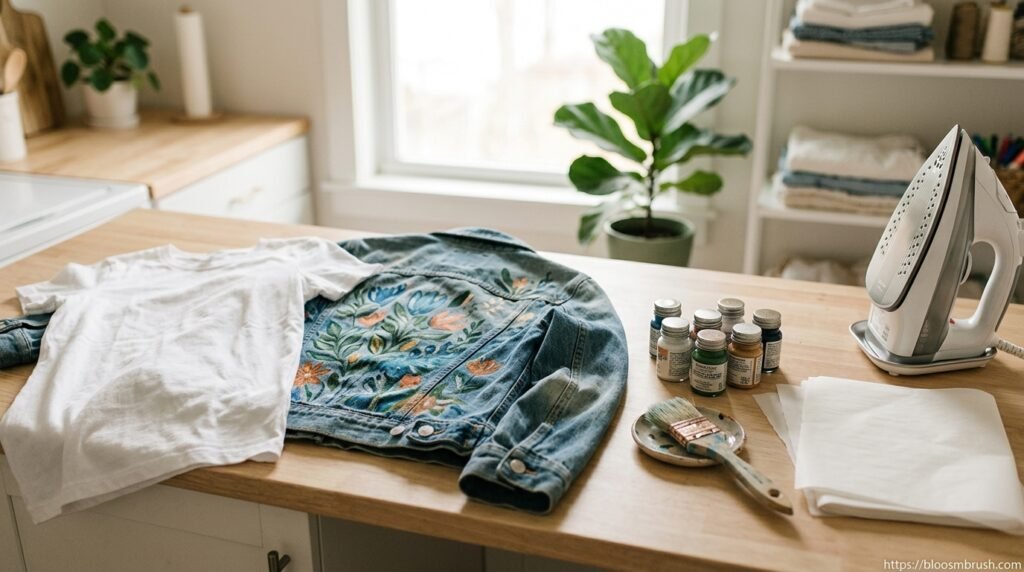
Painted clothing can look beautiful, personal, and completely one of a kind, but only if the design actually lasts. If you want to know how to make paint stay on clothes, the answer depends on three things: the right paint, the right fabric preparation, and the right aftercare.
Fabric paint can stay on shirts, hoodies, denim jackets, tote bags, and other clothing for a long time when you apply it properly and heat set it correctly. Washing habits matter too. A strong design can still fade, crack, or peel if you wash it too soon, use harsh detergent, or dry it with high heat.
This guide explains how to seal paint on fabric, make fabric paint permanent, heat set painted clothing, wash it safely, and avoid the mistakes that damage hand painted clothes.
Read More:
Upcycled & Reworked Painted Clothing
Fabric Painting Techniques for Clothes
Quick Answer: How to Make Paint Stay on Clothes
To make paint stay on clothes, use proper fabric paint or mix acrylic paint with a fabric medium, apply it to clean dry fabric, let it cure fully, then heat set it according to the paint instructions. Most fabric paints need at least 24 hours to dry before heat setting and up to 72 hours before washing.
For best results, wash painted clothes inside out in cold water, use mild detergent, skip bleach, avoid fabric softener, and air dry whenever possible.
Quick Tip
Always test your paint on a hidden area or scrap piece of similar fabric before painting the final garment. Different fabrics absorb paint differently, so a quick test can prevent stiffness, bleeding, cracking, or poor color payoff.
What Makes This Important?
Paint does not behave the same way on fabric as it does on canvas, wood, or paper. Clothes bend, stretch, rub, fold, and go through washing machines. That movement can weaken paint if you do not prepare and protect it.
Making fabric paint permanent matters because it helps prevent:
- Cracking: Paint can split when the fabric stretches or folds.
- Peeling: Thick paint layers may lift from the fabric surface.
- Fading: Strong detergents, hot water, and sunlight can dull the design.
- Bleeding: Wet paint or poor-quality paint can spread into the fibers.
- Stiffness: The wrong paint can make clothing uncomfortable to wear.
- Washed-out designs: Paint may disappear quickly if it never bonded properly.
Good fabric painting aftercare keeps the design flexible, wearable, and washable. It also protects the time, money, and creativity behind hand painted clothing.
Best Fabric Paints, Fabrics, and Materials to Consider
The paint and fabric you choose affect how long the design lasts. Some materials hold paint beautifully. Others need extra care or may not be ideal for detailed painted clothing.
Best Paint for Clothes
For most clothing projects, dedicated fabric paint gives the safest and longest-lasting result. It contains binders that help the color attach to textile fibers while staying flexible after drying.
| Paint Type | Best For | Pros | Watch Out For |
|---|---|---|---|
| Fabric paint | Shirts, hoodies, denim, canvas bags | Flexible, washable, made for clothing | Some brands need heat setting |
| Acrylic paint with fabric medium | Custom designs, bold colors, denim art | Easy to find, strong color range | Acrylic alone can dry stiff and crack |
| Fabric markers | Small details, lettering, outlines | Precise, easy to control | Not ideal for large painted areas |
| Puff paint | Raised designs, kids’ crafts, texture | Adds dimension | Can peel if applied too thickly |
| Textile ink | Screen printing, soft designs | Smooth feel, good durability | May require specific curing methods |
If you want washable fabric paint, check the label for terms like “permanent,” “machine washable,” “textile paint,” or “suitable for fabric.” Paint made only for paper or craft surfaces usually will not last well on clothes.
Fabric Paint vs Acrylic Paint
Acrylic paint can work on clothes, but not by itself if you want a soft, lasting result. Plain acrylic dries into a plastic-like layer, which can crack on flexible fabric.
Use this simple rule:
- Fabric paint: Best choice for most clothing.
- Acrylic paint plus fabric medium: Good alternative when you want more color options.
- Plain acrylic paint: Only suitable for decorative pieces that will not be washed often.
Fabric medium helps acrylic paint bond with fabric and stay more flexible. It also reduces stiffness, which makes the clothing more comfortable.
Best Fabrics for Painted Clothes
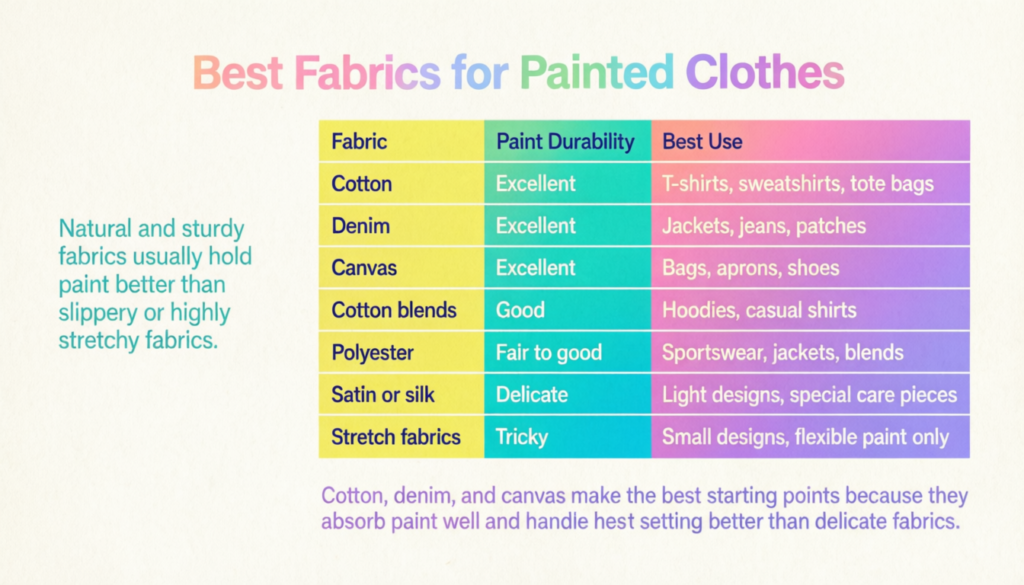
Natural and sturdy fabrics usually hold paint better than slippery or highly stretchy fabrics.
| Fabric | Paint Durability | Best Use |
|---|---|---|
| Cotton | Excellent | T-shirts, sweatshirts, tote bags |
| Denim | Excellent | Jackets, jeans, patches |
| Canvas | Excellent | Bags, aprons, shoes |
| Cotton blends | Good | Hoodies, casual shirts |
| Polyester | Fair to good | Sportswear, jackets, blends |
| Satin or silk | Delicate | Light designs, special care pieces |
| Stretch fabrics | Tricky | Small designs, flexible paint only |
Cotton, denim, and canvas make the best starting points because they absorb paint well and handle heat setting better than delicate fabrics.
Step by Step Care or Application Process
A strong painted design starts before the brush touches the fabric. Clean fabric, proper paint, thin layers, and curing time all help make fabric paint permanent.
1. Wash the Clothing First
New clothes often contain sizing, softeners, finishing chemicals, or surface dust. These can stop paint from bonding properly.
Before painting:
- Wash the garment with mild detergent.
- Avoid fabric softener.
- Dry it completely.
- Do not paint on damp fabric.
Prewashing also helps remove shrinkage before you paint. That matters because a design can distort if the garment shrinks later.
2. Place a Barrier Inside the Garment
If you paint a shirt, hoodie, or tote bag, slide cardboard, freezer paper, or a plastic sheet inside the garment. This prevents paint from bleeding through to the back layer.
For smoother painting, lightly tape the fabric in place so it stays flat without stretching too much.
3. Use the Right Paint Mixture
Use fabric paint straight from the bottle unless the brand says otherwise. If you use acrylic paint, mix it with fabric medium according to the product directions.
A common mistake is adding too much water. A little water can help with blending, but too much can weaken color and bonding.
4. Apply Thin, Even Layers
Thick paint looks bold at first, but it often cracks faster. Thin layers bond better and move with the fabric more naturally.
For best results:
- Build color gradually instead of applying one heavy coat.
- Let each layer dry before adding the next.
- Keep paint out of seams and high-stretch areas when possible.
- Avoid heavy paint buildup on areas that bend often, such as elbows, knees, and waistbands.
5. Let the Paint Dry Fully
Drying time depends on the paint brand, fabric thickness, humidity, and paint layer thickness. Most fabric paint needs at least 24 hours before heat setting.
Thicker designs may need longer. If the paint still feels tacky, cool, or raised in a soft way, give it more time.
6. Heat Set the Fabric Paint
Heat setting helps lock the paint into the fibers. This step often makes the biggest difference in fabric paint durability.
You can heat set fabric paint with an iron, dryer, or heat press, depending on the paint instructions and fabric type.
How to Heat Set Fabric Paint
Heat setting is one of the most important steps if you want paint to stay on clothes after washing. Always check the paint label first because heat settings vary by brand.
Heat Setting With an Iron
This method works well for cotton, denim, canvas, and many cotton blends.
- Make sure the paint is fully dry.
- Turn the garment inside out if possible.
- Place a clean cotton cloth or parchment paper over the painted area.
- Set the iron to the recommended temperature for the fabric.
- Turn off steam.
- Press the iron over the design for short intervals.
- Move the iron gently instead of dragging it hard across the design.
- Let the garment cool before wearing or washing.
Do not place a hot iron directly onto painted artwork. Direct heat can melt, smear, or shine the paint surface.
Heat Setting With a Dryer
Some fabric paints can cure in a dryer. This works best for sturdy garments, but it may not suit delicate fabrics or thick raised designs.
Use low or medium heat if the care label allows it. High heat can shrink fabric, damage elastic, or stress the paint.
Heat Setting With a Heat Press
A heat press can give even pressure and temperature, which makes it useful for custom painted clothing artists. It works especially well for repeat projects or painted denim patches.
Use a protective sheet over the artwork and follow the paint manufacturer’s recommended time and temperature.
Washing, Drying, Ironing, and Storage Rules
Painted clothes can be washable, but they need gentler care than regular printed garments. The first wash matters most.
How to Wash Painted Clothes
Wait at least 72 hours before the first wash unless the paint label recommends a longer curing time.
Follow these washing rules:
- Turn the garment inside out before washing.
- Use cold water.
- Choose a gentle cycle.
- Use mild detergent.
- Wash with similar soft items.
- Avoid bleach, stain removers, and harsh laundry boosters.
- Do not scrub the painted area aggressively.
Hand washing gives the safest result for delicate or highly detailed designs. Machine washing is usually fine for properly cured fabric paint on cotton, denim, or hoodies, but gentle settings help the design last longer.
How to Dry Hand Painted Clothes
Air drying is best for hand painted clothing care. Heat can speed up fading, weaken paint, or cause cracking over time.
Best drying options include:
- Lay the garment flat on a clean towel.
- Hang it indoors away from direct sunlight.
- Use a drying rack for shirts and hoodies.
- Avoid wringing painted areas.
If you use a dryer, choose low heat and remove the garment while it is still slightly warm. Avoid repeated high-heat drying.
How to Iron Fabric Painted Shirts
Iron painted clothing inside out whenever possible. Use a pressing cloth if you need to iron near the design.
Never iron directly over raised paint, metallic paint, glitter paint, or thick artwork. Heat can flatten texture or damage the finish.
How to Store Painted Clothes
Storage can also affect paint durability. Fold painted garments loosely and avoid placing heavy items directly on the painted area.
For long-term storage:
- Keep clothes clean and fully dry.
- Avoid damp closets or plastic bags that trap moisture.
- Store delicate painted pieces flat.
- Keep painted denim jackets on padded hangers.
- Avoid strong sunlight, which can fade colors over time.
Common Mistakes That Damage Hand Painted Clothes
Most fabric paint problems come from rushing the process or treating painted garments like regular laundry.
| Mistake | What Can Happen | Better Choice |
|---|---|---|
| Painting on unwashed fabric | Paint may not bond well | Wash and dry the garment first |
| Using plain acrylic paint | Design may feel stiff or crack | Add fabric medium or use fabric paint |
| Applying thick layers | Paint may peel or split | Use thin layers and build color slowly |
| Washing too soon | Paint may fade or lift | Wait at least 72 hours after curing |
| Using hot water | Colors may fade faster | Wash in cold water |
| Drying on high heat | Paint may crack or shrink | Air dry or use low heat |
| Scrubbing the design | Surface can wear away | Gently spot clean around the artwork |
| Skipping heat setting | Paint may not become permanent | Heat set according to instructions |
A little patience during application and washing can add months or years to the life of painted clothing.
Durability Expectations and How to Prevent Fading
Fabric paint durability depends on the paint quality, fabric type, application method, heat setting, and laundry habits. A well-painted cotton shirt or denim jacket can last through many washes, but every painted garment will age with wear.
How Long Does Fabric Paint Last?
A properly applied and heat-set design can last a long time, especially on sturdy fabric. However, painted clothing does not stay perfect forever. Fading may happen gradually, especially with frequent washing or sun exposure.
You can expect better durability when:
- The paint is made for fabric.
- The garment was prewashed.
- The paint was applied in thin layers.
- The design was heat set correctly.
- The clothing is washed inside out.
- The garment is air dried most of the time.
How to Prevent Fading
To keep painted clothes looking fresh:
- Wash less often when the garment is not truly dirty.
- Spot clean small marks instead of washing the whole item.
- Use cold water and mild detergent.
- Keep painted clothing out of direct sunlight while drying.
- Avoid chlorine bleach and oxygen bleach near the design.
- Store special pieces away from heat and moisture.
Darker colors, neon shades, metallic finishes, and glitter details may fade or change faster than simple matte colors. Treat those finishes with extra care.
Care Tips for Shirts, Hoodies, Denim, and Delicate Fabrics
Different garments need different care. A painted denim jacket can handle more than a silk blouse or thin stretch top.
Painted Shirts Care
Painted shirts usually bend and stretch often, especially across the chest and waist. Lightweight T-shirts also go through frequent washing, so gentle care matters.
Use these tips:
- Choose cotton or a cotton-rich blend for the best results.
- Avoid oversized thick paint designs on stretchy areas.
- Wash inside out with cold water.
- Air dry to reduce cracking.
- Fold with the design facing outward or lightly cushioned.
Painted Hoodies Care
Hoodies are thicker than shirts, so they often hold paint well. The main challenge is drying time and fabric texture.
For painted hoodies:
- Let paint cure longer if the fabric is thick.
- Avoid heavy paint on ribbed cuffs or waistbands.
- Wash on a gentle cycle because hoodies become heavy when wet.
- Dry flat or hang carefully to prevent stretching.
- Keep drawstrings and zippers away from the painted area during washing.
Painted Denim Jacket Care
Denim is one of the best surfaces for custom painted clothes. It is sturdy, textured, and usually less stretchy than T-shirt fabric.
For painted denim jacket care:
- Wash denim jackets only when needed.
- Spot clean whenever possible.
- Turn the jacket inside out for machine washing.
- Use cold water and gentle detergent.
- Air dry on a hanger away from direct sunlight.
- Avoid dry cleaning unless the artist or paint label says it is safe.
Denim can handle bold artwork, but thick paint on seams, elbows, or folds can still crack with wear.
Painted Delicate Fabrics Care
Delicate fabrics need extra caution. Silk, satin, chiffon, rayon, and very thin knits may react badly to heat, water, or heavy paint.
For delicate painted clothing:
- Ask the artist or paint brand for care instructions.
- Avoid machine washing unless the garment label allows it.
- Use very gentle hand washing if safe.
- Do not wring or twist the fabric.
- Avoid high heat during ironing or drying.
- Store flat or on a soft hanger.
If the garment is expensive or sentimental, do not experiment. Get advice before washing or repainting.
When to Ask a Custom Artist Before Washing or Repainting
Custom painted clothes can use different paints, sealers, techniques, and finishes. A professional artist may use fabric paint, acrylic with fabric medium, airbrush paint, textile ink, or mixed media details.
Ask the custom painted clothes artist before washing if:
- The item has rhinestones, glitter, metallic paint, or raised texture.
- The artwork covers a large area.
- The garment is delicate, vintage, or expensive.
- You do not know what type of paint was used.
- The design feels sticky, thick, or rubbery.
- The clothing has leather, faux leather, or coated fabric.
- You want to repaint or repair part of the design.
You should also ask before using any sealant. Some sprays and varnishes make fabric stiff, shiny, or uncomfortable. Others may react poorly with fabric paint.
Can You Repaint Hand Painted Clothing?
Yes, you can repaint some hand painted clothing, but it depends on the fabric and the original paint. Small touch-ups usually work better than painting over a large cracked area.
Before repainting:
- Clean the garment gently.
- Let it dry completely.
- Remove loose paint carefully, but do not scrape hard.
- Use compatible fabric paint.
- Apply thin layers.
- Heat set again if the paint requires it.
If the damage is severe, a custom artist may need to redesign the area instead of simply filling cracks.
Related Custom Painted Clothing Guides
If you want to care for painted clothing properly, these related topics can help you build a complete routine:
- How to wash hand painted clothes: Learn the safest washing method for custom shirts, hoodies, denim, and delicate pieces.
- Fabric paint vs acrylic paint: Understand which paint works better for clothing and why fabric medium matters.
- Custom hand painted clothes: Learn what to ask before buying, gifting, washing, or repairing wearable art.
- Painted denim jacket care: Get specific advice for preserving large back designs and detailed denim artwork.
- Hand painted shirt damage: Learn how to spot early cracking, fading, peeling, or stiffness before it gets worse.
Conclusion
Learning how to make paint stay on clothes comes down to preparation, proper paint, heat setting, and gentle aftercare. Use fabric paint or acrylic mixed with fabric medium, paint on clean dry fabric, apply thin layers, let the design cure, and heat set it correctly.
After that, protect the artwork with cold washing, mild detergent, inside-out laundering, and air drying. With the right habits, painted clothing can stay bright, flexible, and wearable for a long time.
FAQs About How to Make Paint Stay on Clothes
How do you make paint stay on clothes permanently?
Use fabric paint or acrylic paint mixed with fabric medium, apply it to clean dry fabric, let it cure fully, then heat set it according to the paint instructions. Wash the garment gently after at least 72 hours.
Do you need to seal paint on fabric?
Usually, you do not need a separate sealer if you use proper fabric paint and heat set it correctly. Some sealers can make fabric stiff, so always check the paint label or ask the artist before adding anything.
Can acrylic paint stay on clothes?
Acrylic paint can stay on clothes, but it works best when mixed with fabric medium. Plain acrylic may dry stiff and crack after wearing or washing.
How do you heat set fabric paint?
Let the paint dry fully, place a pressing cloth over the design, turn off steam, and press with an iron according to the paint and fabric instructions. Some paints can also be heat set with a dryer or heat press.
Can painted clothes go in the washing machine?
Yes, many painted clothes can go in the washing machine after curing and heat setting. Turn them inside out, use cold water, choose a gentle cycle, and avoid bleach or harsh detergent.
Why is my fabric paint cracking?
Fabric paint can crack if the layer is too thick, the fabric stretches too much, the paint was not heat set, or the garment was washed with hot water or dried on high heat.
How long should fabric paint dry before washing?
Most fabric paint should dry and cure for at least 72 hours before washing. Some brands may need more or less time, so follow the product instructions.
What is the best fabric for painted clothing?
Cotton, denim, and canvas usually hold paint best. They absorb color well, handle heat setting, and offer a sturdy surface for long-lasting painted designs.