
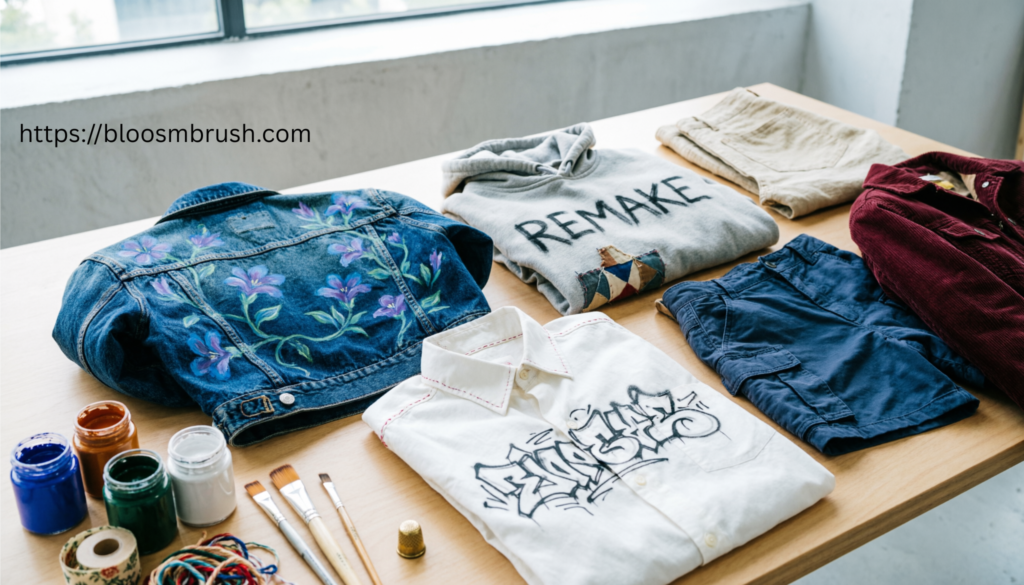
Upcycled & Reworked Painted Clothing turns forgotten garments into fresh pieces with personality, story, and style. Instead of buying something new, people now look at an old denim jacket, faded shirt, plain hoodie, or thrifted pair of pants and see a blank canvas for custom art.
This trend fits fashion lovers, artists, small clothing brands, and buyers who want something personal. It also connects with sustainable fashion because every reworked piece keeps fabric in use for longer. From Pakistan’s growing thrift culture to the custom streetwear scene in the United States, painted upcycled clothing gives old garments a second life with real creative value.
Quick Answer
Upcycled & Reworked Painted Clothing means taking old, thrifted, vintage, or unused garments and turning them into wearable art through painting, patching, distressing, embroidery, embellishment, or redesign.
The best pieces to upcycle include denim jackets, shirts, hoodies, jeans, cargos, and workwear style jackets. These garments hold paint well, look stylish after reworking, and appeal to buyers who love custom fashion, sustainable wearable art, and one of a kind streetwear.
Best Garments to Upcycle: Denim, Shirts, Hoodies and Pants
Choosing the right garment matters because every fabric reacts differently to paint, washing, distressing, and daily wear. A strong base garment helps your artwork last longer and gives the final piece a better shape. Denim, cotton shirts, hoodies, and pants work especially well because they give enough surface area for creative designs.
An upcycled denim jacket gives artists one of the best surfaces for custom painted fashion. The back panel works well for bold artwork, lettering, portraits, florals, slogans, or streetwear graphics. Denim also handles distressing, patchwork, and repeated wear better than many lighter fabrics.
A reworked t shirt art piece can feel more casual and wearable. Artists often use old cotton shirts for small chest designs, back prints, hand painted text, or minimal illustrations. Cotton shirts suit buyers who want something affordable, light, and easy to style.
Painted old hoodie designs work well for colder weather and streetwear collections. Hoodies give space on the chest, sleeves, pouch pocket, and back. They also feel popular with younger buyers in both Pakistan and the United States because people can style them with jeans, cargos, sneakers, or layered winter outfits.
Best garment choices
- Denim jackets for bold back art and premium custom orders
- Cotton shirts for simple designs and affordable thrift flips
- Hoodies for streetwear, lettering, and sleeve artwork
- Jeans and cargo pants for leg designs, patches, and painted details
- Workwear jackets for rugged, vintage custom painted clothing
Simple garment selection table
How to Describe Upcycled Clothing for SEO and Product Pages
A product page must explain the style, material, process, and value of the piece. Buyers want to know what makes the item special before they pay for it. Good descriptions help search engines understand your product, but they also help real people feel confident about buying it.
Use phrases like upcycled hand painted clothes, reworked streetwear, sustainable wearable art, custom painted jacket, thrifted fashion, and handmade clothing naturally. Do not repeat the same keyword too many times. Mix product details with styling ideas and care notes.
A strong description should tell the buyer what the garment was, what changed, and how they can wear it. For example, instead of writing only hand painted hoodie, write a reworked cotton blend hoodie with hand painted sleeve art, soft streetwear styling, and a one of a kind finish.
For Pakistan based sellers, mention winter layering, university wear, modest styling, or local streetwear culture where relevant, For United States buyers, mention festival outfits, vintage streetwear, casual layering, and sustainable fashion wardrobes.
Product page details to include
- Garment type and fabric
- Size and fit
- Art style and placement
- Paint type and finish
- Care instructions
- One of a kind or made to order note
- Styling ideas
- Sustainability message
Example SEO friendly product description
This upcycled hand painted denim jacket features custom back artwork on a thrifted base garment. The design blends reworked streetwear with sustainable wearable art, making it easy to style with jeans, cargos, plain tees, or layered winter outfits. Each piece carries small vintage details, so no two jackets look exactly the same.
How to Source Base Garments for Upcycled Orders
A strong upcycled piece starts with a good base garment. You can source clothing from thrift stores, vintage markets, second hand shops, personal wardrobes, deadstock suppliers, or blank clothing vendors. The goal is to find garments that still have structure, comfort, and resale value.
A thrifted base garment works well when you want a unique look. Vintage denim, old work shirts, oversized hoodies, and faded pants can all become strong custom pieces. Small marks can add character, but large stains, weak seams, and fabric thinning can reduce quality.
Vintage custom painted clothing often sells better when the base garment already has style. Old Levi style denim jackets, varsity jackets, military inspired shirts, and retro sweatshirts give the artwork more personality. Buyers often like pieces that already feel lived in.
Blank clothing sourcing helps when you need consistent sizing for made to order pieces. If a customer wants the same design in small, medium, large, or extra large, blank garments make the process easier. This option suits sellers who want to build a repeatable clothing line.
Where to source base garments
- Local thrift shops
- Vintage clothing markets
- Online resale platforms
- Deadstock clothing sellers
- Wholesale blank apparel suppliers
- Customer supplied garments
- Personal wardrobe pieces
Quality check before painting
- Check seams, collars, cuffs, and zippers
- Look for hidden stains under bright light
- Wash and dry the garment first
- Test fabric strength with gentle stretching
- Avoid fabric that sheds heavily
- Confirm sizing before starting the artwork
Paint + Distress + Patch + Embellish Concepts
Mixed media clothing gives reworked fashion more depth. You do not need to rely on paint alone. You can combine fabric paint, distressing, patches, stitching, studs, beads, lace, fabric scraps, embroidery, and handwritten lettering to create a stronger visual story.
A distressed painted jacket can look bold, edgy, and personal. Light distressing around cuffs, seams, pockets, and hems can make the jacket feel vintage without damaging the structure. The key is control. Too much distressing can make the garment look weak instead of stylish.
Patchwork painted clothes work well when you combine fabric pieces with painted details. You can add floral patches, denim scraps, printed fabric, tartan panels, Urdu calligraphy patches, bandana pieces, or hand stitched shapes. This approach gives the item a handmade look and increases its perceived value.
Embellishments also help when you want a premium finish. Small studs, hand sewn pearls, embroidery thread, contrast stitching, or painted borders can make a simple design feel more complete. Keep the embellishment style connected to the artwork so the piece does not feel crowded.
Creative concept ideas
- Painted denim jacket with distressed shoulders and sleeve patches
- Reworked hoodie with hand painted chest lettering and fabric appliqué
- Old jeans with painted flowers, raw hem details, and contrast stitching
- Vintage shirt with small pocket artwork and patched elbow details
- Painted pants with one illustrated leg and one patchwork side panel
Visual block 1
Old garment
↓
Wash and inspect
↓
Plan artwork
↓
Paint main design
↓
Add distressing or patches
↓
Heat set and finish
↓
Style, photograph, and sell
Sustainable Fashion Messaging for Reworked Pieces
Sustainable painted clothing needs honest messaging. Buyers care about sustainability, but they also notice when brands use vague claims. Focus on clear benefits like reusing existing garments, reducing waste, extending fabric life, and creating thoughtful slow fashion wear.
Eco fashion custom art works best when the story feels real. You can explain that each piece starts from a thrifted or pre owned garment, then receives hand painted artwork and careful finishing. This makes the product feel more meaningful than a mass produced item.
Slow fashion wear encourages people to buy fewer but better pieces. A reworked jacket or painted hoodie gives buyers something personal, not just another trend item. It also supports small artists, local sellers, and independent creative work.
For Pakistan, sustainability messaging can connect with thrift markets, reuse culture, and budget conscious styling. For the United States, it can connect with vintage fashion, festival wear, eco conscious shopping, and custom streetwear.
Strong sustainability phrases
- Made from an existing garment
- Reworked by hand
- Designed to extend garment life
- One of a kind wearable art
- Slow fashion piece
- Custom painted on a thrifted base
- Created in small batches
- Lower waste fashion choice
Avoid weak claims
Turn Old Clothes into New Wearable Art
Upcycled painted clothing lets people keep memories while refreshing their wardrobe. An old hoodie from college, a faded denim jacket, or a plain shirt can become something new without losing its emotional value. This makes custom upcycling a strong choice for gifts and personal fashion.
Reworked painted clothes can also help small brands stand out. Instead of selling the same designs as everyone else, artists can create limited drops, custom name pieces, zodiac jackets, lyric painted shirts, cultural calligraphy pieces, or hand painted streetwear collections.
Thrift flip clothing works especially well for social media because the transformation feels visual. Before and after photos help buyers understand the process. A simple old jacket can become a statement piece through color, texture, patches, and clean finishing.
Customers often like the idea that their garment has a story. When you explain the transformation, the item feels more valuable. You are not just selling clothing. You are selling art, memory, craft, and identity.
Visual block 2
Plain old hoodie
↓
Back design with painted lettering
↓
Sleeve art with small symbols
↓
Patch detail near pocket
↓
Finished streetwear piece
Tools and Materials for Upcycled Painted Clothing
The right tools make the artwork cleaner and more durable. Fabric paint works better than regular acrylic paint because it bends with the fabric. Some artists mix acrylic paint with fabric medium, but pure fabric paint often gives a softer finish.
Brush choice also matters. Flat brushes help with bold shapes, round brushes help with lettering, and fine detail brushes help with outlines. Sponge brushes can create texture, while paint pens work well for small lettering and clean borders.
Heat setting helps the paint bond with the fabric. Many artists use an iron with a pressing cloth or a heat press on safe temperature settings. Always test a small area first because synthetic fabrics, patches, and embellishments can react differently to heat.
Useful materials
- Fabric paint
- Fabric medium
- Detail brushes
- Flat brushes
- Paint pens
- Chalk or washable fabric pencil
- Masking tape
- Stencils
- Patches
- Embroidery thread
- Sewing needles
- Fabric glue
- Iron or heat press
- Pressing cloth
- Lint roller
- Gentle detergent
Fabric selection guide
Buying Tips for Upcycled and Reworked Painted Clothing
Buying upcycled fashion requires a little more attention than buying regular clothing. Since each item starts from a different base garment, size, texture, fade, and fit can vary. Always check measurements instead of relying only on small, medium, or large labels.
Look closely at photos. A good seller should show the front, back, close ups, artwork details, and any natural vintage marks. If the product uses a thrifted base garment, small signs of wear can add charm, but the seller should mention major flaws clearly.
Ask about care instructions before buying. Hand painted clothing can last well when the artist uses proper fabric paint and finishing methods. Still, buyers should wash the garment gently and avoid harsh scrubbing.
What to check before buying
- Actual chest, shoulder, waist, and length measurements
- Fabric type
- Paint type
- Whether the item is ready made or made to order
- Shipping time
- Return policy
- Washing instructions
- Photos of flaws or vintage wear
- Artwork placement and size
Best use cases
- Birthday gifts
- Couple jackets
- Concert outfits
- University fashion
- Eid casual looks
- Festival wear
- Streetwear collections
- Personalized wardrobe pieces
- Small brand drops
Styling Ideas for Reworked Streetwear
Reworked streetwear looks best when the rest of the outfit gives the painted piece room to stand out. If your jacket has large artwork, pair it with plain trousers, a simple shirt, and clean sneakers. If your pants carry the artwork, keep the top simple.
For Pakistan, oversized painted shirts, denim jackets, and hoodies can work well with jeans, wide pants, cargos, or modest layered outfits. A hand painted jacket over a plain kurta style top can also create a modern local look without feeling overdone.
For United States styling, painted denim jackets and reworked hoodies fit well with vintage jeans, boots, sneakers, cargo pants, and festival outfits. Buyers also like custom jackets for concerts, graduation photos, birthdays, and creative events.
Simple styling combinations
- Painted denim jacket with white shirt and black jeans
- Reworked hoodie with cargo pants and sneakers
- Painted old hoodie with straight jeans and cap
- Patchwork painted clothes with plain base layers
- Custom painted pants with a simple oversized tee
Mistakes to Avoid When Making Upcycled Painted Clothing
Many beginners rush the painting process and skip fabric testing. This can lead to cracking, bleeding, or stiff artwork. Always wash the garment first and test paint on a hidden area before starting the final design.
Another mistake involves overcrowding the garment. Paint, distressing, patches, and embellishments can look beautiful together, but too many details can confuse the design. Choose one main focus and let the other elements support it.
Sellers should also avoid unclear product descriptions. Buyers need to know whether the item uses a thrifted base garment, whether vintage marks exist, and how they should wash it. Clear details reduce complaints and build trust.
Common mistakes
- Painting on dirty or unwashed fabric
- Using regular paint without fabric medium
- Skipping heat setting
- Adding too many patches and details
- Ignoring fabric stretch
- Forgetting size measurements
- Using weak photos on product pages
- Making sustainability claims without explaining them
Conclusion
Upcycled & Reworked Painted Clothing gives old garments a fresh purpose through art, craft, and personal style. Denim jackets, shirts, hoodies, and pants all offer strong creative possibilities when you choose the right fabric, use proper paint, and finish the piece carefully.
This style also speaks to modern buyers who want fashion with meaning. Whether someone wants sustainable painted clothing, reworked streetwear, thrift flip clothing, or vintage custom painted clothing, the best pieces combine quality, story, and wearable design.
FAQs
What is upcycled painted clothing?
Upcycled painted clothing means taking an old, thrifted, vintage, or unused garment and turning it into wearable art with paint, patches, distressing, or other creative details.
Which garments work best for upcycled painting?
Denim jackets, cotton shirts, hoodies, jeans, cargo pants, and canvas jackets work best because they offer strong surfaces and good styling value.
Can I paint an old hoodie?
Yes, you can turn a painted old hoodie into a custom streetwear piece. Wash it first, use fabric paint, avoid overly thick layers, and heat set the artwork after drying.
What does reworked streetwear mean?
Reworked streetwear means redesigning an existing garment through painting, cutting, stitching, patching, distressing, or embellishing so it looks fresh and custom.
Is upcycled hand painted clothing washable?
Yes, most upcycled hand painted clothes can handle gentle washing when artists use proper fabric paint and heat setting. Turn the garment inside out and wash it with mild detergent.
How do I describe sustainable wearable art on a product page?
Describe the base garment, artwork, process, and sustainability value. For example, mention that the piece uses a thrifted denim jacket and hand painted artwork to extend the life of the garment.
Are thrifted base garments good for custom orders?
Yes, a thrifted base garment can work well if the fabric, seams, sizing, and condition meet quality standards. Always inspect and wash it before painting.
What is the difference between upcycled and reworked clothing?
Upcycled clothing focuses on turning an existing item into something more valuable. Reworked clothing often includes visible design changes like patches, paint, distressing, or reshaping.
Can I sell vintage custom painted clothing online?
Yes, you can sell vintage custom painted clothing online if you describe the condition clearly, show real photos, mention measurements, and explain care instructions.
Why do people like thrift flip clothing?
People like thrift flip clothing because it feels unique, creative, affordable, and more sustainable than buying mass produced fashion. It also lets buyers wear something with personality.