
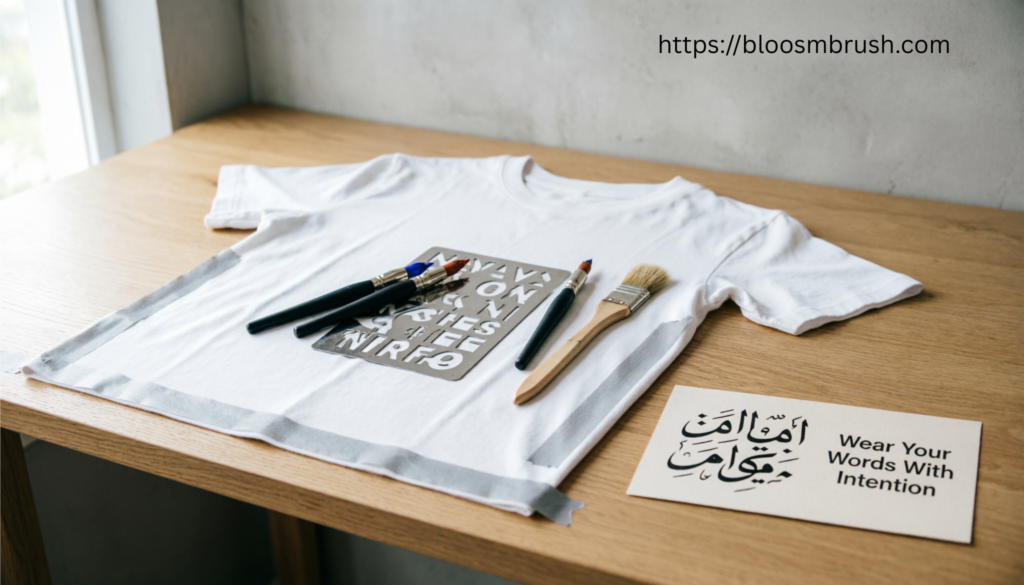
Stencil, lettering and calligraphy on clothes turn plain fabric into wearable expression. A simple shirt, hoodie, kurta, tote bag or denim jacket can carry a name, quote, slogan, poetic line or cultural phrase with style. This art works for fashion lovers, small clothing brands, handmade sellers, students, gift makers and anyone who wants personal clothing with meaning.
Good fabric lettering needs more than nice words. You need the right layout, fabric lettering brushes, paint control, readable placement and proper heat setting. Whether you want Arabic text shirt layout, Urdu calligraphy placement or English quote clothing, careful planning helps your letters stay crisp, durable and easy to read.
Quick Answer
Stencil, lettering and calligraphy on clothes means adding words, quotes or decorative script to fabric using brushes, fabric pens, stencils, paint or markers. The best results come from smooth fabric, stable backing, clean letter spacing, fabric safe paint and proper heat setting. Freehand lettering gives a personal handmade look, while stencil letters on shirts give cleaner and more consistent shapes.
Brushes, Pens and Tools for Detailed Script Work
Detailed script on fabric needs tools that give control. A normal craft brush can work for bold letters, but fine calligraphy needs better precision. Fabric lettering brushes, fabric pens and detail brushes for clothing help you create thin strokes, thick strokes and clean curves without making the text look messy.
A calligraphy pen on fabric works best when the fabric has a tight weave and does not absorb ink too quickly. Cotton, canvas and cotton blends usually handle lettering better than rough ribbed fabric. For stretchy shirts, you need to place cardboard or a firm board inside the garment so the cloth stays flat while you write.
Best tools for fabric lettering
Use these tools when you want clean lettering on clothes:
- Fine detail brush for thin outlines and small script
- Flat brush for block letters and bold strokes
- Round brush for smooth curves
- Fabric paint pens for beginners
- Fabric markers for quick quote clothing
- Sponge brush for stencil letters shirt projects
- Chalk pencil for layout marking
- Masking tape for straight baselines
- Cardboard insert for shirt stability
- Heat press or iron for final setting
A small handmade brand in Pakistan might use fabric pens for custom Urdu names on kurtas or tote bags. A small seller in the United States might use stencils and fabric paint for college shirts, bridal party tops or custom denim jackets. The tools stay similar, but the style changes with the audience.
Freehand Lettering vs Stencil Lettering
Freehand lettering on clothes gives a natural artistic look. It works well when you want personality, flowing script, handmade charm or expressive typography on fabric. You can adjust each letter as you paint, which makes the design feel unique.
Stencil lettering gives stronger consistency. Stencil letters on shirts help beginners keep letter height, spacing and alignment under control. This method works well for bold slogans, team shirts, event clothing, uniform text and repeated designs.
Freehand lettering strengths
Freehand lettering works best when you want:
- Artistic script
- Custom names
- Poetry lines
- Personal quotes
- Urdu or Arabic calligraphy
- Handmade fashion pieces
It does require a steady hand. You should sketch first with chalk or washable fabric pencil before using paint. This helps you avoid crooked words and awkward spacing.
Stencil lettering strengths
Stencil lettering works best when you want:
- Clean block letters
- Repeated shirt designs
- Uniform typography
- Brand logos
- Simple slogans
- Fast production
Stencils can still look creative. You can use ombre paint, metallic fabric paint, textured effects or layered colors to make stencil text look premium instead of plain.
How to Heat Set and Wash Lettered Clothing
Heat setting helps fabric paint bond with the fibers. Without it, your painted letters may crack, fade or wash out too early. If you want durable text clothing, always read the fabric paint label and follow the heat setting instructions.
Most fabric paints need drying time before heat. Let the design dry fully, usually for several hours or overnight. Then place a clean cotton cloth over the lettering and press with an iron. Avoid steam because moisture can weaken the setting process.
How to heat set lettering fabric
Follow this simple method:
- Let the painted letters dry fully.
- Turn the garment inside out when possible.
- Place a pressing cloth over the design.
- Use medium heat unless the paint label says otherwise.
- Press each area for a short time.
- Let the garment cool before washing.
If you use a heat press, test first on a scrap piece of similar fabric. Heat press settings can vary depending on cotton, polyester, blends or denim.
How to wash calligraphy shirt designs
Wash calligraphy shirt designs gently. Turn the garment inside out, use cold water and choose mild detergent. Avoid harsh scrubbing on the painted area. Air drying works better than high dryer heat because too much heat can stress the paint over time.
For custom clothing sellers, include a small care card with each order. Customers appreciate clear instructions, and the design lasts longer.
How to Keep Calligraphy Readable on Curved Garments
Readable calligraphy clothing depends on placement. A beautiful phrase can lose impact if the letters bend around seams, sleeves, chest curves or hoodie pockets. Always think about how the garment sits on the body before painting.
Chest text shirt designs need enough spacing and moderate letter size. Tiny calligraphy across the chest can look elegant on a flat table, but it may become hard to read when worn. Sleeve lettering also needs careful planning because sleeves curve, fold and move.
Best placement areas for readable text
Good areas for calligraphy include:
- Center chest for short phrases
- Upper back for larger quotes
- Left chest for names or initials
- Sleeve outer side for vertical lettering
- Hoodie back for bold designs
- Tote bag front for clean text
- Denim jacket panel for expressive script
For curved garments, keep letter strokes simple. Avoid too many swirls, flourishes or ultra thin lines. Strong readability matters more than decoration.
Chest text shirt and sleeve lettering tips
For chest text shirt designs, place the phrase slightly above the center line of the chest. This gives a balanced look. For sleeve lettering, use vertical text or short horizontal words that fit the sleeve shape.
A curved sleeve does not suit long delicate quotes. Use one word, a name, a short phrase or a clean symbol with text. This keeps the design stylish and readable.
How to Paint Letters on Fabric Without Bleeding
Paint bleeding happens when fabric absorbs paint beyond the letter edges. This can ruin crisp lettering shirt designs. To stop paint bleeding, choose the right paint thickness, stabilize the fabric and avoid overloading the brush.
Thin watery paint spreads faster. Thick fabric paint stays controlled. If your paint feels too thick, add a fabric medium only when needed. Do not add too much water because water increases bleeding on cotton and loose weave fabrics.
Steps to stop paint bleeding
Use this method when you paint letters on fabric:
- Wash and dry the garment before painting.
- Iron the fabric flat.
- Place cardboard inside the garment.
- Sketch the letters lightly.
- Use fabric paint, not watery acrylic alone.
- Apply thin layers instead of one heavy coat.
- Let each layer dry before adding more.
- Remove stencils carefully while paint feels slightly wet.
- Heat set after drying.
When using stencils, press the stencil edges firmly. You can also use stencil adhesive for cleaner edges. Dab paint with a sponge brush instead of dragging the brush under the stencil.
Best fabrics for crisp lettering
Tight weave cotton gives the cleanest result. Canvas, denim and cotton twill also hold letters well. Ribbed fabric, rough linen and highly stretchy knits need more care because paint can spread into texture lines.
How to Plan Arabic, Urdu and English Text Layouts
Arabic, Urdu and English text layouts need different visual planning. Arabic and Urdu scripts flow from right to left. English flows from left to right. If you mix languages, your layout needs balance so the design does not look confused.
Arabic text shirt layout often looks elegant with centered placement, wide spacing and graceful curves. Urdu calligraphy placement works beautifully on kurtas, shawls, tote bags, shirts and jackets because the script carries poetic movement. English quote clothing often works best with clear alignment, strong contrast and readable font style.
Planning multilingual clothing text
Use these layout ideas:
- Keep Arabic or Urdu as the main visual element
- Place English translation below in smaller text
- Use centered alignment for poetic quotes
- Use side placement for modern fashion looks
- Avoid squeezing long Urdu or Arabic phrases into tiny spaces
- Keep enough breathing room around every line
- Check the final direction before painting
For Pakistan, Urdu poetry, names, couplets and cultural phrases look meaningful on handmade clothing. For a global market, Arabic calligraphy, English quotes and bilingual designs can work well for gifts, modest fashion, streetwear and cultural events.
Arabic, Urdu and English layout example
A clean multilingual shirt might look like this:
[ Arabic or Urdu main phrase ]

[ Small English meaning below ]

[ Optional small name or date ]
This layout keeps the script beautiful and gives readers a clear meaning. It also works well for gift shirts, wedding events, poetry clothing and custom brand pieces.
Tools and Materials for Fabric Lettering and Calligraphy
The right materials make fabric lettering easier and cleaner. You do not need expensive equipment at the start, but you should avoid poor quality paint and rough brushes. Cheap tools can leave streaks, blobs and uneven lines.
For small projects, fabric paint pens and a detail brush work well. For bigger clothing designs, use stencils, sponge brushes, painter tape and a heat setting tool. If you plan to sell clothing, invest in better paint and test wash every design before offering it to customers.
Useful materials checklist
| Item | Best Use | Helpful Tip |
|---|---|---|
| Cotton shirt | Beginner lettering | Wash before painting |
| Denim jacket | Bold calligraphy | Use thicker paint |
| Canvas tote | Stencil letters | Great for gift designs |
| Fabric paint | Durable text clothing | Choose soft finish paint |
| Fabric marker | Quick lettering | Best for simple lines |
| Detail brush | Fine script | Use slow controlled strokes |
| Sponge brush | Stencil work | Dab instead of dragging |
| Chalk pencil | Layout planning | Test on dark fabric |
| Cardboard insert | Stabilizing shirts | Prevents paint transfer |
| Iron or heat press | Heat setting | Use a pressing cloth |
For finishing, trim loose threads, clean paint edges and check the design under natural light. These small steps make custom clothing look more professional.
Comparison Table: Freehand Lettering and Stencil Lettering
| Feature | Freehand Lettering | Stencil Lettering |
| Best for | Artistic custom work | Clean repeated designs |
| Skill level | Medium to advanced | Beginner friendly |
| Look | Handmade and expressive | Sharp and consistent |
| Speed | Slower | Faster |
| Tools | Brushes, pens, chalk pencil | Stencils, tape, sponge brush |
| Good for Urdu and Arabic | Yes, especially calligraphy | Yes, with custom stencils |
| Good for English slogans | Yes | Yes |
| Risk | Uneven spacing | Paint bleeding under stencil |
| Best garment | Tote, kurta, shirt, jacket | T shirt, hoodie, tote, uniform |
Freehand lettering suits emotional, poetic and one of a kind pieces. Stencil lettering suits brand drops, event shirts and clean typography on fabric.
Comparison Table: Fabric Paint, Fabric Pens and Markers
| Tool | Best For | Pros | Cons |
| Fabric paint | Bold letters and durable designs | Strong color and long wear | Needs brush control |
| Fabric pen | Small text and outlines | Easy for beginners | Can fade if low quality |
| Fabric marker | Quick lettering | Fast and simple | Less textured than paint |
| Acrylic with fabric medium | Custom color mixing | Flexible color choice | Needs correct mixing |
| Puff paint | Raised lettering | Fun 3D effect | Not ideal for fine calligraphy |
| Metallic fabric paint | Premium designs | Great for gifts | Needs careful layering |
For crisp lettering shirt designs, fabric paint with a good detail brush gives the best control. For quick quote clothing, fabric pens save time.
Text Based Diagram: Simple Shirt Text Placement
Front Shirt Layout

        Collar
          |
   [ Small name or logo ]

 [ Main quote or calligraphy ]
 [ Short supporting line ]

        Hem
This layout works well for chest text shirt designs. Keep the main phrase centered and avoid placing delicate letters too close to the armpit, seam or neckline.
Text Based Diagram: Layering Letters Without Bleeding
Clean Fabric Lettering Flow

Wash fabric
     ↓
Iron flat
     ↓
Insert cardboard
     ↓
Sketch light guide
     ↓
Apply thin paint layer
     ↓
Let dry
     ↓
Add second layer
     ↓
Heat set
     ↓
Wash gently
This flow helps stop paint bleeding and improves durability. Thin layers usually look cleaner than one thick layer.
Extra Value Section: Mistakes to Avoid When Lettering Clothes
Many beginners rush the design and start painting before planning the layout. This often leads to crooked words, cramped letters or paint marks that cannot disappear. Take a few minutes to sketch and measure first.
Another common mistake involves using ordinary paper stencils on soft fabric. Paper can lift, curl or soak paint. Use plastic stencil sheets, freezer paper or adhesive stencil material for cleaner results.
Common mistakes
Avoid these issues:
- Painting on wrinkled fabric
- Using watery paint
- Skipping cardboard inside the shirt
- Making letters too small
- Placing text across heavy curves
- Ignoring right to left script direction
- Washing before the paint cures
- Using steam during heat setting
- Overloading the brush
- Choosing low contrast colors
Dark fabric needs bright or opaque paint. Light fabric gives more freedom, but thin paint can still bleed. Always test a small area first.
Styling Tips for Lettered Clothing
Lettered clothing should match the garment style. A bold English slogan works well on a streetwear shirt. A delicate Urdu phrase may look better on a kurta sleeve, shawl corner or tote bag. Arabic calligraphy can look premium on black, cream, beige, navy or deep green fabric.
For casual outfits, pair a calligraphy shirt with plain jeans or trousers, For handmade gift clothing, add a name, date or small symbol, For brand designs, keep the layout clean and easy to recognize.
Color and contrast tips
Choose colors with enough contrast:
- White lettering on black fabric
- Gold lettering on navy fabric
- Black lettering on beige fabric
- Deep green lettering on cream fabric
- Red or maroon lettering on white fabric
- Pastel lettering on light gray fabric
Do not place busy lettering on busy printed fabric. The words need space to breathe.
Buying Tips for Custom Lettered Clothing
When buying custom lettered clothing, check the seller portfolio first. Look at letter edges, spacing, fabric quality and wash care instructions. A good seller should explain what paint or method they use.
Ask for a mockup before final painting, especially for Arabic, Urdu and English mixed text. This matters because one wrong direction, missing dot or cramped letter can change the whole design.
What to check before ordering
Before buying, check:
- Fabric type
- Text spelling
- Script direction
- Letter size
- Placement on garment
- Paint durability
- Washing instructions
- Delivery time
- Return policy for custom work
- Mockup approval process
Custom clothing works well for birthdays, Eid gifts, graduation shirts, bridal events, family shirts, poetry lovers and small fashion drops.
Care Tips for Durable Text Clothing
Durable text clothing needs gentle care. Even strong fabric paint lasts longer when you wash and store it properly. Turn the garment inside out before washing and avoid rubbing the design.
Air drying gives the safest result. If you use a dryer, choose low heat. Avoid ironing directly over the painted letters unless you use a pressing cloth.
Simple care guide
Use this care routine:
- Wash inside out
- Use cold water
- Choose mild detergent
- Avoid bleach
- Do not scrub lettering
- Air dry when possible
- Iron from the back or with cloth
- Store folded without sharp creases over the design
These habits help calligraphy, stencil letters and painted typography stay clean for longer.
Conclusion
Stencil, lettering and calligraphy on clothes combine art, fashion and personal meaning. With the right brushes, pens, fabric paint, layout planning and heat setting, plain garments can become beautiful custom pieces. Freehand lettering gives emotion and uniqueness, while stencil lettering gives clean and repeatable results.
The best designs start with clear text, readable placement and fabric that supports crisp lines. Whether you create English quote clothing, Urdu calligraphy placement or Arabic text shirt layout, test first, paint slowly and care for the finished garment properly. Good lettering should look beautiful on day one and still feel special after many wears.
FAQs
What is the best paint for lettering on clothes?
Fabric paint works best because it bonds with cloth and stays flexible after drying. Choose soft finish fabric paint for shirts and thicker paint for denim or canvas.
Can I use a calligraphy pen on fabric?
Yes, you can use a calligraphy pen on fabric if the ink suits fabric. Test it first because some pens bleed or fade after washing.
How do I stop paint from bleeding on fabric letters?
Use thick fabric paint, stabilize the garment with cardboard and apply thin layers. Avoid watery paint and do not overload the brush.
Is freehand lettering better than stencil lettering?
Freehand lettering works better for artistic custom designs. Stencil lettering works better for clean, repeated and beginner friendly designs.
How do I make lettered clothing washable?
Let the paint dry fully, heat set it with an iron or heat press and wash the garment inside out in cold water.
What fabric works best for calligraphy on clothes?
Smooth cotton, canvas, denim and cotton blends work well. Very stretchy or rough fabrics make fine calligraphy harder.
How do I keep chest text readable on a shirt?
Use medium sized letters, clean spacing and simple strokes. Avoid placing long delicate words across curved or stretched areas.
Can I paint Urdu calligraphy on clothes?
Yes, Urdu calligraphy looks beautiful on shirts, kurtas, tote bags and jackets. Plan the right to left layout carefully before painting.
Can Arabic and English text work together on one shirt?
Yes, they can work well together. Place Arabic as the main line and English meaning below it in smaller text for a clean bilingual design.
How long should fabric lettering dry before washing?
Most fabric lettering should dry at least overnight before heat setting. After heat setting, wait another day before the first wash for better durability.