
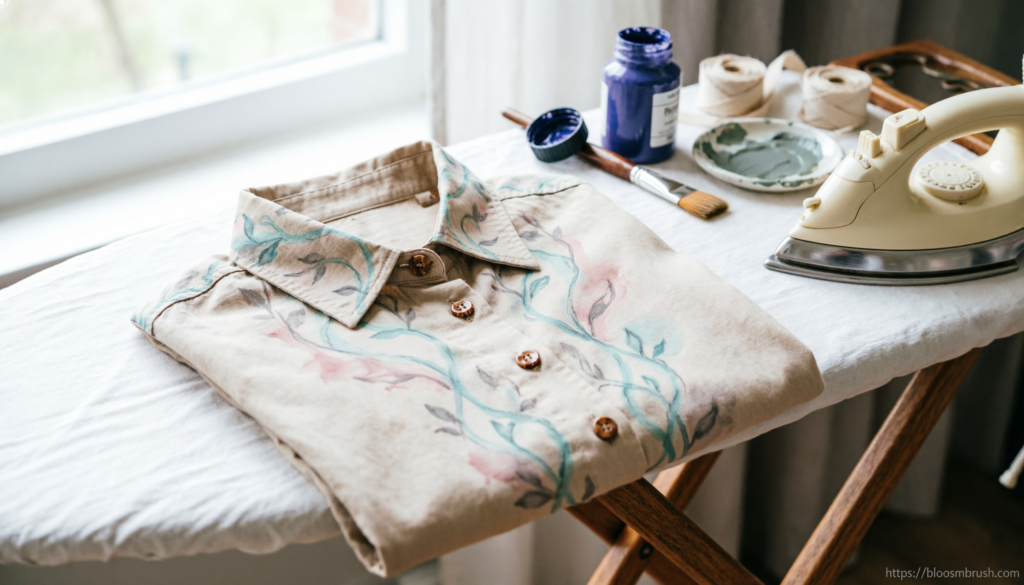
Hand painted clothing needs a little more care than regular printed apparel. The design sits on fabric, moves with the fibers, and reacts to heat, water, friction, and storage. If you want the artwork to last, learning how to iron hand painted clothes the right way matters.
The good news is simple: you can usually iron fabric painted clothes, but you should never press the iron directly onto the painted area. A protective cloth, low to medium heat, and the correct ironing method can keep the design smooth, bright, and crack-free.
Quick Answer: How to Iron Hand Painted Clothes
To iron hand painted clothes, turn the garment inside out, place a clean cotton cloth or parchment paper over the painted area, and use a low to medium heat setting without steam. Press gently instead of dragging the iron across the design.
If the fabric paint has not been heat set yet, follow the paint brand’s instructions first. Most fabric paints need heat setting to improve washability, flexibility, and durability.
Quick Tip
Always test the iron on a hidden seam or inside area before ironing the painted section. If the fabric feels sticky, smells unusual, or the paint softens, stop immediately and lower the heat.
What Makes This Important?
Hand painted clothing looks personal, creative, and unique, but the artwork can suffer if you treat it like a regular shirt or hoodie. Heat, moisture, and pressure can change the texture of the paint or weaken its bond with the fabric.
Proper hand painted clothing care helps prevent:
- Cracking: Too much heat or rough handling can make painted areas split, especially on stretchy fabric.
- Fading: Harsh washing, direct sunlight, and high dryer heat can dull the colors.
- Peeling: Paint may lift if it was not heat set properly or if the iron touches it directly.
- Shine marks: Some paints develop a glossy or scorched look under direct iron heat.
- Fabric damage: Delicate materials can burn, shrink, or warp before the paint itself shows damage.
A few careful habits can make a hand painted shirt, hoodie, denim jacket, or tote bag last much longer.
Best Fabric Paints, Fabrics, and Materials to Consider
The way you iron painted clothing depends partly on the paint and fabric. Some materials handle heat well, while others need extra caution.
Best Fabric Paint for Clothes
The best fabric paint for clothes usually dries flexible, bonds well with fabric fibers, and becomes washable after heat setting. Look for paints labeled as:
- Washable fabric paint: Made for garments that need regular washing.
- Soft fabric paint: Better for T-shirts, sweatshirts, and children’s clothing because it does not feel stiff.
- Opaque fabric paint: Useful for dark fabrics, denim, and bold custom designs.
- Stretch fabric paint: Better for leggings, fitted shirts, or stretchy cotton blends.
- Textile medium mixed with acrylic paint: A workable option, but only if mixed correctly.
Regular acrylic paint alone can dry too stiff on clothing. It may crack faster, especially on flexible areas like elbows, knees, and chest panels. If an artist used acrylic paint, ask whether they mixed it with textile medium and heat set it properly.
Best Fabrics for Painted Clothing
Some fabrics hold painted designs better than others. Cotton remains one of the easiest options because it absorbs paint well and tolerates moderate heat.
| Fabric Type | Paint Durability | Ironing Advice | Best Use |
|---|---|---|---|
| Cotton | High | Use low to medium heat with a pressing cloth | T-shirts, tote bags, casual shirts |
| Cotton blend | Medium to high | Use lower heat if synthetic fibers are present | Hoodies, sweatshirts, everyday wear |
| Denim | High | Iron inside out with firm but careful pressure | Jackets, jeans, patches |
| Canvas | High | Handles heat well, but still protect the design | Bags, shoes, aprons |
| Polyester | Medium | Use low heat only, avoid long pressing | Sportswear, lightweight tops |
| Silk or satin | Low to medium | Use very low heat and extra protection | Delicate custom pieces |
| Stretch fabrics | Medium | Avoid pulling while ironing | Fitted shirts, leggings, activewear |
The safer rule: match the iron setting to the most delicate part of the garment, not the strongest part.
Step by Step Care or Application Process
Painted clothing care starts before ironing. If the paint has not cured or heat set correctly, ironing, washing, or folding can damage the artwork.
Step 1: Let the Paint Cure Fully
Most fabric paints need time to dry and cure before heat setting. Dry paint may feel ready after a few hours, but it can still be soft underneath.
Follow these general timing rules:
- Let the design dry flat in a clean area.
- Wait at least 24 hours before handling the painted area heavily.
- Wait 48 to 72 hours before washing if the paint brand recommends it.
- Avoid folding the painted section while it cures.
Thicker paint layers, raised designs, and dark fabric paints may need more drying time.
Step 2: Heat Set the Painted Clothes
Heat setting painted clothes helps the paint bond with the fabric. This step improves durability and makes the design more resistant to washing.
To heat set painted clothes with an iron:
- Make sure the paint has fully dried.
- Turn the garment inside out.
- Place it on a flat ironing board.
- Put a clean cotton cloth between the iron and the fabric.
- Use the heat level recommended by the paint brand.
- Press each painted area for short intervals.
- Keep the iron moving gently or lift and press in sections.
- Let the garment cool before folding or wearing.
Never use steam while heat setting unless the paint instructions specifically allow it. Steam adds moisture, which can interfere with the paint bond.
Step 3: Check the Paint After Cooling
Once the garment cools, inspect the artwork. The paint should feel dry, flexible, and secure. If it feels tacky or rubbery, give it more curing time before washing or ironing again.
Washing, Drying, Ironing, and Storage Rules
Hand painted clothing aftercare does not need to feel complicated. A few consistent rules can protect the design through repeated wear.
How to Wash Painted Clothes
Washing causes more damage than ironing for many painted garments. The paint faces water, detergent, friction, and twisting.
Use these rules when washing painted clothes:
- Turn the garment inside out before washing.
- Use cold water.
- Choose a gentle cycle or hand wash the item.
- Use mild detergent without bleach.
- Wash painted clothing with similar soft fabrics.
- Avoid fabric softeners if the paint brand warns against them.
- Do not scrub the painted area.
- Do not wring the garment tightly.
For expensive custom hand painted clothes, hand washing is the safest option.
How to Dry Hand Painted Clothes
High dryer heat can weaken fabric paint and shrink the garment. Air drying works best for most painted clothing.
Safe drying methods include:
- Lay the garment flat on a clean towel.
- Hang it away from direct sunlight.
- Reshape hoodies, T-shirts, or delicate tops while damp.
- Keep painted sections from sticking to other fabric.
- Avoid tumble drying unless the artist or paint label says it is safe.
If you must use a dryer, choose the lowest heat setting and remove the garment while slightly damp.
How to Iron Fabric Painted Shirts
Ironing fabric painted shirts safely comes down to heat control and protection.
Use this method:
- Turn the shirt inside out.
- Smooth the fabric gently with your hands.
- Place a thin cotton cloth over the painted area.
- Set the iron to low or medium heat.
- Turn off steam.
- Press lightly for a few seconds at a time.
- Lift the iron instead of sliding it across the design.
- Let the shirt cool before wearing or folding.
For raised paint, glitter paint, metallic paint, or textured designs, use extra caution. These finishes can react differently to heat.
Iron Settings for Painted Shirts
Iron settings for painted shirts depend on both the paint and the fabric. If the care label and paint instructions disagree, choose the lower heat setting.
| Garment Type | Suggested Iron Setting | Steam? | Best Method |
|---|---|---|---|
| Cotton painted shirt | Low to medium | No | Iron inside out with a pressing cloth |
| Painted hoodie | Low to medium | No | Press gently, avoid thick paint areas |
| Painted denim jacket | Medium | No | Iron inside out, protect the design |
| Polyester painted top | Low | No | Short pressing only |
| Delicate painted blouse | Very low | No | Use a cloth and minimal pressure |
| Textured painted design | Low | No | Avoid direct pressure on raised paint |
A hot iron can ruin a painted design quickly, so start lower than you think you need.
How to Store Hand Painted Clothes
Storage affects fabric paint durability more than many people realize. Tight folding can create permanent cracks across the painted section.
Follow these storage tips:
- Hang painted jackets, hoodies, and shirts when possible.
- Fold garments so the painted area does not crease sharply.
- Place tissue paper over textured designs before storing.
- Keep painted clothing away from damp spaces.
- Avoid plastic bags for long-term storage because they can trap moisture.
- Store delicate painted clothes flat if hanging may stretch them.
Good storage keeps the artwork from rubbing, sticking, or cracking between wears.
Common Mistakes That Damage Hand Painted Clothes
Most hand painted shirt damage comes from heat, friction, or rushed care. These mistakes are easy to avoid once you know what causes them.
Mistake 1: Ironing Directly on the Paint
Direct iron contact can melt, flatten, discolor, or lift fabric paint. Always use a barrier, such as a cotton cloth, parchment paper, or the reverse side of the garment.
Mistake 2: Using Steam
Steam adds moisture and heat at the same time. That combination can soften paint, weaken adhesion, or leave marks on some fabrics.
Mistake 3: Washing Too Soon
Fresh paint needs time to cure. Washing too early can cause fading, bleeding, peeling, or rough texture.
Mistake 4: Using High Dryer Heat
A dryer can create more damage than a washing machine. High heat may shrink the fabric and stress the painted design.
Mistake 5: Scrubbing the Artwork
Scrubbing breaks down the paint surface. If a stain appears near the painted area, blot gently instead of rubbing.
Mistake 6: Folding Through the Design
A sharp fold through the middle of a painted graphic can create cracks. Fold around the design or hang the item.
Durability Expectations and How to Prevent Fading
Fabric paint durability depends on the paint quality, fabric type, application method, curing time, and aftercare. A properly painted and heat set garment can last through many washes, but it will not behave exactly like factory-dyed fabric.
How Long Do Hand Painted Clothes Last?
Hand painted clothes can last for years with careful wear and washing. Designs on sturdy cotton, denim, and canvas usually last longer than designs on thin, stretchy, or slippery fabrics.
Several factors affect durability:
- Paint quality: Washable fabric paint lasts longer than craft paint not made for clothing.
- Paint thickness: Thick layers may crack faster than flexible, even layers.
- Fabric stretch: Stretchy clothing puts more stress on the artwork.
- Wash frequency: Daily-wear items fade faster than occasional pieces.
- Heat exposure: Hot water, dryers, and direct ironing shorten the design’s life.
How to Prevent Fading
To prevent fading, reduce heat, friction, and harsh chemicals.
Use these habits:
- Wash inside out in cold water.
- Use mild detergent.
- Air dry away from direct sunlight.
- Avoid bleach and stain removers on painted areas.
- Iron only from the reverse side or through a cloth.
- Store the garment without sharp folds across the design.
- Wash less often when the garment is not visibly dirty.
A painted denim jacket worn occasionally may stay vibrant for much longer than a painted T-shirt worn and washed every week.
Care Tips for Shirts, Hoodies, Denim, and Delicate Fabrics
Different garments need slightly different care. A painted hoodie does not behave like a painted silk blouse, and a denim jacket can tolerate more handling than a thin polyester top.
Painted Shirts Care
Painted shirts often bend and stretch across the chest, shoulders, and sleeves. Keep them flexible by treating the artwork gently.
Best care tips:
- Wash inside out on a gentle cycle.
- Avoid tight folding across the painted design.
- Iron from the inside with a pressing cloth.
- Use low to medium heat, depending on the fabric.
- Do not stretch the painted area while damp.
Painted Hoodies Care
Hoodies are thicker, heavier, and often made from cotton fleece or cotton blends. The fabric can hold paint well, but it takes longer to dry.
Best care tips:
- Turn the hoodie inside out before washing.
- Use cold water and mild detergent.
- Air dry flat or hang on a strong hanger.
- Avoid placing heavy folds through the design.
- Iron gently because thick fabric can require more heat than the paint can handle.
If the hoodie has a large back design, hang it rather than folding it in a drawer.
Painted Denim Jacket Care
Painted denim jacket care is usually easier because denim is sturdy and holds paint well. Still, the painted design needs protection.
Best care tips:
- Spot clean when possible instead of washing often.
- Turn inside out if machine washing.
- Use cold water and a gentle cycle.
- Air dry on a hanger.
- Iron inside out with a cotton cloth as a barrier.
- Avoid heavy pressure on thick painted patches.
Denim can handle more heat than many fabrics, but the paint still needs gentle treatment.
Delicate Painted Fabrics Care
Delicate fabrics need the most caution. Silk, satin, rayon, and thin polyester can react badly to heat and water.
Best care tips:
- Hand wash only if the artist confirms it is safe.
- Use very low iron heat.
- Place a soft cloth between the iron and the garment.
- Avoid steam.
- Do not twist or wring the fabric.
- Store flat or on a padded hanger.
For delicate custom pieces, ask the artist for exact care instructions before washing or ironing.
When to Ask a Custom Artist Before Washing or Repainting
Custom painted clothes can vary widely. One artist may use professional textile paint, while another may use acrylic mixed with fabric medium, airbrush paint, markers, or layered finishes.
Ask the custom painted clothes artist before washing, ironing, or repainting if:
- The garment has raised, glitter, metallic, or textured paint.
- The design includes rhinestones, patches, beads, or mixed media.
- You do not know whether the paint was heat set.
- The garment uses delicate fabric.
- The paint feels sticky, stiff, or uneven.
- You see early cracking or peeling.
- You want to repaint or touch up part of the design.
Questions to Ask the Artist
Before caring for custom hand painted clothes, ask:
- What type of paint did you use?
- Has the design been heat set?
- Can I machine wash it, or should I hand wash it?
- What iron setting is safe for this fabric?
- Should I avoid steam completely?
- Can the design be touched up later?
- How should I store the garment?
A reliable artist should give clear aftercare instructions. If they cannot, choose the safest care method: cold hand wash, air dry, no steam, and indirect ironing only.
Related Custom Painted Clothing Guides
If you care for hand painted fashion often, these related topics can help you protect your pieces:
- How to wash hand painted clothes without fading
- Fabric paint vs acrylic paint for clothing
- Best washable fabric paint for shirts and hoodies
- How to heat set fabric paint on denim
- How to fix cracked fabric paint
- How to store custom hand painted clothes
- How to repaint hand painted clothing safely
These guides connect closely with ironing because painted clothing care works as a full routine, not a single step.
Conclusion
Learning how to iron hand painted clothes is mostly about patience and protection. Turn the garment inside out, avoid direct heat on the artwork, skip steam, and use a clean cloth between the iron and the fabric.
With the right heat setting, gentle washing, careful drying, and smart storage, hand painted clothing can stay bright, flexible, and wearable for a long time.
FAQs About How to Iron Hand Painted Clothes
Can you iron fabric painted clothes?
Yes, you can iron fabric painted clothes if the paint has fully dried and heat set. Turn the garment inside out, use a protective cloth, and avoid steam or direct contact with the painted area.
What is the safest way to iron hand painted clothes?
The safest method is to iron from the reverse side on low to medium heat. Place a cotton cloth between the iron and the painted section, then press gently instead of dragging the iron.
Can I use steam on painted clothes?
Avoid steam on painted clothes. Steam can soften some fabric paints, weaken the bond, or create unwanted marks on the design.
How long should fabric paint dry before ironing?
Many fabric paints need at least 24 hours to dry before heat setting, but some need longer. Check the paint label or ask the artist if the garment was custom painted.
What iron setting should I use for painted shirts?
Use low to medium heat for most painted shirts. If the shirt contains polyester, rayon, or delicate fibers, use low heat only.
Why is my fabric paint cracking?
Fabric paint cracking can happen because of thick paint layers, poor heat setting, stretchy fabric, high dryer heat, or folding through the design. Gentle washing and careful storage can reduce cracking.
Are washable painted clothes safe for machine washing?
Many washable painted clothes can go in the machine on a cold, gentle cycle. Turn them inside out first and avoid bleach, hot water, and high dryer heat.
Should I ask the artist before ironing custom painted clothing?
Yes, especially if the garment has textured paint, glitter, metallic details, delicate fabric, or unknown materials. The artist can tell you what paint they used and which care method is safest.