
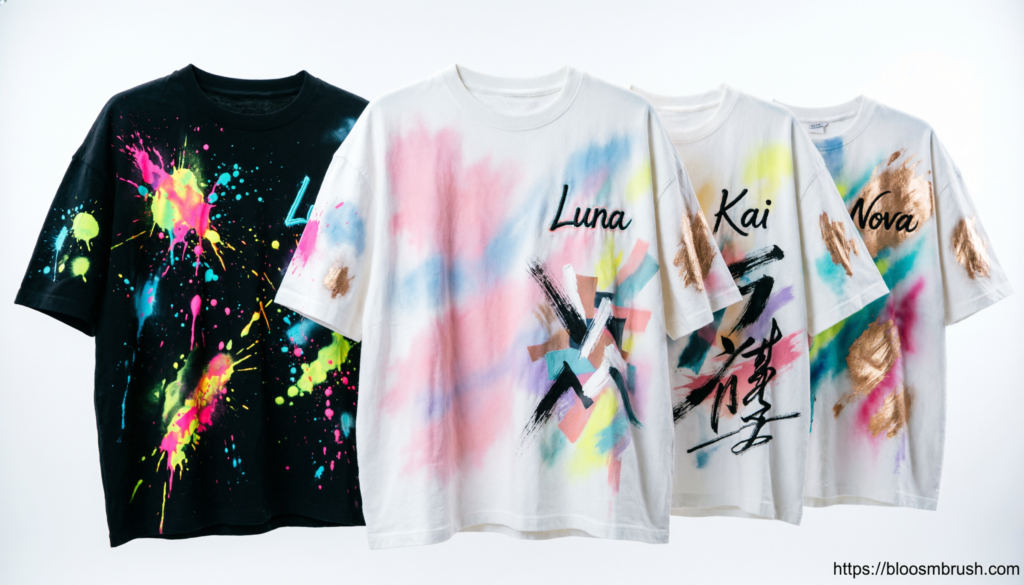
Paint splatter shirts turn simple clothing into wearable artwork. Each design can look energetic, artistic, playful, or surprisingly refined, depending on the colors, placement, and painting technique.
These 20 paint splatter shirt ideas include abstract patterns, personalized names, calligraphy, layered textures, minimalist designs, and multicolor splash effects. You will also find practical guidance on fabric choices, customization, ordering, pricing, washing, and long-term care.
Short Answer
The best paint splatter shirt ideas combine controlled paint placement with colors that complement the shirt fabric. Popular options include neon splashes on black shirts, pastel paint on white cotton, personalized name designs, metallic accents, and abstract drip patterns.
For the most durable result, choose a cotton or cotton-blend shirt and use flexible fabric paint that has been properly heat-set.
Quick Tip
Before painting the full shirt, test every color on a fabric scrap or hidden area. Paint often dries darker, lighter, or less vibrant than it appears in the bottle.
What Are Paint Splatter Shirt Ideas?
Paint splatter shirt ideas are creative clothing designs made by flicking, dripping, spraying, dabbing, or brushing fabric paint onto a shirt. Some designs use random splashes, while others carefully control the direction, size, and position of each mark.
A paint splatter shirt may include:
- Fine paint speckles for a subtle textured look
- Large color splashes for bold visual impact
- Dripping paint lines for an urban or expressive style
- Layered colors that create depth and movement
- Names or quotes surrounded by splatter effects
- Calligraphy artwork combined with painted textures
- Metallic or neon accents for added contrast
Although the design may appear spontaneous, the strongest results usually involve thoughtful color selection, balanced spacing, and careful paint application.
Why Choose Paint Splatter Shirt Designs?
Paint splatter clothing offers more personality than a standard printed shirt. Because the paint lands differently each time, even repeated designs have small variations that make each piece feel original.
Benefits of Custom Painted Clothing
- Every shirt can look different. Small changes in paint direction and droplet size create a one-of-a-kind finish.
- The design can match your preferred colors. You can select shades based on an outfit, event, brand, team, or personal style.
- Personal details are easy to add. Names, initials, dates, quotes, logos, and symbols can become part of the artwork.
- Paint creates visible texture. Hand-painted details often have more depth than flat digital prints.
- The style works across age groups. Children, teenagers, adults, artists, performers, and business owners can all adapt it to their needs.
- It suits both small and large designs. A shirt may feature one restrained splash or an all-over explosion of color.
Printed vs Painted Clothing
| Feature | Printed Clothing | Hand-Painted Clothing |
|---|---|---|
| Design consistency | Usually identical across every item | Each piece has natural variations |
| Texture | Often flat or smooth | May have visible brush or paint texture |
| Personalization | Usually limited to preset templates | Can include custom colors, names, quotes, and artwork |
| Production speed | Often faster for bulk orders | Usually requires more time |
| Best use | Large quantities and repeated designs | Individual pieces, gifts, events, and artistic clothing |
| Overall appearance | Clean and uniform | Creative, expressive, and handmade |
Printed clothing works well when every shirt must look exactly the same. Hand-painted clothing is often better when individuality and artistic detail matter more.
Best Fabric, Fit, and Clothing Options
The garment you choose affects paint adhesion, comfort, durability, and the final appearance of the design.
Best Fabric for Painted Clothes
Cotton is usually the easiest fabric to paint because it absorbs fabric paint well and provides a stable surface.
Good options include:
- 100 percent cotton: Offers strong paint absorption and a natural finish.
- Cotton-polyester blends: Provide softness, reduced shrinkage, and reasonable paint performance.
- Heavyweight cotton: Works well for bold splashes and layered paint.
- Denim: Creates a firm surface for jackets, overshirts, and structured clothing.
- Canvas fabric: Suitable for thick textures, artistic details, and workwear-inspired designs.
Very stretchy fabrics can be harder to paint because the design may crack if the paint does not flex with the material. Smooth synthetic fabrics may also require paint specifically formulated for polyester or nylon.
Choosing the Right Shirt Fit
The fit influences how the design looks when worn.
- Oversized shirts provide more space for large abstract artwork.
- Regular-fit shirts work well for balanced front, back, or shoulder designs.
- Slim-fit shirts suit smaller, more controlled splatter placement.
- Cropped shirts pair well with bright, playful, or asymmetrical designs.
- Long-sleeve shirts provide extra areas for sleeve drips and scattered paint.
- Boxy shirts create a modern canvas for bold graphic arrangements.
Always paint the shirt in its natural, unstretched shape. Stretching the fabric during painting may distort the finished design.
Other Clothing Options
Paint splatter designs are not limited to T-shirts. The same approach can work on:
- Hoodies
- Sweatshirts
- Denim jackets
- Canvas jackets
- Tote bags
- Jeans
- Shorts
- Children’s clothing
- Aprons
- Matching event outfits
20 Paint Splatter Shirt Ideas
The following ideas can be adapted for men, women, children, gifts, events, creative brands, or everyday fashion.
1. Neon Paint Splatter on a Black Shirt
Use electric pink, lime green, bright orange, and neon blue on a black cotton shirt. The dark background makes each color look more intense.
Keep the brightest splashes around the chest and shoulders, then add smaller droplets toward the sleeves and hem. This style works especially well for concerts, dance groups, festivals, and streetwear outfits.
2. Pastel Splash Design on a White Shirt
Combine soft pink, lavender, mint green, pale blue, and light yellow on a clean white shirt. Use small droplets and light brush flicks instead of heavy paint coverage.
The result feels softer and more wearable than a high-contrast design. It suits spring outfits, birthday gifts, creative workshops, and casual everyday clothing.
3. Personalized Name With Paint Splatter
Place a name across the center of the shirt, then frame it with carefully placed paint splashes. The lettering can remain clean while the surrounding colors create movement.
Popular lettering options include:
- Handwritten script
- Bold block letters
- Brush lettering
- Graffiti-inspired text
- Minimal uppercase lettering
- Decorative calligraphy
Choose colors that reflect the wearer’s personality or favorite palette.
4. One-Color Minimalist Splatter Shirt
A splatter shirt does not need several colors. Use one shade, such as black, navy, burgundy, or forest green, on a light shirt.
Concentrate the paint in one area, such as the lower corner, shoulder, or pocket. This controlled approach creates an artistic look without making the shirt feel overly busy.
5. Rainbow Paint Splash Shirt
Apply red, orange, yellow, green, blue, and purple in separate but slightly overlapping sections. Arrange the colors diagonally, vertically, or across the chest.
Avoid mixing every shade together while wet, as this can create muddy brown areas. Let some layers dry before adding the next color.
6. Metallic Gold and Silver Splatter
Gold, silver, bronze, or rose-gold fabric paint can make a simple shirt feel more polished. Metallic paint looks particularly striking on black, navy, charcoal, burgundy, and deep green fabric.
Use metallic shades as accents rather than covering the entire shirt. Small droplets around a name, symbol, or abstract brushstroke often create the strongest effect.
7. Galaxy-Inspired Splatter Shirt
Start with a black, navy, or deep purple shirt. Add blue, violet, pink, and white paint to imitate stars and clouds of cosmic color.
Use a toothbrush or stiff brush to create fine white speckles. Add a few larger stars or constellations by hand for extra detail.
8. Abstract Drip and Splash Design
Combine vertical paint drips with scattered droplets and loose brush marks. Start near one shoulder or the neckline and allow selected lines to move downward.
A limited palette of two or three colors usually gives this design a more intentional appearance. Black, white, and red create strong contrast, while blue, grey, and silver feel cooler and more restrained.
9. Calligraphy With Multicolor Splashes
Paint a word, name, or short phrase in calligraphy, then add splashes that follow the movement of the letters.
Suitable words may include:
- Create
- Brave
- Dream
- Limitless
- Breathe
- Kindness
- Courage
- Original
The paint placement should support the lettering rather than cover it. Leave enough clean space around the main word to maintain readability.
10. Sleeve-Only Paint Splatter
Keep the body of the shirt mostly plain and add paint to one or both sleeves. The design may begin with larger marks near the shoulder and fade into smaller speckles near the cuff.
This option works well for people who prefer subtle custom clothing. It also pairs effectively with a small chest logo, name, or symbol.
11. Side-Splash Asymmetrical Shirt
Place the main paint effect along one side of the shirt, extending from the shoulder toward the lower hem. Leave the opposite side relatively clean.
Asymmetry gives the shirt a modern, deliberate composition. It works especially well with oversized shirts and relaxed streetwear fits.
12. Pocket Burst Design
Create a concentrated burst of paint around the chest pocket. The splatter may appear to emerge from behind the pocket or spread outward from one corner.
This idea suits shirts that already have a visible pocket, but an artist can also paint a false pocket outline for a graphic effect.
13. Monochrome Black and White Splatter
Use black paint on white fabric, white paint on black fabric, or both colors on grey clothing. The limited palette creates sharp contrast and makes the texture more noticeable.
This design can look artistic, modern, and easy to style. It pairs well with jeans, neutral jackets, and simple footwear.
14. Sunset Color Splash Shirt
Blend yellow, orange, coral, pink, and deep purple across the shirt. Arrange the colors from light to dark to imitate a sunset.
Use wide brush marks for the main color areas, then add fine splashes around the edges. A small sun, mountain line, ocean wave, or palm silhouette can complete the design.
15. Ocean-Inspired Blue Splatter
Combine turquoise, royal blue, navy, white, and sea-green paint. Use curved brush movements and scattered white droplets to suggest waves and sea foam.
This style works well on white, pale grey, sand, or navy shirts. It can also include marine artwork such as a whale, wave, shell, or surfboard.
16. Graffiti-Style Splash Shirt
Use bold lettering, rough outlines, paint drips, and bright splashes to create an urban art effect. Red, yellow, blue, white, and black often work well together.
Personalize the shirt with:
- A nickname
- Initials
- A short statement
- A city name
- A team name
- A creative brand wordmark
The composition should feel energetic without making the text unreadable.
17. Floral Paint Splatter Shirt
Paint simple flowers or leaves, then surround them with matching droplets. The splashes can appear like scattered pollen, petals, or watercolor marks.
Soft pinks, greens, lavender, yellow, and white suit a delicate design. Darker burgundy, navy, rust, and forest green can create a more mature floral style.
18. Kids’ Handprint and Splatter Shirt
Combine painted handprints with colorful droplets for a playful children’s design. Add the child’s name, age, birthday year, or a cheerful phrase.
Use washable, non-toxic fabric paint designed for clothing. Adult supervision remains essential during the painting process.
This idea works well for:
- Birthday parties
- School art days
- Family keepsakes
- Holiday crafts
- Sibling matching shirts
19. Team or Event Paint Splatter Shirt
Use event colors around a team name, group title, logo, or date. Each shirt can share the same main layout while retaining small handmade differences.
Suitable occasions include:
- Charity walks
- School events
- Dance teams
- Sports groups
- Family reunions
- Music festivals
- Corporate creative days
- Bachelor or bachelorette parties
For larger groups, approve one sample design before producing the full order.
20. Brand Logo With Controlled Splashes
Place a business logo or brand name at the center, then add paint splashes in the brand’s established colors. Keep the logo sharp and the surrounding texture controlled.
This approach can help creative businesses, fashion labels, artists, studios, and event companies produce merchandise with a handcrafted identity.
Paint Splatter Shirt Ideas by Style
Different design styles create different moods. The table below can help you choose an approach that matches the intended wearer or occasion.
| Style | Best Color Approach | Ideal Placement | Suitable For |
|---|---|---|---|
| Minimalist | One or two neutral colors | Shoulder, pocket, or lower corner | Everyday outfits |
| Neon | Bright colors on dark fabric | Chest, sleeves, or all-over | Festivals and streetwear |
| Pastel | Soft colors on white or cream | Light all-over pattern | Gifts and spring clothing |
| Metallic | Gold, silver, or bronze accents | Around text or artwork | Premium custom pieces |
| Graffiti | High-contrast primary colors | Front, back, and sleeves | Youth fashion and events |
| Galaxy | Blue, purple, pink, and white | Full front or back | Art and space themes |
| Personalized | Favorite colors plus clear lettering | Central chest or back | Birthdays and keepsakes |
| Corporate or branded | Brand color palette | Around the logo | Merchandise and promotions |
Design Options: Names, Calligraphy, Abstract Art, and Texture
A good paint splatter shirt often combines more than one artistic technique.
Name Painting on Clothes
Names can become the main visual element rather than a small label. A custom clothing artist may paint the name using script, brush lettering, serif lettering, graffiti text, or simple block capitals.
For better readability:
- Use a strong contrast between the lettering and fabric.
- Keep heavy splashes away from thin letter strokes.
- Choose a font that matches the overall style.
- Confirm the spelling and capitalization before painting.
- Approve a digital or hand-drawn layout first.
Calligraphy on Clothes
Calligraphy adds elegance and movement to painted clothing. It pairs well with light splashes, metallic details, floral elements, and controlled brush marks.
Short words work better than long paragraphs because they remain readable from a distance. A quote can still work, but it should use a clean layout with enough spacing.
Abstract Painted Clothes
Abstract designs rely on color balance, line direction, texture, and negative space. They do not need to represent a recognizable object.
Common abstract techniques include:
- Broad dry-brush strokes
- Layered paint blocks
- Fine droplets
- Circular splashes
- Dripping lines
- Sponge textures
- Scraped paint effects
- Geometric sections
Abstract clothing often looks strongest when one color leads and the remaining shades support it.
Multicolor Splash Clothing
Multicolor designs offer visual energy, but too many shades can compete with one another. A planned palette usually looks more professional than randomly chosen colors.
Try one of these combinations:
- Navy, turquoise, white, and silver
- Pink, purple, blue, and white
- Orange, yellow, red, and black
- Mint, lavender, peach, and pale blue
- Forest green, beige, rust, and cream
- Black, white, grey, and metallic gold
Personalization Options
Customization allows the design to reflect a person, event, business, or message.
Custom Colors
Colors may be selected based on:
- Favorite shades
- School or team colors
- Brand guidelines
- Wedding or event themes
- Seasonal palettes
- Existing wardrobe colors
- Birthstone-inspired shades
- National or regional colors
Ask for a color sample or digital palette before the artist begins. Color names such as blue or pink can describe many different shades.
Calligraphy Fonts and Lettering Styles
The lettering should support the mood of the shirt.
| Lettering Style | Visual Effect | Best Use |
|---|---|---|
| Modern script | Personal and elegant | Names, gifts, and short quotes |
| Bold brush lettering | Energetic and expressive | Motivational words and streetwear |
| Block capitals | Strong and readable | Events, teams, and brands |
| Graffiti lettering | Urban and playful | Nicknames and youth clothing |
| Serif lettering | Refined and structured | Premium or artistic designs |
| Handwritten lettering | Casual and friendly | Children’s shirts and personal messages |
Custom Quotes on Clothes
Keep quotes short enough to read quickly. Strong options include personal mottos, meaningful dates, inside jokes, song-inspired phrases that you have permission to use, or original messages.
Avoid copying copyrighted artwork, brand logos, or protected characters unless you own the rights or have permission.
Custom Artwork
A paint splatter shirt can include:
- Portrait outlines
- Pet illustrations
- Flowers
- Landscapes
- Sports symbols
- Musical elements
- Zodiac signs
- Abstract faces
- Cultural patterns
- Business logos
- Original characters
Detailed artwork may require a larger painting area and a longer production timeline.
Who Should Buy Custom Paint Splatter Clothing?
Paint splatter clothing can suit many styles and age groups because the design can be adjusted from subtle to highly expressive.
Custom Clothes for Men
Popular options include monochrome splashes, dark color palettes, shoulder designs, graffiti lettering, logo-based artwork, and oversized streetwear shirts.
Denim jackets and heavyweight cotton shirts also work well for structured, masculine styling.
Custom Clothes for Women
Popular choices include pastel palettes, calligraphy, floral splashes, metallic details, cropped shirts, oversized fits, and personalized quote designs.
The design does not need to follow traditional gender categories. Color, fit, and artwork should reflect the wearer’s actual preferences.
Kids’ Custom Painted Clothes
Children often enjoy bright colors, handprints, names, animals, stars, rainbows, and cartoon-inspired original artwork.
Choose soft fabric, flexible paint, and a comfortable fit. Avoid thick paint layers that may feel stiff against the body.
Artists, Performers, and Creative Professionals
Custom painted shirts can help artists, dancers, musicians, photographers, and performers develop a recognizable visual identity. The clothing may be used during performances, exhibitions, workshops, photoshoots, or public events.
Small Businesses and Creative Brands
Hand-painted clothing can serve as:
- Limited-edition merchandise
- Staff apparel
- Launch event clothing
- Influencer packages
- Giveaway items
- Photoshoot styling
- Customer gifts
- Display pieces
Because hand painting takes time, it often suits limited runs better than very large bulk orders.
Gift, Event, Brand, and Everyday Use Ideas
Birthday Gift Shirts
A birthday shirt may include the recipient’s name, age, favorite colors, birth year, hobby, or a personal phrase.
For a more thoughtful design, include subtle details that connect to the person rather than relying only on generic birthday wording.
Event Shirts
Paint splatter shirts can make an event group easy to identify while still giving each person a slightly different design.
They work well for:
- Art parties
- Charity events
- School celebrations
- Family gatherings
- Team-building activities
- Concert groups
- Dance performances
- Creative conferences
Custom Brand Clothing
Businesses can combine a logo with splashes in their brand colors. A controlled design usually looks more professional than an all-over random pattern.
Before ordering, provide the artist with:
- A high-resolution logo file
- Exact brand colors
- Placement preferences
- Garment color
- Required sizes
- Delivery date
- Usage permissions
Everyday Clothing
A subtle splatter shirt can become an easy statement piece for casual outfits. Pair a bold shirt with simple jeans, trousers, or a neutral jacket to keep the overall look balanced.
How the Custom Order Process Works
A clear order process reduces mistakes and gives both the customer and artist a shared understanding of the final design.
1. Choose the Garment
Select the clothing type, fabric, color, fit, and size. Confirm whether the artist supplies the garment or paints one provided by the customer.
2. Share the Design Brief
Provide details such as:
- Preferred colors
- Name or wording
- Lettering style
- Artwork references
- Paint placement
- Required date
- Budget range
- Intended use
References should communicate style, not request an exact copy of another artist’s protected work.
3. Review the Initial Concept
The artist may provide a sketch, digital mockup, layout sample, or written concept. Check spelling, colors, size, and placement carefully.
4. Request Necessary Revisions
Ask for changes during the approval stage. Once painting begins, major revisions may become difficult or impossible.
5. Approve the Final Design
Give clear written approval after reviewing the complete concept. This protects both the customer and artist from misunderstandings.
6. Painting and Curing
The artist prepares the fabric, applies the design, allows the paint to dry, and heat-sets or cures it according to the paint manufacturer’s instructions.
7. Final Inspection and Delivery
Before dispatch or collection, the artist should inspect the shirt for paint adhesion, unwanted marks, spelling errors, and finishing quality.
Pricing, Timeline, Revisions, and Approval
The price of custom painted clothes depends on the garment, artwork complexity, paint type, coverage, and artist’s experience.
Factors That Affect Custom Painted Clothes Prices
- Garment type and quality
- Number of paint colors
- Size of the painted area
- Detail level
- Lettering complexity
- Front, back, or sleeve coverage
- Metallic, reflective, or specialty paint
- Number of revisions
- Rush production
- Shipping and packaging
- Quantity ordered
A small one-color corner design usually costs less than a full front-and-back artwork with detailed lettering.
Typical Order Timeline
Simple designs may require several working days, while detailed pieces can take one or more weeks. Drying, curing, revisions, and shipping all affect the schedule.
For events, order early enough to allow time for:
- Design discussion
- Mockup preparation
- Revisions
- Final approval
- Painting
- Curing
- Quality inspection
- Delivery
Revision Process
Ask the artist how many revisions are included before placing the order. Some artists include one or two concept revisions, then charge for additional changes.
Revisions usually apply to the design plan, not the finished painted garment. Hand-painted work cannot always be erased or repainted cleanly.
Approval Process
Before approving the design, confirm:
- Correct spelling
- Correct garment size
- Exact fabric color
- Paint palette
- Lettering style
- Artwork placement
- Front and back coverage
- Delivery date
- Total price
- Care instructions
Common Paint Splatter Shirt Mistakes
Small planning errors can affect both appearance and durability.
Using Ordinary Craft Paint
Standard acrylic paint may dry stiff and crack during wear. Use fabric paint or mix acrylic paint with a suitable fabric medium.
Applying Paint Too Thickly
Heavy paint layers can feel uncomfortable and may split when the shirt bends. Build color gradually instead of pouring thick paint directly onto the fabric.
Skipping the Fabric Test
Some colors spread, fade, or look different on fabric. Test the paint before applying it to the main garment.
Ignoring Negative Space
Covering every inch can make the design feel crowded. Clean fabric areas help the paint splashes stand out.
Mixing Too Many Wet Colors
Overlapping several wet shades can produce dull or muddy areas. Allow selected layers to dry before adding new colors.
Forgetting to Protect the Back Layer
Place cardboard or a protective sheet inside the shirt. This prevents paint from soaking through to the back.
Washing Too Soon
Fabric paint needs enough time to cure. Washing the shirt before the recommended curing period may weaken the design.
How to Wash Hand-Painted Clothes
Proper washing helps maintain color, flexibility, and paint adhesion.
Recommended Washing Steps
- Wait for the full curing period recommended by the paint manufacturer or artist.
- Turn the garment inside out before washing.
- Use cold or cool water.
- Choose a gentle machine cycle or wash by hand.
- Use a mild detergent.
- Wash with similar colors.
- Avoid bleach and strong stain removers.
- Air-dry the garment whenever possible.
Drying and Ironing
Air-drying usually places less stress on the painted surface than high-heat tumble drying.
If ironing is necessary:
- Turn the shirt inside out.
- Use a low or medium temperature.
- Place a clean cloth between the iron and painted area.
- Do not apply direct high heat to the artwork.
Fabric Paint Durability
High-quality fabric paint can remain attractive through many washes when the artist prepares, applies, and cures it correctly. Durability also depends on how often the garment is worn, washed, stretched, and exposed to heat.
Some natural fading may occur over time, especially on frequently washed clothing. This gradual wear can add character to certain artistic designs.
Related Products and Painting Styles
People who enjoy custom painted shirts may also like other hand-painted clothing and accessories.
Custom Painted Hoodies
Hoodies offer a larger surface for back artwork, sleeve splashes, chest logos, and layered designs. Choose flexible paint so the artwork moves comfortably with the thicker fabric.
Custom Painted Denim Jackets
Denim provides a firm surface for detailed images, lettering, florals, portraits, and bold splatter effects. Jacket panels also make it easier to divide the artwork into clear sections.
Custom Painted Tote Bags
Canvas tote bags are practical test pieces for new colors and techniques. They also work well as personalized gifts, event merchandise, and branded products.
Brush-Painted Clothing
Brush-painted designs use visible strokes rather than scattered droplets. Artists can combine both methods by adding splashes around a central brush-painted image.
Sponge and Stencil Painting
Sponges create textured color fields, while stencils produce clean shapes or letters. Splatter effects can soften the edges and make stencil work feel less rigid.
Conclusion
The strongest paint splatter shirt ideas balance creativity with careful planning. Fabric choice, paint quality, color harmony, placement, and proper curing all shape the final result.
From minimalist black speckles to personalized names, galaxy effects, branded artwork, and multicolor splash designs, this style offers many ways to create clothing that feels personal and original. Choose a concept that suits the wearer, approve the details before painting, and follow the correct care routine to protect the finished design.
FAQs About Paint Splatter Shirt Ideas
What paint should I use for a paint splatter shirt?
Use flexible fabric paint designed for washable clothing. Acrylic paint may also work when combined with an appropriate fabric medium, but ordinary craft paint can become stiff or crack.
What is the best shirt fabric for paint splatter designs?
Cotton and heavyweight cotton usually provide the most reliable surface. Cotton blends can also work well, but very stretchy or synthetic fabrics may need specialized paint.
Can I make paint splatter shirts at home?
Yes. Place cardboard inside the shirt, protect the surrounding area, test the colors, and apply fabric paint with brushes, toothbrushes, droppers, or sponges. Follow the paint manufacturer’s curing instructions.
How do I stop paint from bleeding through the shirt?
Insert thick cardboard, plastic-covered board, or another protective barrier between the front and back layers before painting.
Are paint splatter shirt ideas suitable for gifts?
Yes. Personalized names, favorite colors, meaningful dates, original quotes, and custom artwork can turn a simple shirt into a thoughtful birthday, holiday, or celebration gift.
How long does fabric paint last on a shirt?
Properly applied and heat-set fabric paint can last through many washes. Gentle washing, cool water, mild detergent, and air-drying help preserve it.
Can a custom artist copy any logo or character onto a shirt?
An artist should only reproduce protected logos, characters, or artwork when the customer has the necessary rights or permission. Original artwork and licensed designs are safer choices.
Can paint splatter designs be used on hoodies and denim jackets?
Yes. Hoodies and denim jackets provide excellent surfaces for larger artwork, sleeve details, back designs, names, calligraphy, and layered paint splashes.