
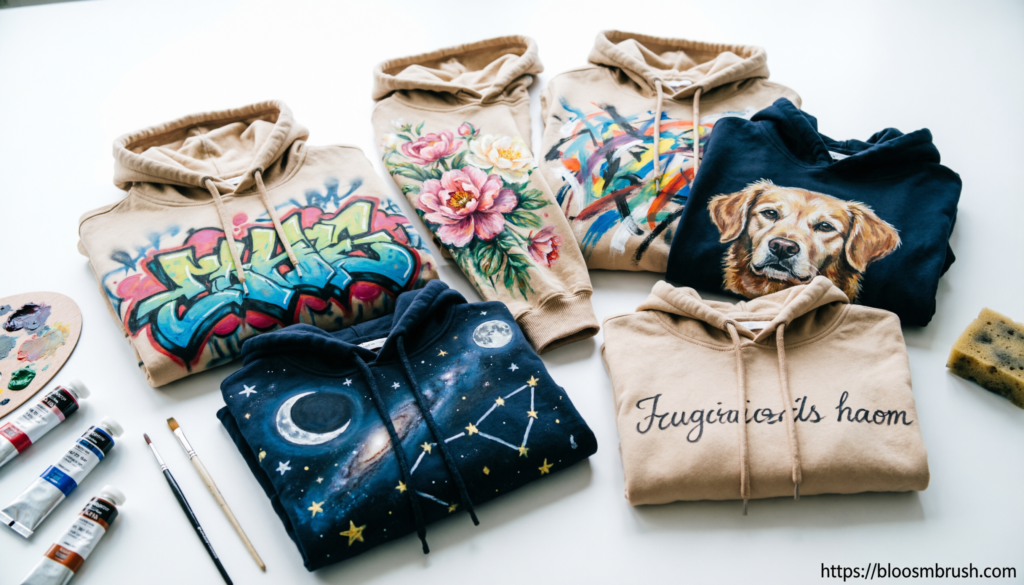
A plain hoodie can become a wearable piece of art with the right colors, layout, and painting technique. Custom hoodie painting ideas range from simple names and initials to detailed portraits, landscapes, calligraphy, abstract patterns, and brand artwork.
Unlike mass-produced prints, hand-painted hoodie designs often include natural brush marks, layered colors, and small variations that make each piece feel personal. You can create one for yourself, commission an artist, promote a small brand, celebrate an event, or design a meaningful gift.
Short Answer
The best custom hoodie painting ideas combine a clear concept with fabric-safe paint and a design that suits the hoodie’s color, fit, and material. Popular choices include painted names, graffiti lettering, floral artwork, portraits, abstract shapes, celestial scenes, pet illustrations, and paint-splatter effects.
Quick Tip
Choose the hoodie before finalizing the artwork. Its color, pocket placement, seams, zipper, and fabric texture can affect the size, visibility, and durability of the painted design.
What Are Custom Hoodie Painting Ideas?
Custom hoodie painting ideas are original artwork concepts created directly on hoodies using fabric paint, fabric markers, airbrushing, stencils, or mixed painting techniques.
The artwork may appear on:
- The front chest
- The center of the back
- One or both sleeves
- The hood
- The pocket
- The shoulders
- Several connected areas
Some painted hoodie designs focus on one bold image, while others use smaller details across the garment. The design can be fully hand-painted, partly stenciled, or built with a combination of painting, outlines, lettering, and texture.
A custom-painted hoodie may include:
- A person’s name or initials
- A handwritten quote
- A portrait
- A favorite animal
- A floral arrangement
- An abstract composition
- A business logo
- A symbolic image
- Artwork inspired by music, travel, nature, or hobbies
The strongest designs feel connected to the wearer rather than looking like random decoration.
Why Choose a Hand-Painted Hoodie?
Hand-painted clothing offers a level of individuality that standard printed apparel rarely provides. Even when two hoodies follow the same concept, brushwork and color blending create small differences between them.
Painted Clothing Feels More Personal
A hoodie can reflect a person’s name, interests, memories, profession, personality, or visual style. This makes painted clothing especially suitable for gifts and milestone events.
The Artwork Can Follow the Garment
Printed designs usually sit inside a fixed rectangular area. A painter can extend artwork around seams, sleeves, pockets, shoulders, and the hood.
For example, a vine can begin near the pocket and continue up one sleeve. A galaxy design can spread across the back and onto the hood.
You Can Control the Details
A custom order usually gives you more influence over:
- Color choices
- Lettering style
- Artwork placement
- Design size
- Quote wording
- Character details
- Background effects
- Level of complexity
Painted Designs Have an Artistic Finish
Hand-painted clothing may show visible brush strokes, soft shading, layered texture, and irregular details. These features help the hoodie look like wearable art rather than factory-made merchandise.
Printed vs Painted Clothing
Both methods can produce attractive clothing, but they serve different needs.
| Feature | Hand-Painted Hoodie | Printed Hoodie |
|---|---|---|
| Appearance | Artistic and individually created | Clean and highly consistent |
| Uniqueness | Each piece has small variations | Multiple pieces can look identical |
| Detail control | Easy to personalize individual elements | Best when using a finished digital design |
| Large orders | Slower and more expensive | Faster and more practical |
| Texture | May include visible brushwork | Usually smooth or slightly raised |
| Placement | Can move around seams and sleeves | Often limited by printing area |
| Best use | Gifts, art pieces, personal clothing | Teamwear, merchandise, bulk orders |
Choose painting when you want an individual piece with a handcrafted look. Choose printing when you need many matching garments or precise reproduction of the same artwork.
20 Custom Hoodie Painting Ideas
The following hand-painted hoodie ideas can be adapted for men, women, teenagers, children, couples, teams, and brands.
1. Personalized Name Hoodie
Paint a first name, surname, nickname, or initials across the chest, back, sleeve, or hood.
The lettering can be styled as:
- Elegant calligraphy
- Bold block text
- Graffiti lettering
- Minimal handwritten script
- Gothic typography
- Retro bubble letters
For a subtle design, place small initials near the cuff or upper chest. For a statement piece, use oversized lettering across the back.
2. Graffiti-Inspired Street Art
Graffiti artwork works well on oversized black, grey, navy, or cream hoodies. Combine layered letters, arrows, paint drips, outlines, and contrasting colors.
A balanced graffiti hoodie may include:
- One main word
- A thick outline
- A shadow layer
- Small symbols
- Controlled paint splashes
Avoid filling every empty area. A clear focal point makes street-art clothing easier to wear.
3. Abstract Color Blocking
Use curved shapes, geometric sections, broken lines, and overlapping colors to create a modern abstract design.
This idea works particularly well with:
- Earth tones
- Pastel combinations
- Black and white
- Primary colors
- Muted blues and greens
Abstract painted clothes do not need to represent a specific object. The visual impact comes from shape, balance, contrast, and movement.
4. Paint-Splatter Hoodie
A paint-splatter design creates an energetic, casual look. It can cover the entire hoodie or remain concentrated around one area.
Possible approaches include:
- Small white splashes on black fabric
- Neon paint on a dark hoodie
- Two-color splatters around a name
- Metallic accents over a solid base
- A diagonal splash from shoulder to pocket
Controlled splattering usually looks more polished than randomly covering the garment.
5. Floral Sleeve Design
Paint flowers, leaves, vines, or branches along one or both sleeves. The artwork may begin at the cuff and climb toward the shoulder.
Popular flower choices include:
- Roses
- Daisies
- Sunflowers
- Cherry blossoms
- Wildflowers
- Lavender
- Peonies
A floral sleeve can look soft and delicate or bold and dramatic depending on the colors and linework.
6. Back Portrait Hoodie
A large portrait on the back turns the hoodie into a statement piece. The subject might be a family member, musician, fictional character, historical figure, or original face.
Portrait painting requires careful preparation because facial proportions and shading need precision. Ask for sketches or a digital mockup before the artist starts painting.
7. Custom Pet Portrait
A hand-painted pet hoodie makes a thoughtful gift for dog, cat, rabbit, horse, or bird owners.
The artwork can show:
- A realistic face
- A simplified cartoon portrait
- The pet’s name
- A paw-print border
- A favorite toy
- A small memorial date
Clear, well-lit reference photos help the artist capture markings, eye color, and expression.
8. Celestial Moon and Stars
Paint moons, stars, planets, constellations, clouds, or galaxies across the back and hood.
Dark hoodies work especially well for celestial artwork because blue, violet, silver, and white shades stand out against the fabric.
You can personalize the design with:
- A zodiac constellation
- A meaningful date
- A moon phase
- A short quote
- A planet linked to a favorite color palette
9. Nature Landscape Hoodie
Turn the back of the hoodie into a small landscape painting. Mountains, forests, oceans, sunsets, and desert scenes can create striking hand-painted hoodie designs.
For a cleaner composition, use a defined shape such as:
- A circle
- An arch
- A rectangle
- A window frame
- A silhouette
This gives the artwork clear boundaries and prevents it from feeling unfinished.
10. Motivational Quote Hoodie
Choose a short quote that remains readable from a natural distance. Long paragraphs rarely work well on clothing.
Good placements include:
- Across the chest
- Down one sleeve
- Across the upper back
- Around the hood
- Above the pocket
Pair the quote with a small illustration, underline, painted border, or symbolic object.
11. Music-Inspired Artwork
A music hoodie may feature lyrics, instruments, sound waves, album-inspired colors, notes, or a portrait of a performer.
To create something more personal, paint:
- A waveform from a meaningful recording
- A favorite instrument
- A concert date
- A song title
- A symbolic image connected to a lyric
Avoid copying protected album artwork or logos for commercial use without permission.
12. Cartoon-Style Character Hoodie
A custom cartoon character can represent the wearer, a friend, a pet, or an original fictional personality.
Cartoon art often works well on hoodies because it uses:
- Clear outlines
- Flat colors
- Expressive features
- Simple shading
- Recognizable silhouettes
An artist can also turn a photograph into a simplified illustrated character.
13. Matching Couple Hoodies
Create two designs that connect when the wearers stand together. The hoodies do not need to be identical.
Ideas include:
- Two halves of one image
- Coordinated initials
- Matching constellations
- Complementary quotes
- Sun and moon artwork
- Key and lock symbols
- Shared dates
A subtle matching concept is often more wearable than an overly literal design.
14. Family or Friendship Set
Paint a coordinated set for siblings, parents, friends, or a group celebration.
Each hoodie can share:
- The same color palette
- A repeated symbol
- Matching lettering
- A group name
- Individual numbers
- Different versions of one illustration
This approach keeps the collection connected while allowing each person to have a distinct design.
15. Minimal Line-Art Hoodie
A single continuous line can form a face, hand, flower, animal, or abstract figure. Minimal line art suits neutral hoodies and understated wardrobes.
Popular combinations include:
- Black artwork on beige
- White linework on charcoal
- Brown artwork on cream
- Navy lines on pale grey
The simplicity makes placement particularly important. A slightly off-center chest design or small back-neck illustration can look more intentional than a large central image.
16. Gothic Lettering and Symbols
Use dark calligraphy, medieval-style lettering, flames, thorns, ravens, crosses, roses, or architectural details.
Black-on-black artwork can create a subtle textured effect, while white, red, or metallic paint produces stronger contrast.
Keep the typography readable. Highly decorative letters may lose clarity when painted too small.
17. Sports and Team Hoodie
Create a custom hoodie for an athlete, recreational team, school club, or supporter.
The artwork might include:
- A player’s name
- Jersey number
- Team colors
- Equipment illustration
- Mascot
- Season date
- Championship reference
Obtain permission before commercially reproducing protected team logos.
18. Brand Logo and Artwork Hoodie
Small businesses, creators, cafés, studios, and fashion labels can use custom-painted hoodies for limited collections or promotional clothing.
A branded design may feature:
- A hand-painted logo
- A slogan
- Product-inspired artwork
- Founder initials
- A location reference
- Numbered limited-edition details
Painting works best for small runs. Printing or embroidery may suit larger quantities that require exact consistency.
19. Textured Brush-Stroke Hoodie
Visible brush strokes can become the main design rather than a background effect. Use dry brushing, layered marks, thick lines, or faded edges to create movement.
Texture can be placed:
- Across the shoulders
- Around the pocket
- Along the sleeves
- Behind lettering
- In a vertical back panel
Test thick paint applications carefully. Heavy layers may feel stiff or crack more easily if the paint is unsuitable for fabric.
20. Mixed-Media Painted Hoodie
Combine fabric painting with another decorative method for a more detailed finish.
Possible combinations include:
- Paint and embroidery
- Paint and fabric patches
- Paint and studs
- Paint and appliqué
- Paint and stitched outlines
- Paint and reflective material
Mixed-media designs require careful washing because different materials may have different care needs.
Best Fabric, Fit, and Hoodie Options
The hoodie itself affects how well the artwork applies, looks, and lasts.
Best Fabric for Painted Hoodies
Cotton-rich fabric is usually the easiest surface for hand-painted clothing.
| Fabric | Painting Suitability | Key Consideration |
|---|---|---|
| 100% cotton | Excellent | Absorbs fabric paint well and provides a stable surface |
| Cotton-polyester blend | Very good | Smooth, durable, and less likely to shrink |
| Heavy fleece | Good | Comfortable, but textured fibers may reduce fine detail |
| French terry | Very good | Offers a relatively smooth outer surface |
| Performance polyester | More difficult | May require paint designed for synthetic fabric |
| Stretch fabric | Moderate | Needs flexible paint to reduce cracking |
Always check the paint manufacturer’s fabric recommendations before beginning.
Pullover vs Zip-Up Hoodie
A pullover hoodie provides a large uninterrupted area across the front and back. It works well for portraits, abstract artwork, lettering, and landscapes.
A zip-up hoodie divides the front design. It suits:
- Artwork placed on one side
- Mirrored designs
- Sleeve painting
- Back artwork
- Small chest logos
Avoid placing critical facial details or lettering directly across a zipper unless the split forms part of the design.
Choosing the Right Fit
The fit influences how the artwork sits on the body.
- Oversized hoodies provide more painting space and suit streetwear, graffiti, and large back designs.
- Regular-fit hoodies work well for everyday personalized clothing.
- Cropped hoodies suit compact artwork, small lettering, and sleeve details.
- Children’s hoodies need simpler designs with fewer tiny elements.
Wash and dry a new hoodie before painting if shrinkage is likely. This prevents the finished artwork from changing shape after its first wash.
Choosing Colors, Fonts, Quotes, and Artwork
A successful custom design needs more than an attractive idea. The colors, lettering, size, and placement must work together.
Select Colors With Enough Contrast
The design should remain visible against the base fabric.
Strong combinations include:
- White, silver, or neon paint on black
- Navy, brown, or forest green on cream
- Black or burgundy on grey
- Deep blue or purple on pale pink
- Warm earth tones on beige
For dark fabric, some colors need a light base layer to appear bright.
Match the Font to the Mood
Typography changes the personality of the hoodie.
- Calligraphy feels elegant and personal.
- Graffiti lettering feels bold and urban.
- Serif lettering can feel classic or literary.
- Block lettering looks clear and confident.
- Handwritten script feels casual and intimate.
- Gothic lettering suits darker artistic themes.
Ask the artist for a lettering sample if the name or quote forms the main focus.
Keep Quotes Short
A few strong words usually work better than a full sentence. Short wording remains readable and leaves room for artwork.
Before approval, check:
- Spelling
- Capitalization
- Punctuation
- Line breaks
- Date formatting
- Name accuracy
Painted mistakes can be difficult to correct cleanly.
Use High-Quality Reference Images
For portraits, pets, logos, vehicles, or detailed objects, send clear reference material. Avoid blurry screenshots, strong filters, cropped faces, or images with heavy shadows.
Who Should Buy a Custom-Painted Hoodie?
Custom-painted clothes can suit many ages and styles because the artwork can be adjusted to the wearer.
Custom Hoodies for Men
Popular options include:
- Minimal chest artwork
- Graffiti lettering
- Sports themes
- Automotive art
- Abstract designs
- Monochrome portraits
- Sleeve graphics
Custom Hoodies for Women
Common choices include:
- Floral sleeves
- Calligraphy
- Pet portraits
- Celestial artwork
- Fashion illustrations
- Soft abstract patterns
- Personalized quotes
These categories are not fixed. The best design follows the person’s preferences rather than gender labels.
Kids’ Custom-Painted Hoodies
Children’s designs often feature:
- Names
- Animals
- Space themes
- Dinosaurs
- Sports
- Cartoon characters
- Bright paint splashes
Use non-toxic paint intended for fabric, and avoid loose decorative pieces for very young children.
Artists and Creative Professionals
Painters, designers, musicians, photographers, tattoo artists, and content creators may use custom hoodies as personal branding or wearable portfolio pieces.
People Who Value One-of-a-Kind Clothing
A hand-painted hoodie suits anyone who wants something less common than standard retail clothing. It can also refresh a plain garment that already fits well.
Gift, Event, Brand, and Everyday Use Ideas
A personalized hoodie can serve a practical purpose while carrying emotional or promotional value.
Birthday Gifts
Add the recipient’s name, birth flower, zodiac sign, pet, favorite quote, or hobby.
Anniversary Gifts
Use a date, location, coordinated couple design, handwritten message, or artwork connected to a shared memory.
Graduation Gifts
Paint the graduate’s name, year, subject, school colors, or a short message about their next step.
Memorial Clothing
A subtle portrait, signature, date, flower, or meaningful symbol can create a respectful memorial piece.
Event Hoodies
Custom-painted hoodies may suit:
- Reunions
- Retreats
- Festivals
- Birthday trips
- Bridal events
- Creative workshops
- School performances
- Fundraising events
Limited Brand Collections
An artist or clothing brand can release individually numbered hoodies with variations in brushwork or color. This creates a small collection without making every item exactly the same.
Everyday Personal Style
Not every design needs a special occasion. A small chest symbol, painted cuff, abstract sleeve, or minimal name detail can make an everyday hoodie more distinctive.
How the Custom Order Process Works
A clear order process reduces mistakes and helps the artist understand your expectations.
1. Choose the Hoodie
Confirm:
- Size
- Fit
- Fabric
- Base color
- Pullover or zip-up style
- Pocket placement
- Brand, if relevant
Some artists provide the hoodie, while others accept a garment supplied by the customer.
2. Describe the Main Idea
Share the subject, mood, colors, placement, and intended use. Specific guidance helps, but leave some creative room if you selected the artist for their style.
3. Send Reference Material
Provide photographs, logos, sketches, color samples, or examples of the artist’s previous work that match your preferred direction.
4. Receive a Quote
The artist may calculate the price based on:
- Design size
- Level of detail
- Number of painted areas
- Hoodie cost
- Materials
- Urgency
- Revisions
- Shipping
5. Review the Sketch or Mockup
Check the layout, spelling, proportions, colors, and placement. A digital mockup shows the overall direction, although the final brushwork may vary slightly.
6. Approve the Design
Give clear written approval before painting begins. Major changes may no longer be possible once paint has been applied.
7. Painting and Curing
The artist paints the garment and allows the design to dry or cure according to the paint instructions. Some fabric paints require heat setting.
8. Final Inspection and Delivery
The artist checks the artwork, photographs the finished hoodie, and prepares it for collection or shipping.
Pricing, Timeline, Revisions, and Approval
Custom-painted hoodie prices vary because each project requires a different amount of time and detail.
What Affects the Price?
A simple name or small symbol usually costs less than a full back portrait or multi-sleeve composition.
Pricing may increase with:
- Realistic portraits
- Detailed backgrounds
- Multiple characters
- Metallic or specialty paints
- Painting across several garment areas
- Custom hoodie sourcing
- Fast turnaround
- International shipping
Typical Project Complexity
| Design Type | Complexity | Relative Cost |
|---|---|---|
| Small initials or symbol | Low | Lower |
| Name with simple decoration | Low to medium | Lower to moderate |
| Sleeve florals or abstract pattern | Medium | Moderate |
| Large calligraphy back design | Medium | Moderate |
| Pet portrait | Medium to high | Moderate to higher |
| Detailed human portrait | High | Higher |
| Full hoodie mixed-media artwork | Very high | Highest |
These categories provide general guidance rather than fixed pricing. Artist experience, location, materials, and garment quality also affect the total.
How Long Does a Custom Order Take?
A straightforward piece may take several days, while detailed artwork can take a few weeks. The timeline may include:
- Design discussion
- Hoodie sourcing
- Sketching
- Customer approval
- Painting
- Drying and curing
- Quality checks
- Shipping
Order early for birthdays, events, holidays, or travel.
How Revisions Usually Work
Artists often allow changes during the sketch stage. Once painting begins, revision options become limited.
Clarify these terms before paying:
- Number of included sketch revisions
- Cost of additional changes
- Deposit requirements
- Cancellation rules
- Approval deadline
- Refund policy
- Responsibility for incorrect sizing
Common Custom Hoodie Design Mistakes
Avoiding a few common problems can improve both appearance and durability.
Choosing a Design With Too Many Details
Tiny lettering, complex backgrounds, and numerous small objects may become difficult to see on textured fabric.
Ignoring Seams and Pockets
A design that looks balanced on a flat mockup may become distorted when it crosses a pocket, zipper, or thick seam.
Using Ordinary Acrylic Paint Without Fabric Medium
Standard craft paint may dry stiff or crack. Use paint made for fabric or mix compatible acrylic paint with a suitable textile medium.
Skipping the Approval Stage
Names, dates, quotes, and portraits need careful review. Approve the layout before paint touches the hoodie.
Ordering the Wrong Size
A painted garment may not be returnable after customization. Check the exact size chart rather than relying only on small, medium, or large labels.
Washing the Hoodie Too Soon
Paint needs enough time to cure. Washing before the recommended curing period can damage the finish.
How to Wash Hand-Painted Hoodies
Proper care helps preserve the artwork and reduces fading, cracking, and abrasion.
Recommended Washing Method
- Wait for the full curing period recommended by the artist or paint manufacturer.
- Turn the hoodie inside out.
- Wash it in cold or cool water.
- Use a gentle cycle.
- Choose mild detergent.
- Wash it with similar colors.
- Air-dry it whenever possible.
Avoid These Care Mistakes
- Do not use bleach.
- Do not scrub the painted area.
- Do not soak the hoodie for long periods.
- Do not use harsh stain removers directly on the artwork.
- Do not iron directly over the paint.
- Do not use high dryer heat unless the artist confirms it is safe.
If ironing is necessary, turn the hoodie inside out and use low heat with a protective cloth.
How Durable Is Fabric Paint?
High-quality fabric paint can remain attractive through repeated wear and washing when the artist prepares, applies, cures, and heat-sets it correctly.
Durability depends on:
- Fabric type
- Paint quality
- Surface preparation
- Thickness of the paint
- Curing method
- Stretching
- Washing temperature
- Dryer heat
- Frequency of wear
Some fading over time is normal, especially on frequently washed clothing. Thick, inflexible paint layers may crack sooner than thin, well-bonded layers.
Custom Painted Hoodies, Shirts, and Denim Jackets
The same artwork can produce different results on different garments.
Custom Painted Shirts
T-shirts suit lightweight designs, small portraits, lettering, and warm-weather clothing. Smooth cotton provides a good surface for detailed work.
Custom Painted Hoodies
Hoodies offer more space and structure. They work well for large back art, sleeve painting, hood details, and layered compositions.
Custom Painted Denim Jackets
Denim provides a sturdy painting surface and often holds bold color well. The back panel works particularly well for portraits, florals, lettering, and album-inspired artwork.
Choosing the Right Garment
| Garment | Best For | Main Limitation |
|---|---|---|
| T-shirt | Lightweight art and simple everyday designs | Less painting space |
| Hoodie | Large artwork, sleeves, hoods, and streetwear | Thick areas and pockets can affect placement |
| Denim jacket | Bold back panels and durable statement pieces | Stiff seams can limit design flow |
Related Painting Styles to Consider
You can adapt custom hoodie painting ideas using several visual styles.
- Realistic painting suits portraits, pets, landscapes, and detailed objects.
- Minimal art uses clean lines, limited colors, and small placements.
- Graffiti art combines lettering, outlines, arrows, drips, and street-style marks.
- Watercolor-inspired painting uses soft transitions and loose color effects.
- Pop art features strong outlines, bright colors, and graphic shapes.
- Vintage painting uses faded colors, distressed lettering, and retro imagery.
- Monochrome art creates the entire composition with shades of one color.
- Illustrative painting blends cartoon, editorial, and storybook influences.
- Textured painting highlights brush strokes, dry-brush marks, and layered surfaces.
Choose a style that matches both the subject and the artist’s strengths.
Conclusion
The best custom hoodie painting ideas turn an ordinary garment into something personal, useful, and visually distinctive. Names, portraits, florals, abstract shapes, quotes, landscapes, and brand artwork can all work well when the design suits the hoodie’s fabric, color, fit, and structure.
Plan the placement carefully, approve the artwork before painting, and follow proper washing instructions. A well-made hand-painted hoodie can remain a favorite piece for years rather than feeling like a short-lived novelty.
FAQs About Custom Hoodie Painting Ideas
What paint should I use on a hoodie?
Use flexible fabric paint designed for cotton, blends, or the specific material of your hoodie. Acrylic paint may work when mixed with a compatible textile medium, but ordinary acrylic can become stiff and crack.
Can you paint directly on a black hoodie?
Yes. Some colors may need an opaque white or light-colored base layer to remain bright on black fabric. Paint made for dark textiles usually provides better coverage.
What are the easiest custom hoodie painting ideas for beginners?
Simple lettering, stencils, small flowers, geometric shapes, stars, line art, and controlled paint splatters are good beginner options. They require less shading and precision than portraits.
Can a hand-painted hoodie go in the washing machine?
Most properly cured fabric-painted hoodies can be machine washed inside out on a cold, gentle cycle. Follow the artist’s care instructions because materials and curing methods vary.
How long should fabric paint dry before washing?
Drying and curing times differ by product. Some paints need at least 24 to 72 hours, while others require heat setting. Follow the exact instructions provided by the paint manufacturer or artist.
Can I order a hoodie with a portrait painted from a photo?
Yes. Send a sharp, well-lit image that clearly shows the person or pet. The artist may request several reference photos to capture colors, proportions, and expression accurately.
Are painted hoodie designs suitable for business merchandise?
They work well for limited editions, influencer gifts, art drops, staff statement pieces, and small promotional collections. Printing or embroidery is usually more practical for large matching orders.
How do I stop fabric paint from cracking?
Use suitable flexible paint, apply thin layers, allow each layer to dry, cure the design correctly, and avoid high washing or drying temperatures. Excessively thick paint is more likely to crack.