
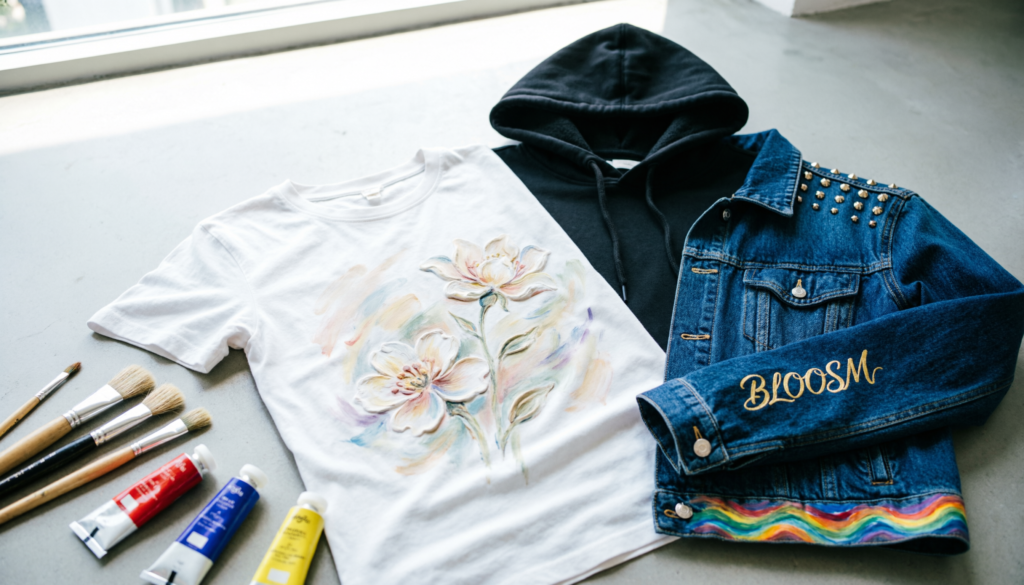
Artistic texture clothing turns an ordinary shirt, hoodie, or jacket into a distinctive piece of wearable art. Instead of relying on flat graphics alone, these designs use layered brushstrokes, raised paint, distressed finishes, stitched details, splatter effects, and mixed patterns to create depth.
The best artistic texture clothing ideas balance creativity with wearability. A design should look impressive without feeling stiff, overloaded, or difficult to style. From subtle painted accents to detailed denim artwork, the right concept can reflect your personality, mark a special occasion, or create a memorable personalized gift.
Short Answer
Artistic texture clothing combines fabric paint, layered patterns, lettering, symbols, and tactile effects to create clothing with visual depth. Popular options include abstract brushstrokes, raised botanical designs, textured calligraphy, distressed denim art, metallic details, and personalized names or dates.
Quick Tip
Before choosing a design, decide where you want the strongest visual focus. A single textured feature on the back, chest, sleeve, or pocket often looks more polished than covering every part of the garment.
Best 15 Artistic Texture Clothing Ideas to Inspire Your Next Custom Piece
These ideas range from simple textured shirt painting concepts to premium painted clothes designed as statement pieces.
1. Layered Abstract Brushstrokes
Layered abstract brushstrokes create movement through overlapping lines, blocks, curves, and imperfect paint marks. The artist can combine thick and thin strokes to make the surface feel dimensional.
This idea works especially well on:
- Oversized cotton T-shirts
- Boxy cropped shirts
- Sweatshirts
- Canvas jackets
- Denim overshirts
Choose two or three coordinated colors rather than using every shade available. A controlled palette gives the design a gallery-inspired appearance.
For a subtle look, place the brushstrokes near one shoulder or along the lower side seam. For a stronger statement, use a large composition across the back.
2. Raised Botanical Texture
Flowers, leaves, vines, and branches gain extra depth when painted with raised fabric medium or dimensional paint. Small ridges can follow the shape of petals or leaf veins, producing a lightly embossed effect.
Good botanical options include:
- Wildflowers for a relaxed, natural style
- Roses for a romantic or dramatic look
- Ferns for a modern organic design
- Cherry blossoms for a delicate composition
- Tropical leaves for bold summer clothing
- Lavender stems for understated elegance
Raised botanical artwork looks best when the texture remains selective. Excessively thick paint can make the garment uncomfortable and harder to wash.
3. Textured Calligraphy Shirt Design
Textured lettering combines handwritten words with brush marks, shadows, outlines, stitched effects, or metallic highlights. It offers more character than a standard printed slogan.
Possible wording includes:
- A meaningful one-word reminder
- A favorite short quote
- A family saying
- A personal motto
- Song-inspired wording that you have permission to reproduce
- Coordinates linked to a memorable location
Calligraphy font ideas range from flowing script to rough dry-brush lettering. The font should match the garment. Elegant script suits soft neutral shirts, while distressed lettering works well on hoodies and denim.
4. Stone and Marble Effect
A marble-inspired design uses flowing veins, soft color transitions, and irregular lines to imitate natural stone. Artists can create a polished effect with white, gray, black, beige, gold, or muted blue.
This style suits people who want fabric texture clothing designs that feel refined rather than playful. It works particularly well on:
- Black sweatshirts with white and gold veins
- Cream shirts with beige and brown marbling
- Navy hoodies with pale blue and silver lines
- White jackets with gray mineral patterns
A partial marble panel on the pocket, sleeve, or back yoke can look more wearable than a full-garment treatment.
5. Ocean Wave Texture
Textured waves combine curved brushstrokes, foam-like dots, layered blue tones, and raised white details. The result can look calm and minimalist or energetic and dramatic.
Consider adding:
- A small moon above the waves
- A sunrise in muted orange
- Coordinates of a favorite beach
- A tiny boat silhouette
- A short coastal phrase
- Fine sand-colored speckles near the hem
This design works on T-shirts, hoodies, tote bags, and denim jackets. Dark blue garments create a night-ocean effect, while white and cream fabrics feel lighter and more summery.
6. Metallic Foil and Paint Accents
Metallic details add a premium finish without requiring a complicated illustration. Gold, silver, copper, bronze, and pearl accents can highlight shapes, words, edges, or abstract textures.
Strong combinations include:
| Base Garment | Main Design Color | Metallic Accent | Overall Effect |
|---|---|---|---|
| Black hoodie | Charcoal gray | Silver | Modern and urban |
| Cream T-shirt | Terracotta | Gold | Warm and artistic |
| Dark denim jacket | White | Copper | Rustic and premium |
| Navy sweatshirt | Pale blue | Silver | Cool and polished |
| Burgundy shirt | Soft pink | Gold | Rich and romantic |
Metallic paint should support the main design rather than dominate it. Small reflective details usually look more sophisticated than large solid metallic areas.
7. Distressed Graffiti Texture
Graffiti-inspired clothing uses layered letters, paint drips, rough outlines, stamps, scratches, and spray-style marks. It suits streetwear, music-inspired outfits, and bold personalized pieces.
A successful graffiti design often includes:
- One main word or name
- Two supporting colors
- A few controlled paint drips
- Rough-edged blocks or circles
- Small handwritten symbols
- A limited number of background marks
The design may look spontaneous, but good composition still matters. Too many unrelated elements can make the garment appear messy rather than artistic.
8. Textured Landscape Scene
A landscape can feel more tactile through layered mountains, thick clouds, rippled water, tree silhouettes, or textured fields. The artist does not need to create a highly realistic painting. Simplified shapes often work better on clothing.
Popular scenes include:
- Mountain ranges at sunset
- Pine forests under a moon
- Desert landscapes with a rising sun
- Rolling hills and wildflowers
- Coastal cliffs
- City skylines with textured skies
The back of a denim jacket provides enough space for detailed painted clothes designs, while a small chest landscape works well on shirts and sweatshirts.
9. Celestial Constellation Design
Stars, moons, planets, and constellations suit textured clothing because they can combine fine dots, raised outlines, metallic details, and soft blended backgrounds.
Personalization options include:
- A zodiac constellation
- The night sky from a meaningful date
- Initials hidden among the stars
- A moon phase linked to a birthday
- Coordinates placed beneath the artwork
- A short phrase written along an orbit line
Navy, black, charcoal, and deep purple provide strong bases. Gold and silver create a polished celestial look, while white and pale blue feel softer.
10. Cracked Paint and Vintage Texture
A cracked or weathered finish gives clothing the appearance of an aged poster, vintage sign, or well-worn artwork. This effect can work with numbers, sports-inspired graphics, classic lettering, or faded symbols.
It looks especially convincing on:
- Washed black T-shirts
- Faded hoodies
- Distressed denim
- Vintage-style sweatshirts
- Heavy cotton overshirts
The goal is controlled imperfection. Random cracking without a clear composition may simply look damaged, so the aged effect should support a deliberate graphic.
11. Textured Animal Illustration
Animals can be represented through layered fur strokes, feather marks, scales, spots, or geometric texture. The design may feature a realistic portrait, a simplified silhouette, or a symbolic animal.
Popular options include:
- A wolf with layered fur
- A tiger with textured stripes
- A butterfly with raised wing details
- A koi fish with metallic scales
- A bird with patterned feathers
- A pet portrait with expressive brushwork
Pet portraits make particularly meaningful personalized clothing gifts. A small name or date can be added below the illustration without distracting from the artwork.
12. Patchwork-Inspired Painted Design
A painted patchwork effect imitates stitched fabric pieces through blocks of color, patterned sections, faux seams, and textured borders. It creates the look of mixed materials without adding heavy physical patches.
Pattern options include:
- Checks
- Florals
- Stripes
- Dots
- Geometric shapes
- Miniature symbols
- Handwritten words
This style works well on pockets, elbows, sleeves, and jacket panels. It can also refresh an older garment by turning faded or marked areas into intentional design features.
13. Topographic Line Art
Topographic designs use curved contour lines inspired by maps and landscapes. The repeated lines create texture even when the paint remains relatively flat.
You can personalize this idea with:
- Coordinates
- A hometown name
- A hiking destination
- A mountain elevation
- A travel date
- A compass symbol
Topographic artwork suits minimalist streetwear because it appears detailed without using many colors. White lines on black, tan lines on olive, or dark brown lines on cream all work well.
14. Embroidery-Look Fabric Painting
Paint can imitate embroidery through short repeated strokes, dotted borders, crossed lines, and shaded thread-like details. This approach creates the appearance of hand stitching without adding the weight or cost of dense embroidery.
Suitable motifs include:
- Small flowers
- Initials
- Folk-inspired borders
- Hearts
- Stars
- Insects
- Tiny food illustrations
- Decorative sleeve patterns
This technique works best for smaller designs. Large areas of painted faux stitching may become visually busy.
15. Mixed-Media Wearable Art
Mixed-media clothing combines more than one technique, such as fabric paint, stitching, appliqué, beads, patches, or controlled distressing. It offers the greatest creative freedom and can produce true luxury wearable art.
A mixed-media denim jacket might include:
- A painted floral back panel
- Stitched outlines around selected leaves
- Metallic paint on flower centers
- A small name on the collar
- Fabric patches on the elbows
- Hand-painted symbols near the cuffs
Because mixed-media pieces require careful planning, they usually cost more and need gentler care. They work best as occasional statement garments rather than everyday basics.
Simple Artistic Texture Clothing Ideas for Beginners and First-Time Buyers
A first custom garment does not need a complex full-back illustration. Simple designs often look cleaner, cost less, and remain easier to style.
Beginner-friendly fabric painting ideas include:
- Textured initials on the pocket: Add raised outlines, small dots, or a shadow effect around one or two letters.
- A single brushstroke across the chest: Use one main color with a smaller metallic or contrasting accent.
- Mini flowers along the sleeve: Place a few small blooms near the cuff instead of covering the entire arm.
- A painted collar edge: Add a thin pattern, vine, or line around the collar.
- A small abstract corner design: Position overlapping shapes near the lower hem.
- A textured heart or star: Use layered paint, stippling, or fine outlines to add depth.
- One short word on the back: Combine simple lettering with a dry-brush shadow.
First-time buyers should choose a garment they already enjoy wearing. A striking design will not help if the fit, neckline, fabric weight, or color feels uncomfortable.
Premium and Detailed Designs for a Statement Look
Premium hand-painted clothing usually involves more time, better materials, a stronger composition, and finer finishing. The price reflects more than the size of the artwork. Detailed preparation and proper curing also matter.
Features that can make a design feel premium include:
- Carefully blended color transitions
- Custom sketches created for one client
- Layered paint with controlled texture
- Detailed line work
- Hand-painted lettering
- Metallic or pearl highlights
- Subtle stitched or appliqué details
- Artwork that follows the garment’s shape
- Finished edges without accidental smudges
- Durable fabric paint suited to the material
Luxury wearable art often uses restraint. A single highly detailed panel may look more valuable than a crowded garment filled with unrelated effects.
Good Placements for Premium Artwork
Consider these locations when planning a detailed custom piece:
- Full back: Best for landscapes, portraits, animals, and large botanical scenes.
- Back shoulder panel: Good for wings, florals, celestial designs, and abstract compositions.
- One sleeve: Suitable for vines, lettering, flames, waves, or repeating symbols.
- Front chest and sleeve combination: Creates balance without covering the whole garment.
- Jacket panels: Allows separate but connected artwork across seams.
- Pocket and collar details: Adds quiet personalization to a polished design.
Artistic Texture Clothing Ideas by Garment Type
Different garments require different design choices. Fabric type, stretch, thickness, seams, and washing habits all influence the final result.
Painted Shirt Ideas
Cotton T-shirts provide a smooth, familiar surface for fabric paint. They work well for:
- Abstract brushstrokes
- Quotes and calligraphy
- Small botanical illustrations
- Celestial patterns
- Minimal landscapes
- Names and dates
Avoid extremely heavy paint on thin shirts because it may pull the fabric downward or create a stiff patch.
Painted Hoodie Ideas
Hoodies suit bold streetwear designs, raised lettering, graffiti textures, and large back artwork. Their thicker fabric can support slightly heavier paint applications.
Useful placements include:
- Across the upper back
- Down one sleeve
- Around the hood edge
- Above the front pocket
- On the pocket itself
- Along the side panels
The artist should account for folds and seams, especially near the pouch pocket and underarms.
Painted Denim Jacket Ideas
Denim is one of the best surfaces for detailed painted clothing. Its structure supports landscapes, portraits, lettering, distressed textures, and mixed-media work.
A denim jacket can feature:
- A large artwork inside the back panel
- Painted flowers around existing seams
- Personalized collar details
- Sleeve symbols
- Small illustrations above the pockets
- Coordinated designs on the cuffs
Light denim suits dark outlines and bright color, while black denim creates a strong base for white, silver, neon, or metallic paint.
Painted Jeans
Painted jeans usually look best with artwork concentrated in a few areas. Strong placements include:
- One thigh
- A back pocket
- The outer leg
- The lower hem
- One knee panel
Designs must remain flexible around the knees and hips. Thick paint in high-movement areas may crack faster.
Painted Tote Bags
Tote bags allow experimentation without the fit concerns of clothing. They suit beginners, gifts, small business designs, and detailed illustrations.
Because bags often carry weight and rub against surfaces, the artist should use durable paint and cure it properly.
Color Palettes, Fonts, Patterns, and Texture Options
The right combination of color, lettering, and texture can make a simple concept feel intentional and complete.
Color Ideas for Painted Clothes
Use the garment color as part of the design rather than treating it as an empty background.
| Style | Base Color | Suggested Palette |
|---|---|---|
| Minimalist | White, cream, gray | Black, taupe, muted blue |
| Earthy | Olive, tan, brown | Rust, cream, forest green |
| Romantic | Blush, cream, burgundy | Rose, gold, deep red |
| Coastal | White, navy, pale blue | Aqua, sand, soft coral |
| Streetwear | Black, charcoal, washed gray | White, red, silver, neon accents |
| Vintage | Faded black, mustard, brown | Cream, brick red, dusty blue |
| Celestial | Navy, black, purple | Silver, white, pale blue, gold |
| Playful | Bright white or pastel | Pink, orange, teal, yellow |
Limit the design to a main color, one or two supporting shades, and an optional accent. Too many competing colors can weaken the focal point.
Calligraphy Font Ideas
Choose a lettering style that supports the message:
- Modern script: Suitable for names, romantic phrases, and elegant gifts.
- Dry-brush lettering: Works well for expressive words and abstract designs.
- Bold block letters: Best for streetwear, sports-inspired designs, and initials.
- Serif lettering: Creates a classic, literary, or vintage look.
- Handwritten print: Feels casual and personal.
- Gothic lettering: Suits dramatic dark clothing when used carefully.
- Retro lettering: Pairs well with faded colors and vintage textures.
Readability matters. Extremely decorative fonts may look attractive in a sketch but become difficult to understand on folded fabric.
Fabric Painting Patterns
Patterns can fill empty space, frame a main design, or create texture without a large illustration.
Useful pattern options include:
- Checkerboards
- Repeated dots
- Wavy lines
- Geometric grids
- Floral borders
- Stars
- Mini hearts
- Broken stripes
- Contour lines
- Stamped circles
- Crosshatching
- Speckled paint
Repeating patterns should follow the garment’s structure. A border along a cuff or pocket often looks more natural than a pattern ending randomly.
Texture Techniques
Artists can create depth through several methods:
- Dry brushing: Produces rough, broken strokes with visible fabric underneath.
- Stippling: Uses repeated dots to build shading and texture.
- Layering: Places translucent or opaque colors over one another.
- Palette-style application: Creates thicker, irregular paint marks.
- Sponging: Forms cloud-like, stone-like, or distressed surfaces.
- Splattering: Adds energetic spots and fine droplets.
- Raised medium: Produces dimensional outlines and details.
- Faux stitching: Uses repeated short marks to imitate thread.
- Crackle effects: Creates a weathered, vintage surface.
- Metallic highlighting: Adds reflective detail to selected areas.
Personalized Ideas With Names, Quotes, Dates, and Symbols
Personalization makes artistic clothing feel connected to a person, place, memory, or relationship. The strongest personalized painted clothes use details that have meaning without overcrowding the design.
Name Painting Ideas
A name can become part of the artwork rather than sitting beneath it like a label.
Try these approaches:
- Write the name inside a flowing brushstroke.
- Hide initials among flowers or leaves.
- Place a surname across the back in distressed lettering.
- Add a small first name above a pocket.
- Turn each letter into part of a geometric pattern.
- Use a signature-style name near the cuff.
- Combine two initials inside a simple symbol.
Quote Shirt Ideas
Short quotes work better than long paragraphs. Aim for words that remain readable from a natural viewing distance.
Good formats include:
- One strong line across the back
- A small phrase near the heart
- Words divided between two sleeves
- A vertical quote along the side seam
- A phrase curved around an illustration
- Tiny wording hidden inside a larger design
Check spelling, punctuation, capitalization, and quote ownership before the artist starts painting.
Custom Date Shirt Ideas
Dates can mark:
- Birthdays
- Anniversaries
- Graduations
- Engagements
- Weddings
- Travel memories
- Personal achievements
- The start of a business or creative project
Dates can appear in standard numbers, Roman numerals, handwritten script, or coordinates paired with the year.
Meaningful Symbols
Symbols provide personalization without using much text. Options include:
- A birth flower
- A zodiac symbol
- A family crest-inspired motif
- A favorite animal
- A compass
- A moon phase
- A small house outline
- A mountain silhouette
- A music symbol
- A meaningful number
Ask the artist to integrate the symbol into the main design so it feels intentional rather than added at the last minute.
Gift and Occasion-Based Artistic Clothing Ideas
Custom-painted clothing can make a thoughtful gift because it combines practical use with personal meaning.
Birthday Shirt Ideas
Personalize a birthday shirt with:
- The recipient’s name
- Birth year
- Birth flower
- Zodiac constellation
- Favorite colors
- A hobby-related symbol
- A private joke
- A small illustration of a pet
Avoid printing the person’s exact age unless you know they would appreciate it.
Personalized Clothing Gifts
Suitable recipients include:
- Partners
- Siblings
- Parents
- Close friends
- Graduates
- Teachers
- Artists
- Musicians
- Travelers
- New business owners
Choose a design connected to the recipient’s interests rather than selecting artwork based only on current trends.
Couple Painted Shirts
Couple designs do not need to match exactly. Coordinated pieces often look more stylish.
Ideas include:
- Two halves of one abstract image
- Coordinated constellations
- Matching color palettes with different symbols
- Shared coordinates
- Complementary words
- One date shown in different formats
- Connected wave or landscape scenes
- Initials hidden inside separate designs
Each shirt should still work as an individual garment.
Graduation Clothing
A graduation jacket or hoodie may include:
- Graduation year
- School colors
- A subject-related symbol
- The graduate’s name
- A short motivational phrase
- A small campus illustration
- Coordinates of the school
- Friends’ signatures in fabric-safe ink
Leave enough empty space so the garment does not resemble a crowded event poster.
Anniversary and Wedding Gifts
For anniversaries or weddings, consider:
- Wedding flowers
- Vows reduced to a short phrase
- The wedding date
- Venue coordinates
- Two initials
- A line drawing of the venue
- A shared symbol
- A subtle metallic accent
Neutral colors usually make commemorative pieces easier to wear after the occasion.
How to Choose the Right Clothes Painting Design for Your Style
A visually impressive idea may not suit every wardrobe. Use this process to choose a design you will genuinely wear.
1. Review Your Existing Clothes
Look at the colors, fits, and styles you wear most often. A custom garment should work with pieces you already own.
Ask yourself:
- Do I prefer minimal or bold clothing?
- Do I wear bright colors or neutrals?
- Would I choose a front design or a back design?
- Do I like readable quotes or visual artwork?
- Will I wear this casually, socially, or for special events?
2. Choose the Garment Before Finalizing the Art
The same design will look different on a fitted shirt, oversized hoodie, or structured jacket. Select the garment first so the artwork can match its proportions.
3. Pick One Main Focal Point
Decide what viewers should notice first. It may be a name, flower, animal, quote, landscape, or abstract shape.
Supporting textures should guide attention toward that focal point.
4. Match the Detail Level to Your Lifestyle
Detailed artwork suits occasional pieces, while simpler designs tend to handle frequent wear more easily.
For an everyday garment, consider:
- Smaller artwork
- Flexible paint application
- Limited raised texture
- Darker colors that hide minor wear
- Designs away from high-friction areas
5. Consider How the Clothing Moves
Sleeves, knees, elbows, pockets, and waistbands bend repeatedly. Heavy texture in these areas may wear faster.
Place thicker effects on stable areas such as:
- The upper back
- Chest
- Jacket panels
- Outer thigh
- Shoulder area
- Tote bag front
6. Set a Realistic Budget
Cost may depend on:
- Garment price
- Artwork size
- Number of colors
- Level of detail
- Personal sketching time
- Materials
- Mixed-media elements
- Front and back coverage
- Artist experience
- Shipping
Ask what the quoted price includes before approving the order.
How to Order or Brief a Custom Clothing Artist
A clear custom clothing artist brief reduces misunderstandings and helps the artist create a result that matches your expectations.
Include These Details in Your Brief
Provide:
- Garment type
- Garment size
- Base color
- Fabric composition
- Preferred design placement
- Main subject
- Exact wording
- Color preferences
- Style references
- Desired texture level
- Deadline
- Budget range
- Shipping location
Use reference images to explain mood, composition, or texture. Do not ask an artist to copy another creator’s original work exactly.
Describe What You Like About Each Reference
Instead of sending several images without explanation, identify the useful element in each one.
For example:
- “I like the rough brush texture in this image.”
- “I prefer the lettering placement, but not the font.”
- “I like this muted color palette.”
- “I want a similar amount of empty space.”
- “I prefer small metallic details rather than a fully metallic design.”
Clear feedback allows the artist to create an original piece that reflects your preferences.
Confirm the Design Before Painting Begins
Ask whether the process includes:
- A rough sketch
- A digital mockup
- One or more revision rounds
- Final color approval
- Garment approval
- Progress photos
- Care instructions
Some handmade variation is normal. A mockup can guide placement and scale, but the final painted texture may not look identical to a digital preview.
Questions to Ask Before Ordering
Ask the artist:
- What type of fabric paint do you use?
- Is the paint flexible after curing?
- Can the garment be machine washed?
- How long does production take?
- Do you provide the garment or paint one supplied by the customer?
- Can the design be revised before painting?
- Is the artwork one of a kind?
- How should the item be stored?
- What happens if the garment size does not fit?
- Are custom orders refundable?
Read the artist’s policies carefully because personalized work often has limited return options.
Common Mistakes to Avoid
A few planning errors can reduce the comfort, durability, or visual quality of custom-painted clothes.
Choosing Detail That Is Too Small
Tiny lettering and intricate lines may lose clarity on textured fabric. The artist may need to simplify the design to keep it readable.
Using Too Many Unrelated Ideas
A name, quote, date, animal, landscape, and several patterns may not belong in one composition. Select one main concept and a few supporting details.
Ignoring Fabric Stretch
Stretchy shirts require flexible materials and careful paint application. A design that looks smooth while flat may crack when stretched.
Placing Thick Paint on High-Movement Areas
Heavy texture on elbows, knees, or waistbands may experience more friction and bending.
Approving Wording Without Checking It
Review every letter, number, date, and coordinate. Once painted and cured, corrections may be difficult.
Choosing a Trend That Does Not Match Your Wardrobe
A highly fashionable design may remain unworn if it does not work with your usual clothing. Personal style matters more than short-term popularity.
Washing the Garment Too Soon
Fabric paint usually needs time to cure fully. Follow the artist’s instructions before the first wash.
Care Tips for Keeping the Design Fresh
Proper care helps protect color, texture, and flexibility. Always follow the artist’s specific instructions because paint formulas and fabrics vary.
How to Wash Hand-Painted Clothes
A cautious washing routine usually includes these steps:
- Wait until the paint has fully cured. Do not wash the garment immediately after receiving it.
- Turn the clothing inside out. This reduces friction against the painted surface.
- Use cold or cool water. High heat may weaken paint and accelerate fading.
- Choose a gentle cycle. Hand washing may be better for detailed or mixed-media pieces.
- Use mild detergent. Avoid strong bleach and aggressive stain removers.
- Wash with similar lightweight items. Heavy jeans, towels, and garments with exposed zippers can rub against the artwork.
- Air-dry when possible. High dryer heat may shorten the life of the design.
- Iron from the reverse side. Place a protective cloth between the iron and the garment if ironing is allowed.
Fabric Paint Durability
Well-applied, properly cured fabric paint can remain attractive through repeated wear, but no hand-painted garment stays completely unchanged forever.
Durability depends on:
- Paint quality
- Fabric type
- Surface preparation
- Paint thickness
- Curing method
- Washing frequency
- Water temperature
- Friction
- Sun exposure
- Storage
Slight fading or softening may develop over time, especially on frequently worn items. This natural aging can complement distressed or vintage designs.
Storing Painted Clothing
Store the garment in a cool, dry place. Avoid folding a heavily textured area against itself for long periods.
For premium pieces:
- Hang structured jackets on padded hangers.
- Place acid-free tissue between painted folds.
- Avoid stacking heavy clothing on raised artwork.
- Keep metallic details away from prolonged moisture.
- Do not store the garment in direct sunlight.
Styling Artistic Texture Clothing
A custom-painted garment should remain the focus of the outfit. Simple supporting pieces usually create the strongest result.
Styling a Painted T-Shirt
Pair it with:
- Straight-leg jeans
- Neutral trousers
- A plain denim overshirt
- Simple sneakers
- Minimal jewelry
Styling a Painted Hoodie
Try:
- Solid joggers
- Black jeans
- Neutral cargo pants
- A plain cap
- Clean low-profile shoes
Styling a Painted Denim Jacket
Wear it over:
- A plain white or black shirt
- A fitted knit dress
- A monochrome outfit
- Neutral trousers
- A simple hoodie
Avoid combining several bold prints unless intentional pattern mixing is part of your personal style.
Conclusion
The strongest artistic texture clothing ideas combine a clear concept, suitable materials, thoughtful placement, and a color palette that matches the wearer’s style. You can keep the design simple with textured initials or create a premium statement piece with layered landscapes, calligraphy, metallic accents, or mixed-media artwork.
Choose a garment you already enjoy wearing, focus on one main idea, and give the artist a detailed brief. With proper care, custom-painted clothing can remain a meaningful and highly wearable part of your wardrobe.
FAQs About Artistic Texture Clothing Ideas
What are artistic texture clothing ideas?
Artistic texture clothing ideas use layered paint, raised details, rough brushwork, patterns, stitching effects, or mixed materials to add visual and physical depth to clothing.
What is the easiest textured shirt painting idea for a beginner?
A single brushstroke, small name, simple flower, abstract corner design, or textured pocket detail is usually easier than a large portrait or full-back scene.
Which fabric works best for painted clothing?
Cotton, denim, canvas, and sturdy cotton blends often provide reliable surfaces. Stretchy or water-resistant fabrics may require special preparation and flexible paint.
Can hand-painted clothes go in a washing machine?
Many can, but they should usually be turned inside out and washed in cold water on a gentle cycle. Always follow the artist’s care instructions.
Does fabric paint crack over time?
It can crack if applied too thickly, placed on high-stretch areas, cured incorrectly, or exposed to excessive heat. Flexible fabric paint and proper care improve durability.
How much should a custom-painted garment cost?
Pricing varies based on the garment, artwork size, detail, materials, artist experience, and production time. A small design may cost far less than a one-of-a-kind mixed-media jacket.
Can I send my own clothing to a custom artist?
Some artists accept customer-supplied garments, while others prefer to source clothing themselves. Confirm fabric requirements, sizing, shipping responsibility, and damage policies first.
Are painted clothes a good personalized gift?
Yes. Names, dates, birth flowers, pet portraits, coordinates, and meaningful symbols can make the garment feel personal without making it difficult to wear.