
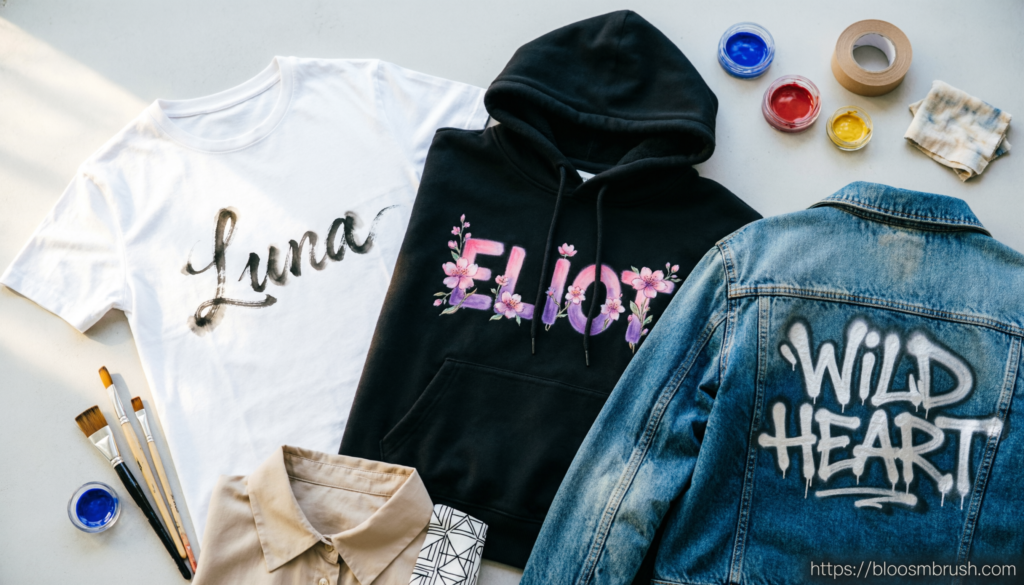
Name painting on clothes turns an ordinary garment into something personal, expressive, and memorable. A hand-painted name can feel playful, elegant, artistic, romantic, or bold depending on the lettering, colors, symbols, and clothing style you choose.
These name painting ideas on clothes cover simple shirts, premium jackets, personalized gifts, couple designs, children’s clothing, and statement pieces. You will also learn how to select fonts, colors, layouts, and fabric types that suit your style.
Short Answer
The best name painting design combines readable lettering with colors and details that suit the garment. Beginners can start with a simple outlined name on a cotton shirt, while more detailed designs may include calligraphy, flowers, dates, portraits, symbols, or painted backgrounds.
Quick Tip
Before painting or ordering a custom piece, place a paper version of the name on the garment. This helps you check the size, position, and overall balance before the permanent design begins.
Best 20 Name Painting Ideas on Clothes to Inspire Your Next Custom Piece
The following ideas can work on T-shirts, hoodies, denim jackets, sweatshirts, tote bags, children’s clothing, and other fabric items.
1. Minimalist Name Across the Chest
A clean name placed across the center of a shirt offers a simple and modern look. Use one solid color and a clear handwritten or sans-serif font.
This design works especially well on neutral shirts in white, black, gray, beige, or navy.
Best choices include:
- White lettering on a black shirt
- Black lettering on a cream shirt
- Navy lettering on a light gray sweatshirt
- Soft brown lettering on a beige hoodie
Keep the lettering medium-sized so it looks intentional without taking over the entire garment.
2. Small Name Over the Heart
Paint the name in a small size on the upper-left chest, similar to a subtle logo. This placement feels polished and works well for everyday clothing.
You can add:
- A tiny heart
- A short underline
- A small star
- A birth flower
- A simple crown
- A meaningful initial
This is one of the easiest name painting ideas for people who prefer understated personalized clothing.
3. Oversized Name Across the Back
An oversized name painted across the back creates a strong statement. It works particularly well on hoodies, denim jackets, and oversized shirts.
Choose bold block letters, graffiti lettering, or thick brush lettering. Add shadows or outlines to make the name more visible from a distance.
For a balanced design, keep the front simple with a small initial, symbol, or short word.
4. Floral Name Design
Combine a painted name with flowers that wrap around, underline, or grow through the letters. The flowers can represent personality, birth month, or a special memory.
Popular floral options include:
- Roses for love and romance
- Daisies for a cheerful style
- Lavender for a soft, calming look
- Sunflowers for warmth and positivity
- Cherry blossoms for a delicate finish
- Wildflowers for a relaxed, natural design
A floral name design looks especially attractive on white shirts, pastel hoodies, and light denim jackets.
5. Graffiti Name Shirt
Graffiti lettering creates an energetic, urban look. Use thick outlines, overlapping colors, paint splashes, arrows, stars, or bubble letters.
A strong graffiti palette might include:
- Black, white, and red
- Purple, blue, and turquoise
- Neon green with black outlines
- Orange, yellow, and dark blue
- Pink, silver, and charcoal
This style suits streetwear shirts, hoodies, varsity jackets, and denim pieces.
6. Calligraphy Name Painting
Calligraphy gives a personalized garment an elegant and artistic appearance. Flowing strokes, long letter extensions, and decorative flourishes can make even a short name feel luxurious.
Popular calligraphy styles include:
- Modern brush script
- Classic cursive
- Gothic lettering
- Monoline calligraphy
- Vintage sign-painting script
- Decorative signature lettering
A calligraphy name shirt works beautifully for birthdays, bridal events, anniversaries, and personalized gifts.
7. Name Inside a Heart
Paint the name inside a large heart or place it along the heart’s outline. The heart can be solid, sketched, floral, stitched, or made from smaller symbols.
This design suits:
- Couple shirts
- Parent and child sets
- Friendship gifts
- Anniversary clothing
- Valentine’s Day outfits
- Memorial designs
For a less romantic version, replace the traditional heart with an anatomical heart, broken-heart illustration, or abstract heart shape.
8. Name with a Crown
A crown above a name creates a confident and playful design. It works well for children’s birthday shirts, team clothing, family events, and bold fashion pieces.
You can use:
- A small gold crown above the first letter
- A detailed royal crown over the full name
- A simple line-art crown
- A colorful cartoon crown
- A crown combined with stars or gems
Gold, silver, white, and metallic fabric paints work particularly well for crown details.
9. Name with Birth Date or Special Year
Add a meaningful date below the name to create a more personal design. The date might represent a birthday, wedding, graduation, friendship anniversary, business launch, or another milestone.
Possible layouts include:
- Name on top, date below
- Initials separated by a date
- Name written in an arch above the year
- Roman numerals under a signature-style name
- A small date placed on the sleeve
Keep the date smaller than the name so the visual hierarchy remains clear.
10. Name with a Favorite Quote
Pair a painted name with a short quote that reflects the wearer’s personality. The quote can appear below the name, around it, on the sleeve, or across the back.
Examples include:
- “Stay curious”
- “Made with courage”
- “Create your own path”
- “Choose joy”
- “Keep going”
- “Born to explore”
- “Dream in color”
Avoid adding a long paragraph. A short line usually looks cleaner and remains easy to read.
11. Name Formed with Leaves or Vines
Instead of painting ordinary letters, shape the name with leaves, branches, vines, or natural curves. This creates a softer and more artistic result.
You can also place vines around the first and last letters. Green, sage, olive, brown, cream, and muted gold create a nature-inspired palette.
This idea works well on:
- Linen shirts
- Cotton sweatshirts
- Canvas jackets
- Tote bags
- Earth-toned hoodies
- Children’s clothing
12. Watercolor Name Design
A watercolor background creates soft movement behind the name. Blend two or three colors, then paint the lettering over the dry background in white, black, or metallic paint.
Popular combinations include:
- Pink, peach, and lavender
- Blue, turquoise, and purple
- Yellow, orange, and coral
- Green, teal, and navy
- Gray, silver, and soft blue
The watercolor effect should look controlled rather than muddy. Leave some open fabric visible around the colors.
13. Name with Stars and Constellations
Turn the name into a night-sky design using stars, moons, planets, and constellation lines. You can also create a custom constellation around the letters.
This design works particularly well on black, navy, charcoal, or deep purple fabric.
Consider adding:
- A zodiac constellation
- The moon phase from a special date
- Metallic silver stars
- Glow-in-the-dark fabric paint
- A small planet beside the name
- A shooting star under the lettering
This style can feel dreamy, personal, and sophisticated without becoming overly decorative.
14. Split Name Across Two Sleeves
Paint one part of the name or phrase on each sleeve. When the wearer brings both arms together, the complete design becomes visible.
You might split:
- A first and last name
- Two initials
- A couple’s names
- “Best” and “Friends”
- A name and meaningful date
- Two halves of a symbol
This placement gives hoodies and long-sleeve shirts a more creative, interactive look.
15. Name Hidden Inside an Abstract Painting
Create an abstract painted area using brushstrokes, geometric shapes, drips, or color blocks, then weave the name into the composition.
The name can be:
- Clearly visible in contrasting paint
- Partly hidden between shapes
- Written in negative space
- Repeated faintly in the background
- Broken into separate letters
- Layered over textured brushwork
Abstract name painting works best for people who want wearable art rather than a traditional personalized shirt.
16. Name with a Cartoon or Character Illustration
Pair the name with a small original cartoon, animal, hobby symbol, or playful character. The illustration should reflect the wearer’s interests rather than overpower the lettering.
Ideas include:
- A skateboard beside the name
- A cat sitting on the first letter
- A book under the name
- A soccer ball replacing one letter
- A paintbrush forming the underline
- A dinosaur for a child’s shirt
- A small coffee cup beside a nickname
Use original artwork or properly licensed characters when creating clothing for sale.
17. Embroidery-Effect Painted Name
Use fabric paint to imitate the look of embroidery. Add small painted stitches, thread-like lines, and shaded edges around the letters.
This technique offers the visual texture of stitching without using an embroidery machine. It looks especially effective with floral lettering and vintage-style designs.
Choose warm, slightly muted colors such as:
- Burgundy
- Mustard
- Forest green
- Dusty pink
- Cream
- Denim blue
Keep the painted “stitches” consistent in size to make the effect convincing.
18. Monogram and Full Name Combination
Create a large monogram using the wearer’s initials, then add the full name in smaller lettering across or beneath it.
This format feels polished and works well for:
- Family shirts
- Bridal party clothing
- Business uniforms
- Graduation gifts
- Personalized jackets
- Club or team apparel
A serif monogram paired with a simple sans-serif name creates an attractive contrast.
19. Couple Name Painting Design
Create coordinating shirts with names, initials, dates, or connected illustrations. The designs should feel related without needing to look identical.
Possible couple painted shirt ideas include:
- One name on each shirt with a shared date
- Matching initials inside small hearts
- Two halves of the same illustration
- “Est.” followed by an anniversary year
- Coordinating sun and moon designs
- A shared quote split between two shirts
Choose designs that still look complete when each person wears the shirt separately.
20. Family Name Jacket
Paint a family name across the back of a denim or canvas jacket. Add smaller first names, an established year, hometown, family symbol, or meaningful flower.
A typical layout might include:
- Small symbol at the top
- Large family name in the center
- “Established” year below
- Decorative leaves or stars around the lettering
This design can become a meaningful gift for reunions, anniversaries, weddings, or new parents.
Quick Comparison of Name Painting Styles
| Design Style | Best Clothing Type | Skill Level | Overall Look |
|---|---|---|---|
| Minimal chest name | T-shirts and sweatshirts | Beginner | Clean and modern |
| Calligraphy lettering | Shirts, hoodies, jackets | Intermediate | Elegant and artistic |
| Graffiti name | Hoodies and streetwear shirts | Intermediate | Bold and energetic |
| Floral name | Shirts and denim jackets | Intermediate | Soft and decorative |
| Watercolor background | Light cotton clothing | Intermediate | Creative and colorful |
| Abstract name art | Jackets and oversized shirts | Advanced | Contemporary and expressive |
| Monogram design | Jackets, uniforms, gifts | Intermediate | Polished and classic |
| Detailed family jacket | Denim and canvas jackets | Advanced | Personal and premium |
Simple Ideas for Beginners and First-Time Buyers
A complicated design is not always better. Simple painted clothes often look more polished because the lettering remains clear and the garment stays easy to style.
Easy Name Painting Ideas
Beginners can start with:
- One-color lettering: Paint the name in a single color using a stencil or lightly drawn guide.
- Outlined block letters: Create thick letters, then leave the center unpainted or fill it with a second color.
- Small pocket-area design: Use a short name or initials near the chest pocket.
- Simple underline: Add one curved brushstroke below the name for a finished look.
- Initial with a symbol: Combine one large initial with a heart, star, flower, or crown.
- Back-neck placement: Paint a small name just below the collar for a subtle detail.
Cotton shirts offer the easiest surface for first-time fabric painting. Choose a smooth, tightly woven fabric rather than a highly textured or stretchy material.
Beginner Fabric Painting Tips
For cleaner results:
- Wash and dry the garment before painting.
- Place cardboard inside the clothing to stop paint from bleeding through.
- Sketch the design lightly with tailor’s chalk or a washable fabric marker.
- Apply thin paint layers rather than one heavy coat.
- Let each layer dry before adding outlines or details.
- Follow the paint manufacturer’s instructions for heat-setting.
- Test the paint on scrap fabric before working on the final garment.
Avoid stretching the fabric while painting. Once it returns to its normal shape, stretched lettering may crack or appear distorted.
Premium and Detailed Designs for a Statement Look
Premium hand-painted clothing usually includes more than a name. It combines strong composition, refined lettering, layered color, detailed illustration, and thoughtful placement.
Detailed Painted Clothes Designs
A high-end custom design may feature:
- Hand-drawn calligraphy with controlled thick and thin strokes
- Realistic flowers, animals, portraits, or landscapes
- Layered shadows that make the letters appear raised
- Metallic highlights or pearl-effect paint
- Painted textures that imitate denim patches, embroidery, or gold leaf
- Artwork that continues across the back, shoulders, and sleeves
- A carefully planned color palette that suits the garment
Detailed work requires more time because the artist must prepare the surface, sketch the layout, build the colors gradually, and seal or heat-set the finished piece.
Creating a Luxury Wearable Art Look
For a more sophisticated result, limit the design to two or three main colors. Repeating a controlled palette throughout the lettering and illustrations makes the garment feel cohesive.
Luxury wearable art often uses:
- Black with gold or bronze
- Cream with deep brown
- Navy with silver
- Burgundy with muted pink
- Forest green with beige
- Charcoal with white and gray
The garment itself also matters. Heavy cotton hoodies, structured denim jackets, canvas overshirts, and quality sweatshirts usually support detailed artwork better than thin, low-cost fabric.
Name Painting Ideas by Clothing Type
Each garment has different painting areas, textures, and styling possibilities.
Painted Shirt Ideas
T-shirts provide a flat surface and suit most name design styles. Popular placements include:
- Center chest
- Upper-left chest
- Full back
- Lower hem
- One sleeve
- Around the neckline
- Vertical placement along one side
A short name can look good in large lettering, while a long name often suits a smaller script or curved layout.
Painted Hoodie Ideas
Hoodies offer more space and several separate areas for artwork.
Consider painting:
- A small name on the chest
- A large design across the back
- Initials on the hood
- A date on one sleeve
- A quote on the other sleeve
- Small symbols near the pocket
Avoid painting directly over thick seams or the front pocket edge unless the design intentionally uses those features.
Painted Denim Jacket Ideas
Denim jackets support bold, detailed, and long-lasting designs. The large back panel works well for family names, calligraphy, portraits, floral frames, and abstract art.
Other useful areas include:
- Shoulder panels
- Upper back yoke
- Cuffs
- Collar tips
- Chest pockets
- Lower side panels
Light denim suits dark and bright colors, while black denim looks striking with white, silver, gold, red, and neon paint.
Sweatshirts and Crewnecks
Crewneck sweatshirts suit clean, comfortable designs. Try a college-style name across the chest, a small signature near the collar, or a floral initial on the upper-left side.
Because sweatshirt fabric can absorb paint, artists may need a base layer before adding bright colors.
Tote Bags and Fabric Accessories
A personalized tote bag offers an easy alternative to clothing. It also works well for beginners because canvas is usually stable and easy to paint.
Names can be combined with:
- Books
- Flowers
- Coffee cups
- Art supplies
- Travel symbols
- Teacher-themed illustrations
- Pet portraits
Similar ideas can work on fabric caps, shoes, aprons, and small pouches, provided the paint suits the material.
Color Palettes, Fonts, Patterns, and Texture Options
The right lettering and color choices can transform a basic name into a complete design.
Color Ideas for Painted Clothes
Use contrast to keep the name readable.
| Garment Color | Recommended Paint Colors |
|---|---|
| White | Black, navy, red, green, purple, metallic gold |
| Black | White, silver, gold, neon shades, bright red |
| Gray | White, black, navy, burgundy, pastel pink |
| Beige or cream | Brown, forest green, black, rust, muted blue |
| Light blue denim | White, black, red, navy, yellow |
| Dark blue denim | White, cream, gold, coral, turquoise |
| Pastel fabric | White, charcoal, deep purple, dark green |
| Bright fabric | Black, white, or a darker version of the garment color |
Do not rely only on personal color preference. Consider how clearly the paint will show against the fabric.
Calligraphy Font Ideas
Different lettering styles create different moods:
- Brush script: Friendly, expressive, and suitable for casual fashion
- Classic cursive: Elegant and ideal for gifts or formal occasions
- Block lettering: Bold, readable, and suitable for streetwear
- Serif lettering: Traditional and polished
- Bubble letters: Playful and suitable for children or graffiti designs
- Gothic lettering: Dramatic and suitable for dark or alternative styles
- Signature lettering: Personal and minimal
- Retro lettering: Warm, nostalgic, and suitable for colorful designs
Readability matters most. Decorative letters should still allow people to recognize the name quickly.
Fabric Painting Patterns
Patterns can fill the letters or surround the name. Useful options include:
- Checkerboard
- Polka dots
- Stripes
- Leopard print
- Clouds
- Flames
- Marble texture
- Floral patterns
- Geometric shapes
- Stars and moons
Use one strong pattern rather than combining several unrelated ones.
Texture Options
Fabric paint can create visual texture through:
- Dry-brush strokes
- Raised paint details
- Metallic finishes
- Glitter accents
- Sponge-painted backgrounds
- Stippled dots
- Layered outlines
- Painted stitch marks
Raised and glitter paints may need extra care because thick details can catch, crack, or wear faster than flat paint.
Personalized Ideas with Names, Quotes, Dates, and Symbols
Personalized painted clothes feel more meaningful when every element has a reason to be included.
Combine a Name with a Meaningful Symbol
Symbols can communicate interests, memories, or personality traits without adding too much text.
Examples include:
- A mountain for someone who loves hiking
- A camera for a photographer
- A musical note for a musician
- A book for a reader or teacher
- A paw print for a pet owner
- A wave for someone who loves the ocean
- A butterfly for growth or change
- A compass for travel and direction
Place the symbol beside the name, replace one letter with it, or use it as part of the underline.
Add Dates Without Making the Design Look Crowded
A custom date shirt can mark:
- A birthday
- Wedding day
- Graduation
- Friendship anniversary
- Child’s birth
- Memorial date
- Business launch
- Travel milestone
Use a smaller font for the date. Roman numerals can create a formal look, while standard numbers feel clearer and more casual.
Use Nicknames and Personal Phrases
A nickname often feels more natural on casual clothing than a full legal name. You could also use a family phrase, shared joke, or short saying that has personal meaning.
Keep private jokes tasteful if the garment will be worn publicly. A design should still feel comfortable months or years later.
Gift and Occasion-Based Name Painting Ideas
Personalized painted clothing works well for events because it feels more thoughtful than a standard printed item.
Birthday Shirt Ideas
A birthday shirt can feature:
- The person’s name and age
- A birth year in retro lettering
- A crown above the name
- A favorite hobby or animal
- A zodiac sign or constellation
- A phrase such as “Birthday Crew”
- Coordinating family shirts
Children’s birthday shirts often suit bright colors and playful lettering. Adult birthday designs may look better with minimal fonts and a limited palette.
Personalized Clothing Gifts
Consider custom-painted clothing for:
- Graduations
- New parents
- Bridal parties
- Anniversaries
- Retirement
- Team celebrations
- Family reunions
- Holiday gifts
- Friendship milestones
Choose a garment the recipient already wears. Someone who rarely wears graphic T-shirts may prefer a small name on a hoodie, jacket, or tote bag.
Couple Painted Shirts
Matching couple shirts do not need to be identical. Coordinated colors, shared symbols, or connected phrases often look more stylish than exact copies.
Good options include:
- Initials with an anniversary date
- Two complementary illustrations
- Matching sleeve details
- Shared colors with different names
- A phrase divided between two shirts
- Sun and moon symbols
- Two locations connected by a line
Group and Family Clothing
For groups, keep one design element consistent while changing the individual names.
For example, every family member could have:
- The same lettering style
- The same back design
- A different first name
- A different small symbol
- A role such as “Mom,” “Dad,” or “Cousin”
- A shared family name and event date
This creates unity without making every garment completely identical.
How to Choose the Right Clothes Painting Design for Your Style
A good design should match the wearer, the garment, and the situations in which it will be worn.
Consider Your Everyday Style
Ask yourself which description feels most accurate:
- Minimal: Choose small lettering, neutral colors, and limited details.
- Romantic: Use calligraphy, flowers, hearts, or soft watercolor shades.
- Streetwear-inspired: Try graffiti letters, bold outlines, and oversized back designs.
- Artistic: Combine names with abstract brushwork, unusual layouts, or layered textures.
- Classic: Choose serif lettering, monograms, and balanced placement.
- Playful: Use bubble letters, cartoons, bright colors, and small symbols.
A design that matches your existing wardrobe will be easier to wear regularly.
Match the Design to the Name Length
Short names can handle:
- Large block letters
- Wide spacing
- Decorative frames
- Bold back placement
- Monograms
Long names often work better with:
- Smaller lettering
- Curved layouts
- Vertical placement
- Narrow calligraphy
- Initial-based designs
Do not squeeze a long name into a space designed for a short word. Adjust the scale and placement instead.
Think About Where You Will Wear It
A bold painted jacket may suit concerts, festivals, photoshoots, or creative events. A small chest design may work better for daily errands, casual workplaces, and relaxed social occasions.
The most useful personalized clothing fits naturally into the wearer’s real life.
Choose a Suitable Garment
Before finalizing a design, check:
- Fabric composition
- Stretch level
- Surface texture
- Garment color
- Available painting space
- Washing requirements
- Overall garment quality
Avoid investing in detailed artwork on clothing that already feels thin, damaged, or poorly shaped.
Common Mistakes to Avoid
Even a strong idea can lose impact if the planning or execution is weak.
Avoid these common problems:
- Choosing unreadable lettering: Highly decorative fonts may make the name difficult to recognize.
- Using too many colors: A crowded palette can make the design look inconsistent.
- Ignoring garment seams: Seams and pockets may interrupt lettering or detailed artwork.
- Making the design too small: Fine details can disappear from a normal viewing distance.
- Making every element equally bold: The name should remain the main focal point.
- Using unsuitable paint: Regular craft paint may stiffen, crack, or wash away.
- Skipping fabric preparation: Unwashed clothing may shrink after the design is completed.
- Copying protected artwork: Original or licensed artwork is safer, especially for commercial orders.
- Forgetting care requirements: Heavy washing and high heat can shorten the life of painted details.
How to Order or Brief a Custom Clothing Artist
A clear custom clothing artist brief reduces mistakes and helps the artist understand your expectations.
Information to Include in Your Brief
Provide the following details:
- The exact name or wording: Confirm spelling, capitalization, punctuation, and dates.
- Garment type: Specify whether it is a shirt, hoodie, jacket, sweatshirt, or another item.
- Garment color and size: These details affect placement and paint selection.
- Preferred design style: Mention calligraphy, graffiti, floral, minimalist, abstract, or another direction.
- Color palette: Share two or three preferred colors and any colors you dislike.
- Placement: Explain where the design should appear.
- Approximate size: Give measurements when possible.
- Symbols or illustrations: Describe any additional artwork you want.
- Reference images: Use references to communicate mood and layout, not to request direct copying.
- Deadline: State the date you need the completed garment.
- Budget: A clear range helps the artist recommend a realistic level of detail.
Sample Custom Painted Clothing Brief
“I would like the name ‘Amelia’ painted across the back of a light blue denim jacket. Please use elegant white calligraphy with small lavender flowers around the first and last letters. Add the date 06.14.2025 in smaller lettering beneath the name. I prefer a soft, refined look rather than bright colors or heavy glitter.”
A brief like this gives the artist direction while leaving room for professional judgment.
Questions to Ask Before Ordering
Ask the artist:
- Which type of fabric paint will you use?
- Will the design be heat-set or sealed?
- Can you paint on a garment I provide?
- Do you recommend washing the garment first?
- How should I wash and dry the finished item?
- Will you send a sketch before painting?
- How many revisions are included?
- Can you provide examples of similar work?
- What happens if the garment arrives damaged?
- Is the artwork intended for occasional or frequent wear?
Confirming these details protects both the buyer and the artist.
Care Tips for Keeping the Design Fresh
Proper care can help personalized painted clothes retain their color and shape.
How to Wash Hand-Painted Clothes
Follow the artist’s or paint manufacturer’s instructions first. General care often includes:
- Wait until the paint has fully cured before the first wash.
- Turn the garment inside out.
- Wash it in cold or cool water.
- Use a gentle cycle or hand-wash when possible.
- Choose a mild detergent.
- Wash it with similar soft garments.
- Air-dry it away from strong direct sunlight.
- Avoid ironing directly over the painted design.
Do not assume every fabric paint has the same curing period. Some paints need several days before washing.
Improve Fabric Paint Durability
To reduce wear:
- Avoid bleach and harsh stain removers.
- Do not scrub the painted area.
- Keep painted surfaces away from hook-and-loop fasteners.
- Avoid frequent tumble drying.
- Fold the garment without creating a sharp crease through thick paint.
- Store jackets on hangers when possible.
- Place a clean cloth over the design if ironing nearby.
Even durable fabric paint may soften or fade gradually with repeated use. Gentle care slows that process.
Related Style Ideas
Name painting can connect naturally with other custom clothing styles. Consider exploring:
- Abstract painted clothes ideas
- Calligraphy shirt designs
- Hand-painted floral clothing
- Personalized Urdu or Arabic name clothing
- Custom couple shirt designs
- Painted denim jacket ideas
- Minimalist fabric painting
- Quote painting on shirts
- Birthday clothing designs
- Wearable art gift ideas
These related styles can help you build a complete design rather than treating the name as an isolated detail.
Conclusion
The best name painting ideas on clothes combine personal meaning with thoughtful lettering, color, placement, and garment choice. A simple chest name can feel just as effective as a detailed floral jacket when the design matches the wearer’s style.
Start with the name, choose one clear visual direction, and add only the details that strengthen the story. With careful planning and proper fabric care, personalized painted clothing can remain a meaningful part of a wardrobe for years.
FAQs About Name Painting Ideas on Clothes
What are the easiest name painting ideas on clothes?
The easiest options include one-color names, outlined block letters, small initials, simple underlines, and stencil-based designs. Smooth cotton shirts are usually the easiest garments for beginners.
Which fabric is best for painting a name?
Cotton, denim, and canvas generally provide stable painting surfaces. Highly stretchy, fluffy, waterproof, or loosely woven fabrics may require special paints and techniques.
Can I use acrylic paint on clothes?
Standard acrylic paint may dry stiff and crack after washing. Use fabric paint or mix acrylic paint with a fabric medium according to the product instructions.
Where should I place a name design on a shirt?
Popular placements include the center chest, upper-left chest, full back, sleeve, neckline, and lower side. The best position depends on the name length and design size.
How can I make a painted name look more premium?
Use controlled lettering, a limited color palette, clean outlines, balanced spacing, quality fabric, and carefully chosen details such as metallic highlights or small floral elements.
How long does fabric paint last on clothing?
High-quality fabric paint can last through many washes when applied, cured, and cared for correctly. Durability depends on the paint, fabric, application method, and washing routine.
Should I wash a shirt before painting it?
Yes. Prewashing removes finishes and allows the garment to complete any initial shrinkage before the design is added. Avoid fabric softener unless the paint instructions allow it.
Can painted clothing be machine-washed?
Many hand-painted garments can be machine-washed on a gentle, cold cycle after the paint has fully cured. Turn the item inside out and avoid bleach, high heat, and aggressive drying.