
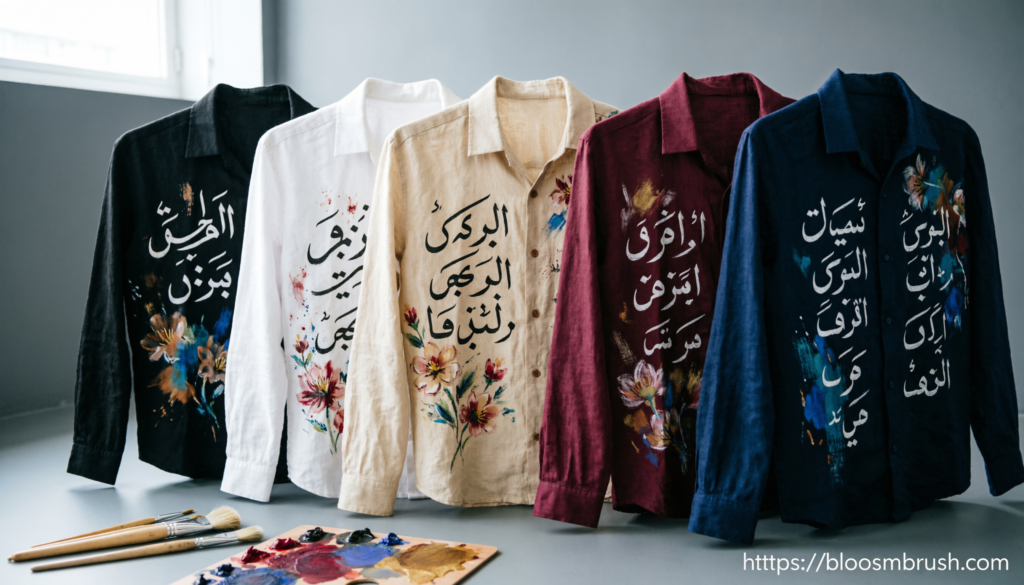
Calligraphy shirt designs turn ordinary clothing into meaningful, wearable artwork. Instead of relying on a standard graphic or mass-produced slogan, these designs combine expressive lettering, personal messages, cultural influences, and hand-painted details.
From elegant Arabic lettering to bold Urdu words, custom names, abstract brushwork, and textured backgrounds, calligraphy can suit casual T-shirts, oversized streetwear, hoodies, denim jackets, and gift clothing. The right design can celebrate identity, mark a special occasion, promote a brand, or simply give your wardrobe a more personal look.
Short Answer
The best calligraphy shirt designs combine readable lettering, balanced placement, suitable fabric, and colors that stand out without overwhelming the garment. Popular choices include Arabic and Urdu calligraphy, personalized names, meaningful quotes, circular typography, sleeve lettering, and abstract paint effects.
Quick Tip
Choose the shirt color before finalizing the artwork. The base color affects paint visibility, contrast, font style, and the overall mood of the finished design.
What Are Calligraphy Shirt Designs?
Calligraphy shirt designs feature decorative or expressive lettering placed on clothing as the main visual element. The lettering may be painted by hand, printed digitally, embroidered, screen-printed, or created through a combination of techniques.
Unlike ordinary text-based shirts, calligraphy clothing focuses on the shape, rhythm, flow, and artistic arrangement of letters. A short word can become a complete piece of artwork when the artist adjusts its curves, spacing, scale, and surrounding details.
Common styles include:
- Arabic calligraphy shirts featuring meaningful words, names, prayers, or artistic letter compositions.
- Urdu calligraphy shirts using poetic phrases, names, cultural expressions, or literary words.
- English calligraphy shirts with handwritten quotes, signatures, initials, or brush lettering.
- Abstract calligraphy clothing that treats letters as visual shapes rather than simple readable text.
- Personalized name shirts created around a customer’s name, nickname, initials, or family name.
- Mixed-media designs combining calligraphy with splashes, florals, textures, line art, or geometric patterns.
Hand-painted clothing adds another layer of individuality because the artist creates each garment separately. Small variations in strokes and texture make every piece slightly different.
Why Choose Calligraphy Shirt Designs?
Calligraphy clothing works well for people who want more meaning and originality than a standard printed graphic can provide. The design can reflect language, culture, personality, beliefs, memories, or creative interests.
Personal Meaning
A custom shirt can feature a name, date, phrase, lyric, family saying, or word with emotional value. This makes the garment feel personal rather than decorative.
Artistic Character
Calligraphy has natural movement. Long curves, sharp edges, thick brushstrokes, and delicate lines can make even a simple word visually interesting.
Cultural Expression
Arabic calligraphy shirt ideas and Urdu calligraphy shirt ideas allow wearers to celebrate language and heritage through modern clothing. The design can remain traditional, contemporary, minimalist, or streetwear-inspired.
Unique Gift Value
A personalized garment often feels more thoughtful than a generic shirt. It shows that the buyer considered the recipient’s name, favorite colors, language, style, or personal message.
Flexible Styling
Calligraphy works on several clothing styles, including fitted T-shirts, oversized tees, hoodies, sweatshirts, denim jackets, children’s clothing, and coordinated event outfits.
Printed vs Hand-Painted Calligraphy Clothing
Both printed and painted clothing can look attractive, but they offer different benefits.
| Feature | Printed Calligraphy Clothing | Hand-Painted Calligraphy Clothing |
|---|---|---|
| Appearance | Clean and consistent | Artistic and individually textured |
| Reproduction | Easy to produce in large quantities | Best for one-off or limited pieces |
| Personalization | Often limited to preset layouts | Highly flexible |
| Surface texture | Usually smooth | May show brush or paint texture |
| Small variations | Nearly identical across items | Each piece has slight differences |
| Best use | Teams, campaigns, merchandise | Gifts, statement pieces, custom fashion |
| Cost | Usually lower for bulk orders | Often higher due to artist time |
| Production time | Faster for repeated designs | Longer for detailed custom work |
Printed clothing suits customers who need several identical shirts. Hand-painted clothing offers stronger personalization and a more original finish.
25 Calligraphy Shirt Design Ideas
The following ideas can be adapted for men, women, children, gifts, events, brands, or everyday wear.
1. Personalized Name Calligraphy Shirt
Turn a first name, surname, or nickname into the central artwork. The lettering can sit across the chest, curve around the shoulder, or appear vertically along one side.
A name design works especially well when paired with:
- A small date beneath the lettering
- Initials on the sleeve
- A contrasting underline
- Minimal floral or geometric details
- A translation in smaller text
2. Arabic Name Calligraphy Design
Arabic lettering creates flowing shapes that suit both elegant and bold clothing styles. The name can appear in a traditional composition or a modern, stretched layout.
For better results, confirm the spelling and meaning before painting or printing the final garment.
3. Urdu Name Calligraphy Shirt
Urdu script has graceful curves and strong visual rhythm. It can make a personal name, poetic word, or short expression look refined and expressive.
Dark green, black, navy, cream, maroon, gold, and white are popular combinations, though brighter palettes can create a more contemporary look.
4. Single Meaningful Word Design
A single word can make a stronger statement than a long quote. Words connected with hope, patience, freedom, strength, love, peace, or gratitude work well.
The lettering should remain large enough to read from a comfortable distance.
5. Minimal Chest Calligraphy
Place a small handwritten word or name on the upper-left chest. This design feels subtle and works well for customers who prefer understated clothing.
It suits:
- Plain cotton T-shirts
- Crewneck sweatshirts
- Polo-style tops
- Minimalist streetwear
- Everyday casual outfits
6. Oversized Back Calligraphy
Use the back of the shirt as a large canvas. A bold word, quote, or abstract lettering arrangement can cover the shoulder blades or extend toward the lower back.
A small coordinating symbol on the front can make the garment feel complete.
7. Vertical Side Calligraphy
Run the lettering vertically from the shoulder toward the hem. This placement creates movement and works especially well on oversized T-shirts and longline tops.
8. Sleeve Calligraphy Design
Paint or print a phrase along one sleeve. The design may begin near the shoulder or run from the wrist upward.
Sleeve lettering works particularly well on:
- Hoodies
- Long-sleeve shirts
- Sweatshirts
- Denim jackets
- Sports-inspired tops
9. Circular Calligraphy Composition
Arrange the letters or words in a circle around a symbol, date, monogram, or small illustration. Circular designs feel balanced and work well in the center of the chest or upper back.
10. Heart-Shaped Calligraphy
Shape a name or phrase into a heart outline. This style suits anniversary gifts, couples’ clothing, wedding events, and family-themed designs.
Avoid filling the heart with too many words, as crowded lettering can reduce readability.
11. Calligraphy With Floral Artwork
Combine soft lettering with hand-painted flowers, vines, leaves, or petals. The flowers can frame the words, grow around the letters, or appear as a small accent.
This approach works beautifully on cream, white, black, dusty pink, light blue, or neutral fabrics.
12. Calligraphy With Geometric Patterns
Pair flowing lettering with circles, squares, lines, grids, or angular shapes. The contrast between soft script and structured geometry creates a modern appearance.
13. Abstract Brushstroke Calligraphy
Use broad strokes, overlapping letters, paint marks, and loose composition to create an expressive design. The final piece may look partly readable and partly abstract.
This style suits creative streetwear and statement garments.
14. Paint Splash Calligraphy Shirt
Add controlled paint splashes behind or around the lettering. The splash should support the text rather than hide it.
Popular combinations include:
- White paint on black fabric
- Gold and cream on maroon
- Blue and silver on grey
- Red and white on navy
- Multicolored splashes on a white shirt
15. Textured Background Calligraphy
Create a soft painted background using dry-brush marks, sponged texture, faded color blocks, or layered strokes. Add the calligraphy over the texture once the background has dried.
16. Signature-Style Name Shirt
Turn a person’s name into a stylish signature. This design feels modern, personal, and suitable for everyday clothing.
It also works for entrepreneurs, artists, creators, photographers, and personal brands.
17. Initials and Monogram Design
Combine two or three initials into a compact calligraphy symbol. A monogram can appear on the chest, cuff, collar area, pocket, or back neckline.
Monograms suit people who want personalization without using a full name.
18. Inspirational Quote Shirt
Choose a short quote that can be read easily. One or two lines usually work better than a full paragraph.
Strong quote designs often include:
- One emphasized word
- A smaller supporting line
- A balanced line break
- A simple illustration
- A readable contrast between text and fabric
19. Poetry-Inspired Calligraphy Shirt
A short poetic line can create an emotional and artistic design. Urdu poetry, Arabic expressions, and English verse can all work well, provided the text fits the available space.
Use the back panel for longer lines and the chest for shorter phrases.
20. Family Name Calligraphy Shirt
Feature a family surname, household phrase, or family identity on matching clothing. This idea suits reunions, holidays, group photographs, and family gifts.
Each shirt can use the same central design with different first names added underneath.
21. Couple Calligraphy Shirts
Create two connected designs that make sense separately but form a complete idea when worn together.
Possible concepts include:
- Two halves of a phrase
- Matching initials
- Complementary words
- Shared dates
- A paired symbol
- Two parts of one artistic composition
22. Children’s Custom Calligraphy Shirt
Use a child’s name, birthday number, positive word, or playful nickname. Keep the design bright, simple, and comfortable.
For children’s clothing, choose soft fabric and avoid large, stiff painted areas that could affect flexibility.
23. Calligraphy Hoodie Design
Hoodies provide more design space than standard T-shirts. Calligraphy can appear across the chest, back, sleeves, pocket, or hood edge.
A hoodie design may combine:
- A large back word
- Small chest initials
- Sleeve text
- Paint splashes
- Coordinated drawstring colors
24. Calligraphy Denim Jacket
Denim supports bold, durable artwork and gives artists a structured surface. Large calligraphy works well across the back panel, while smaller details can appear near the pocket or collar.
White, red, gold, black, and bright blue often stand out well on denim.
25. Brand Calligraphy Shirt
A business name, creator signature, product phrase, or campaign message can become custom brand clothing. Hand-painted pieces work well for photo shoots, product launches, pop-up events, and limited collections.
For larger quantities, the original painted artwork can be digitized and reproduced through printing.
Best Fabric, Fit, and Clothing Options
The base garment affects comfort, paint adhesion, durability, and design clarity.
Cotton T-Shirts
Cotton is one of the best fabrics for painted clothes because it absorbs fabric paint well and usually provides a smooth working surface.
Choose a shirt that feels substantial rather than extremely thin. Very lightweight cotton may stretch or wrinkle while the artist works.
Cotton Blends
Cotton and polyester blends can offer softness, shape retention, and lower shrinkage. Paint performance varies, so artists should test the fabric before completing a detailed design.
Hoodies and Sweatshirts
These garments provide a larger surface and suit bold lettering. Smooth, tightly woven fabric usually produces cleaner lines than heavily textured fleece.
Denim Jackets
Denim works well for structured designs and long-lasting statement pieces. Its thickness supports layered paint, detailed outlines, and larger compositions.
Choosing the Right Fit
The fit changes how the artwork sits on the body.
- Regular-fit shirts suit centered chest designs and everyday wear.
- Oversized shirts offer more room for large or abstract artwork.
- Fitted shirts work best with smaller, carefully placed designs.
- Longline shirts suit vertical calligraphy.
- Boxy shirts complement modern streetwear lettering.
- Cropped shirts work well with compact chest or back designs.
Personalization Options for Calligraphy Shirts
Custom clothing becomes more successful when each design choice supports the wearer’s style.
Colors
Choose colors based on contrast, mood, and wardrobe use.
| Shirt Color | Calligraphy Colors That Often Work Well |
|---|---|
| Black | White, gold, silver, red, bright blue |
| White | Black, navy, green, burgundy, multicolor |
| Navy | White, cream, silver, light blue |
| Grey | Black, white, maroon, blue |
| Cream | Brown, forest green, black, rust |
| Maroon | Gold, cream, white, black |
| Denim blue | White, red, yellow, black |
Metallic paint can look attractive, but it should be tested under natural and artificial light before approval.
Calligraphy Fonts and Lettering Styles
The lettering style should match the message and garment.
- Traditional calligraphy suits cultural, formal, or meaningful phrases.
- Brush lettering creates a casual, expressive finish.
- Modern script works well for names, signatures, and fashion designs.
- Bold block calligraphy suits streetwear and high-contrast layouts.
- Minimal handwritten lettering supports subtle, everyday clothing.
- Abstract lettering focuses on movement and visual impact.
Quotes and Messages
Keep the text short enough to remain readable. Long quotes may need smaller letters, which can weaken the visual impact.
Before production, check:
- Spelling
- Translation
- Punctuation
- Capitalization
- Line breaks
- Name order
- Cultural or religious sensitivity
Additional Artwork
Calligraphy can be paired with:
- Flowers and leaves
- Stars and moons
- Geometric shapes
- Portrait outlines
- Landscapes
- Paint splashes
- Cultural motifs
- Abstract textures
- Dates and coordinates
- Brand symbols
The supporting artwork should frame the lettering rather than compete with it.
Who Should Buy Custom Calligraphy Clothing?
Calligraphy clothing suits a wide range of people because the artwork can change in style, message, and complexity.
Custom Clothes for Men
Popular options include oversized tees, hoodies, denim jackets, bold back lettering, sleeve designs, signature-style names, and minimalist chest calligraphy.
Custom Clothes for Women
Popular choices include floral calligraphy, poetry-inspired shirts, soft color palettes, personalized names, cropped sweatshirts, oversized tees, and elegant script designs.
Kids’ Custom Painted Clothes
Children’s clothing can feature names, initials, favorite words, birthdays, cartoon-inspired accents, or family matching designs.
Artists and Creative Professionals
Photographers, painters, musicians, writers, designers, and content creators can use signature-style calligraphy as part of their personal branding.
People Looking for Meaningful Gifts
A custom shirt works well for someone who values personalized items, cultural expression, art, handmade products, or meaningful phrases.
Gift, Event, Brand, and Everyday Use Ideas
Custom calligraphy shirts can support both personal and practical purposes.
Birthday Gift Shirts
Use the recipient’s name, birth year, nickname, favorite phrase, or a word that reflects their personality.
Anniversary and Couple Gifts
Add initials, a meaningful date, a shared quote, or matching words that connect the two garments.
Wedding and Family Events
Create coordinated shirts for:
- Bridal parties
- Family gatherings
- Rehearsal events
- Wedding preparation
- Group photographs
- Post-wedding celebrations
Cultural Celebrations
Arabic or Urdu calligraphy can add cultural meaning to clothing created for festivals, community events, heritage celebrations, and family occasions.
Business and Brand Clothing
Custom brand clothing can help a small business, artist, or creator stand out at:
- Pop-up markets
- Trade events
- Product launches
- Creative shoots
- Store openings
- Social media campaigns
Everyday Style
Not every design needs a special occasion. A small chest word, sleeve phrase, signature, or abstract composition can become an everyday wardrobe piece.
How the Custom Order Process Works
A clear order process reduces errors and helps the customer and artist agree on the final result.
1. Choose the Garment
Select the clothing type, size, fit, fabric, and color. Customers may use an item provided by the artist or supply their own garment if the artist accepts outside clothing.
2. Submit the Design Brief
The brief should include:
- Exact wording or name
- Preferred language
- Shirt color
- Paint colors
- Lettering style
- Design placement
- Reference images
- Required date
- Additional artwork
3. Confirm Spelling and Translation
The customer should approve all written text before production, especially names, poetry, Arabic script, Urdu phrases, dates, and translated quotes.
4. Review the Initial Concept
The artist may provide a rough sketch, digital layout, or written design plan. This stage helps confirm placement, scale, and visual direction.
5. Request Revisions
Customers can ask for reasonable changes before the final painting begins. Revisions may include color adjustments, lettering size, placement, or small artwork changes.
6. Approve the Final Design
Once approved, the artist prepares the garment and begins production. Major changes after this point may not be possible.
7. Painting, Drying, and Heat Setting
The artist applies the design, allows the paint to cure, and may use heat to help set the artwork according to the paint manufacturer’s instructions.
8. Final Inspection and Delivery
The finished item should be checked for spelling, paint coverage, unwanted marks, alignment, and overall quality before packaging.
Pricing, Timeline, Revisions, and Approval
The custom painted clothes price depends on the garment, design size, detail, materials, and artist time.
Factors That Affect Price
- Garment type and quality
- Number of paint colors
- Size of the artwork
- Front, back, and sleeve coverage
- Lettering complexity
- Additional illustrations
- Metallic or specialty finishes
- Rush production
- Number of garments
- Packaging and shipping
A small name on the chest will usually cost less than a full-back calligraphy composition with flowers, splashes, and sleeve details.
Custom Order Timeline
A simple design may take a few days, while a complex garment may require one to several weeks. The timeline should include design planning, approval, painting, drying, heat setting, inspection, and shipping.
Customers ordering for birthdays or events should leave extra time for revisions and delivery delays.
Revision Process
A fair revision policy should explain:
- How many concept revisions are included
- Which changes can be requested
- When final approval occurs
- Whether changes after approval cost extra
- What happens if the customer changes the wording
- Whether custom orders can be cancelled
Final Approval
Customers should approve the spelling, layout, color plan, size, and placement before painting begins. Handmade artwork cannot always be erased or repositioned once applied.
Common Mistakes to Avoid
Good planning prevents most problems with custom calligraphy clothing.
- Using too much text: Long phrases can look crowded and may require lettering that is too small to read.
- Choosing weak contrast: Dark lettering on a dark shirt can disappear unless the artist adds an outline or lighter background.
- Skipping spelling checks: Name and translation mistakes may be impossible to correct after painting.
- Ignoring fabric texture: Rough or stretchy fabric can make fine lines harder to control.
- Adding too many visual elements: Flowers, splashes, symbols, and lettering should work together rather than compete.
- Placing artwork across heavy seams: Seams and pockets can interrupt clean lettering.
- Ordering too close to an event: Custom work needs time for approval, painting, curing, and delivery.
- Washing the garment too soon: Fresh paint may need additional curing time before its first wash.
Washing, Care, and Durability Instructions
Correct care helps preserve color, texture, and fabric paint durability.
How to Wash Hand-Painted Clothes
Follow the artist’s instructions first, as paint types and curing methods vary. General care often includes:
- Wait for the recommended curing period before the first wash.
- Turn the garment inside out.
- Wash it in cold or cool water.
- Use a mild detergent.
- Select a gentle washing cycle.
- Wash with similar colors.
- Avoid bleach and harsh stain removers.
- Air-dry the garment when possible.
Ironing Instructions
Do not place a hot iron directly on painted artwork. Turn the garment inside out or place a protective cloth between the iron and the design.
Drying Instructions
High dryer temperatures may weaken paint or damage the fabric over time. Air drying usually offers the safest option for hand-painted clothing.
Storing Painted Clothes
Store the garment clean and completely dry. Fold it with the artwork facing outward or place soft tissue between painted surfaces to prevent sticking.
How to Choose the Right Calligraphy Shirt Design
The best design should match the person, occasion, garment, and intended use.
Consider these questions:
- Does the wearer prefer minimal or bold clothing?
- Should the lettering feel traditional, modern, elegant, or expressive?
- Will the shirt be worn regularly or saved for an event?
- Does the text need to remain readable?
- Which shirt color matches the wearer’s wardrobe?
- Is the design meaningful without requiring a long explanation?
- Will the artwork suit the garment’s shape and fit?
- Does the artist have experience with the chosen script?
For a first custom piece, a name, short phrase, or single meaningful word usually offers the best balance of personality and wearability.
Related Products and Painting Styles
Calligraphy can extend beyond standard T-shirts into other custom painted clothing.
Custom Painted Hoodies
Hoodies suit large back designs, sleeve text, chest lettering, and layered streetwear artwork.
Custom Painted Denim Jackets
Denim jackets provide a strong surface for bold calligraphy, portraits, florals, and mixed designs.
Custom Sweatshirts
Crewneck sweatshirts work well for minimal name designs, centered quotes, and seasonal gifts.
Painted Tote Bags
A tote bag offers a useful alternative for customers who want personalized artwork without selecting a clothing size.
Coordinated Clothing Sets
Artists can create matching shirts, hoodies, jackets, or accessories using the same lettering style and color palette.
Other Painting Styles
Calligraphy may be combined with:
- Botanical painting
- Portrait art
- Minimal line drawing
- Graffiti lettering
- Watercolor-style effects
- Geometric artwork
- Pop-art influences
- Celestial patterns
- Vintage textures
- Typography-based streetwear
Conclusion
Calligraphy shirt designs offer a practical way to combine clothing, language, identity, and personal artwork. The strongest designs use short, meaningful text, clear contrast, suitable fabric, balanced placement, and a lettering style that matches the wearer.
From Arabic and Urdu calligraphy shirt ideas to painted names, quotes, hoodies, denim jackets, and brand clothing, each design can be adapted for gifts, events, creative work, or everyday style. Careful planning and proper washing will also help the finished garment stay attractive for longer.
FAQs About Calligraphy Shirt Designs
What are the most popular calligraphy shirt designs?
Popular choices include custom names, Arabic words, Urdu poetry, inspirational quotes, sleeve lettering, oversized back designs, monograms, and calligraphy paired with flowers or paint splashes.
Which fabric is best for a hand-painted calligraphy shirt?
Smooth, good-quality cotton usually works best because it accepts fabric paint well and provides a stable surface. Cotton blends and denim can also work when tested properly.
Are Arabic calligraphy shirt ideas suitable for everyday clothing?
Yes. A small Arabic word on the chest, sleeve, or upper back can look subtle enough for everyday wear. Larger compositions suit statement clothing and special events.
Can I use my own quote on a custom shirt?
Most custom clothing artists allow customers to submit their own quotes. Keep the phrase reasonably short and carefully check spelling, punctuation, and translation before approval.
How long does a custom painted shirt take?
The timeline depends on the design and artist’s schedule. Simple lettering may take a few days, while detailed calligraphy with additional artwork may require one or more weeks.
Will fabric paint crack or fade?
Quality fabric paint can remain durable when properly applied, cured, and washed. Frequent hot washing, bleach, harsh detergents, and high dryer temperatures may cause faster wear.
Can calligraphy shirts be made for children?
Yes. Children’s designs often feature names, initials, birthdays, positive words, or playful artwork. Soft fabric and flexible painted areas help keep the garment comfortable.
How much do custom calligraphy shirt designs cost?
Pricing varies based on the garment, design size, lettering complexity, number of colors, additional artwork, and production time. A simple name design normally costs less than a full front-and-back painted garment.