
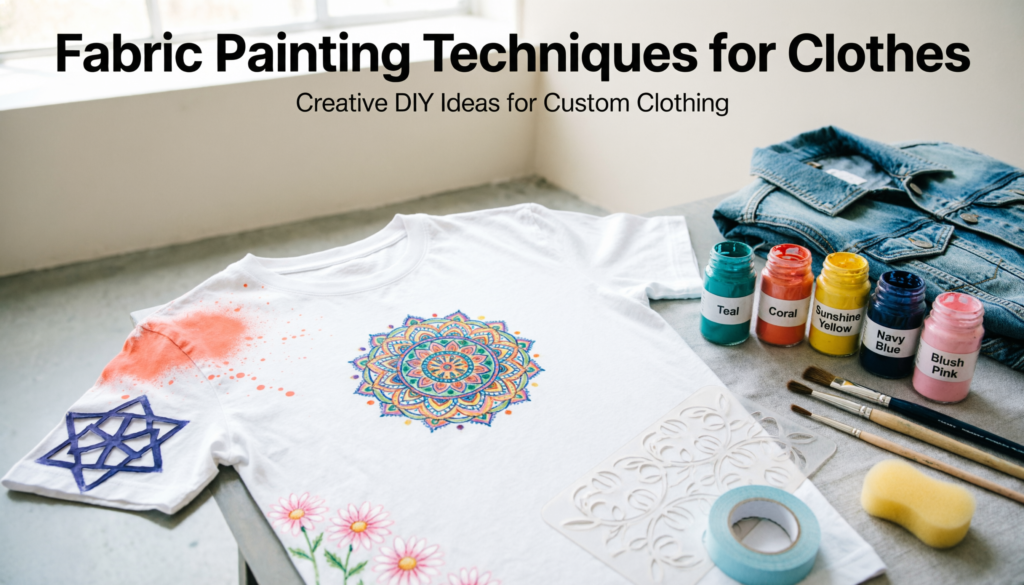
Fabric painting techniques for clothes help you turn plain shirts, jeans, scarves, jackets, tote bags, and dupattas into personal wearable art. You can create small floral details, bold statement graphics, mandala shirt art, stencil patterns, splash paint clothes, or full custom illustration shirt designs with the right method.
The best part is that fabric painting works for beginners, students, hobby artists, fashion lovers, and small handmade clothing businesses. Whether you live in Pakistan and want to customize lawn, cotton kurtis, denim jackets, and tote bags, or in the United States and want to personalize T shirts, hoodies, canvas bags, and thrifted clothes, these techniques give you creative control without needing a factory setup.
Quick Answer
Fabric painting techniques for clothes include dot painting, mandala art, freehand illustration, blending, layering, puff paint, metallic paint, spray effects, splatter designs, and stencil painting. Beginners can start with stencil painting or dot painting because these methods give more control. Artists who want unique painted clothing art can try freehand fabric painting, layered clothing art, and textured paint on fabric.
Dot, Mandala and Repetition-Based Techniques
Dot painting on fabric works well when you want neat, decorative, and rhythmic designs. You create small dots with a brush tip, dotting tool, pencil end, cotton bud, or fabric paint bottle nozzle. This method suits borders, sleeves, pockets, collars, dupatta corners, tote bags, and simple shirt art.
Mandala shirt art uses repeated dots, petals, circles, and small shapes around a center point. It looks detailed, but the process stays simple if you build the design slowly from the middle outward. Many beginners like this technique because even basic dots can create a rich pattern when you repeat them carefully.
Patterned clothing paint also works beautifully for casual wear and handmade gifts. You can repeat small flowers, stars, leaves, paisley shapes, hearts, abstract marks, or geometric dots across fabric. This style looks especially good on plain cotton shirts, denim jackets, canvas shoes, and cotton tote bags.
Best uses for dot and mandala fabric painting
- Shirt pockets with small mandala details
- Sleeves with repeated dot borders
- Dupatta edges with simple dotted patterns
- Denim jackets with circular back designs
- Tote bags with floral dot patterns
- Kids clothing with stars, hearts, and playful shapes
For Pakistan based readers, dot and mandala work can look beautiful on cotton kurtis, lawn shirts, and casual Eid wear. For United States readers, the same method works well on T shirts, hoodies, thrifted denim, and canvas accessories.
Freehand Painting for Custom Artwork and Illustration
Freehand fabric painting gives you the most creative freedom. You draw or paint directly on the clothing without relying on a stencil. This technique works best for artists who want custom illustration shirt designs, portraits, quotes, cartoons, florals, landscapes, animals, or symbolic painted clothing art.
A light pencil sketch helps you plan the design before painting. You can also use tailor chalk or washable fabric markers. Start with simple shapes if you feel nervous. A flower, butterfly, sun, moon, name design, or small character illustration gives you enough room to practice without overwhelming the fabric.
Custom illustration shirt art works best when you match the design with the clothing style. A large back illustration suits denim jackets and oversized shirts. A small chest design suits minimal T shirts. A painted quote or line art drawing suits casual cotton shirts and tote bags.
Freehand painting tips for cleaner artwork
- Place cardboard inside the shirt before painting
- Sketch lightly before using paint
- Use fine brushes for outlines
- Let one color dry before adding another
- Keep a small cloth nearby for quick cleanup
- Test your paint on scrap fabric first
Freehand painting needs patience, but it gives the most personal result. If you sell handmade clothes, this technique can help you create one of a kind pieces that buyers value more than repeated prints.
Layering, Blending and Texture Techniques
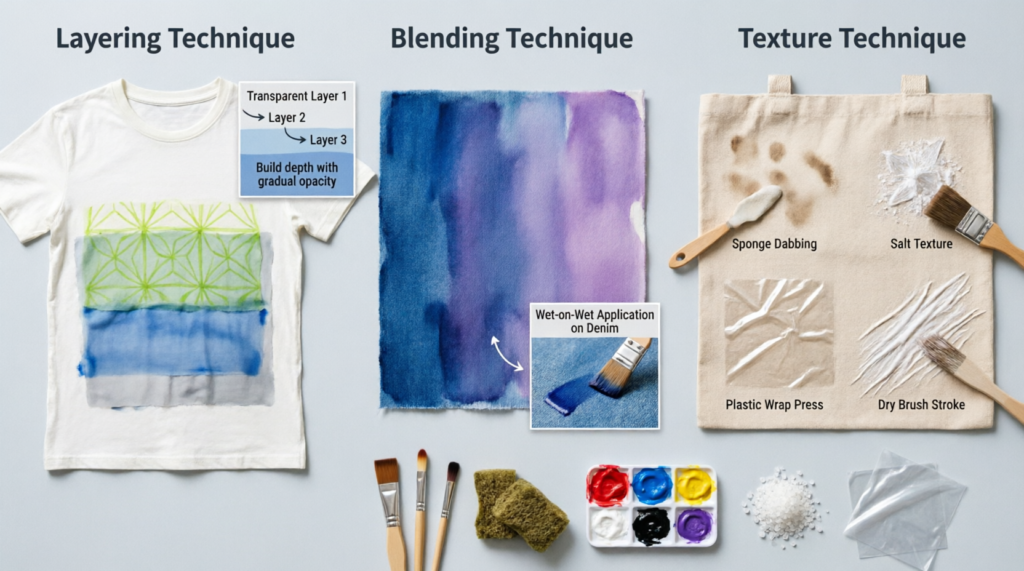
Layering helps your fabric painting look richer and more professional. Instead of adding one flat color, you build the design in stages. A base color comes first, then shadows, highlights, outlines, texture, and small details. This approach works well for flowers, portraits, animals, food art, fantasy designs, and detailed clothing art.
Blending fabric paint creates soft transitions between colors. You can blend fabric paint while it stays wet, or use a dry brush to soften edges. For example, you can blend pink into orange for a sunset shirt, blue into purple for a galaxy hoodie, or green into yellow for leaves on a kurti or tote bag.
Textured paint on fabric adds a handmade surface that people can see and feel. You can create texture with thick fabric paint, sponge dabbing, brush strokes, palette knife marks, or repeated short strokes. This technique looks strong on denim, canvas, and heavier cotton because those fabrics hold texture better.
Simple layering order for fabric painting
- Prepare the fabric
- Add a light sketch
- Paint the base colors
- Add shadows and darker areas
- Add highlights and lighter details
- Add outlines if needed
- Heat set the final design
Layered clothing art works best when you let each stage dry properly. Rushing can muddy the colors and damage fine details.
Puff, Metallic and Dimensional Paint Techniques
Puff paint clothing designs add raised lines and playful texture, Puff paint works well for names, outlines, cartoon art, kids clothing, school projects, festival outfits, and decorative borders. When used carefully, it adds a fun handmade feel without needing advanced painting skills.
Metallic fabric paint shirt designs create shine and elegance. Gold, silver, copper, bronze, and pearl shades can make simple clothing look premium. Metallic paint works beautifully on black shirts, dark denim, tote bags, festive kurtis, and statement jackets. For Pakistani clothing, gold and copper details can look lovely on cotton or lawn pieces. For US fashion, metallic accents work well on streetwear, party shirts, and DIY concert outfits.
Dimensional textile paint creates raised artwork that stands above the fabric surface. You can use it for dots, outlines, floral centers, lettering, borders, and decorative accents. The key is control. Too much dimensional paint can make the clothing stiff, so use it in selected areas.
Best places to use dimensional paint
- Lettering and names
- Mandala dots
- Flower centers
- Borders on sleeves and hems
- Small decorative icons
- Outlines around freehand illustrations
Use puff and dimensional paint on areas that do not stretch too much. Chest, back, pockets, and tote bags usually work better than tight sleeves or leggings.
Spray, Splash and Splatter Techniques
Spray paint effect on fabric gives clothes an energetic, street style look. You can use fabric spray paint, diluted fabric paint in a spray bottle, or a toothbrush for small mist effects. This style works well for galaxy shirts, abstract backgrounds, sportswear inspired designs, festival clothing, and modern casual fashion.
Splash paint clothes look bold and expressive. You load a brush with paint and flick, tap, or swing it carefully over the fabric. The result feels spontaneous and artistic. You can use one color for a clean design or several colors for a bright, playful effect.
Splatter shirt design works especially well on white, black, and solid colored shirts. A black shirt with white and silver splatter creates a night sky effect. A white shirt with red, blue, yellow, and green splatter creates a fun art class or streetwear look.
How to control spray and splatter designs
- Cover your work area fully
- Place cardboard inside the clothing
- Mask areas you want to keep clean
- Start with light splatter
- Add more only after checking the balance
- Let the first layer dry before adding extra colors
Spray and splatter painting can look messy if you overdo it. The best results often come from controlled randomness.
Stencil Painting for Clean Shapes and Repeats
Stencil painting on clothes gives you clean shapes, repeat patterns, and sharp designs. It works well for beginners because the stencil controls the outline. You can use ready made stencils, vinyl cutouts, freezer paper, cardboard, acetate sheets, or plastic folders cut into shapes.
A stencil T shirt design can include letters, logos, flowers, stars, leaves, geometric shapes, school themes, sports icons, or simple quotes. This method also works for tote bags, aprons, hoodies, denim pockets, and kids clothing.
Clean edge fabric paint depends on how you hold the stencil and apply the paint. Use less paint than you think you need. Too much paint can bleed under the stencil and blur the design. A sponge brush, stencil brush, or foam dabber gives better control than a wet brush.
Best stencil painting steps
- Wash and dry the clothing
- Iron the painting area
- Place cardboard inside the fabric
- Tape the stencil firmly
- Dab paint lightly from the edge inward
- Remove the stencil carefully
- Let the design dry fully
- Heat set according to paint instructions
Stencil painting suits small businesses because you can repeat a design on multiple items while still using handmade finishing touches.
Tools and Materials for Fabric Painting Techniques for Clothes
Good tools make fabric painting cleaner, easier, and longer lasting. You do not need a huge kit at the start. A few reliable materials can help you practice dot painting on fabric, freehand fabric painting, stencil work, textured paint on fabric, and metallic fabric paint shirt designs.
Choose fabric paint instead of regular acrylic paint when possible. Fabric paint stays more flexible after drying. If you use acrylic paint, mix it with fabric medium so the design does not crack easily. Always check the paint label because some paints need heat setting with an iron.
Basic fabric painting kit
| Item | Best use | Beginner note |
|---|---|---|
| Fabric paint | Main color work | Choose washable paint |
| Fabric medium | Softens acrylic paint | Useful if using acrylics |
| Fine brushes | Outlines and details | Keep separate sizes |
| Flat brushes | Filling shapes | Good for large areas |
| Sponge brush | Stencil painting | Helps avoid brush marks |
| Dotting tools | Mandala and dots | Pencil ends can also work |
| Cardboard sheet | Stops paint bleeding | Place inside shirts |
| Masking tape | Holds stencils | Use gentle tape |
| Fabric marker | Sketching designs | Pick washable or fading type |
| Iron | Heat setting | Follow paint instructions |
Fabric types and how they behave
| Fabric type | Painting result | Best technique |
|---|---|---|
| Cotton | Absorbs paint well | Freehand, stencil, dot work |
| Denim | Strong and textured | Layering, splatter, metallic paint |
| Canvas | Durable and firm | Tote bags, stencil designs, texture |
| Linen | Natural look | Florals and simple patterns |
| Polyester blend | Can resist paint | Test before painting |
| Lawn fabric | Light and smooth | Fine details and soft motifs |
| Hoodie fleece | Absorbent surface | Bold shapes and large artwork |
Cotton gives beginners the easiest start. Denim and canvas suit stronger designs. Stretchy fabrics need flexible paint and thinner layers.
Comparison Table 1: Best Fabric Painting Techniques by Skill Level
| Technique | Skill level | Best clothing item | Main benefit |
|---|---|---|---|
| Dot painting | Beginner | Shirts, kurtis, tote bags | Easy control |
| Mandala art | Beginner to intermediate | T shirts, backs of jackets | Detailed look |
| Freehand painting | Intermediate | Custom shirts, denim jackets | Unique artwork |
| Layering and blending | Intermediate | Hoodies, shirts, canvas bags | Professional depth |
| Puff paint | Beginner | Kids clothes, names, borders | Raised texture |
| Metallic paint | Beginner to intermediate | Dark shirts, festive wear | Shiny finish |
| Spray effect | Beginner to intermediate | Streetwear shirts, hoodies | Bold style |
| Splatter design | Beginner | T shirts, jeans, bags | Quick creative effect |
| Stencil painting | Beginner | T shirts, aprons, tote bags | Clean repeat shapes |
Comparison Table 2: Fabric Paint Effects and Best Uses
| Paint effect | Visual style | Best for | Care level |
|---|---|---|---|
| Matte fabric paint | Soft and natural | Everyday clothing | Easy |
| Metallic fabric paint | Shiny and premium | Party shirts, jackets, festive wear | Medium |
| Puff paint | Raised and playful | Names, dots, outlines | Medium |
| Dimensional paint | Thick and textured | Borders and accents | Medium |
| Fabric spray paint | Misty and modern | Abstract designs | Easy to medium |
| Glitter fabric paint | Sparkly and bright | Kids clothing and event wear | Medium |
| Opaque fabric paint | Strong coverage | Dark fabric | Easy |
| Transparent fabric paint | Soft color wash | Light fabrics | Easy |
Text Based Diagram 1: Simple Fabric Painting Workflow
Choose clothing
      ↓
Wash and dry fabric
      ↓
Iron the painting area
      ↓
Place cardboard inside
      ↓
Sketch or place stencil
      ↓
Apply paint in thin layers
      ↓
Let the design dry
      ↓
Heat set if required
      ↓
Wash gently and wear
This workflow works for most fabric painting techniques for clothes. The drying and heat setting steps matter because they help the design last longer after washing.
Text Based Diagram 2: Choosing the Right Technique
Want clean shapes?
      ↓
Use stencil painting

Want personal artwork?
      ↓
Use freehand painting

Want decorative patterns?
      ↓
Use dot or mandala painting

Want bold street style?
      ↓
Use spray, splash, or splatter

Want raised texture?
      ↓
Use puff or dimensional paint

Want depth and realism?
      ↓
Use layering and blending
This simple choice map helps beginners select a method before buying supplies or starting a project.
Mistakes to Avoid When Painting Clothes
Many fabric painting problems come from rushing the preparation. If you paint on dusty, oily, or unwashed fabric, the paint may not hold well. New clothes often contain finishing chemicals, so wash and dry them before painting.
Another common mistake involves using too much paint at once. Thick layers can crack, bleed, or feel stiff. Thin layers give better control and usually last longer. This matters even more for T shirts, lawn shirts, and hoodies because these fabrics move when you wear them.
Common mistakes
- Painting without testing the fabric first
- Skipping cardboard inside the clothing
- Using regular paint without fabric medium
- Washing too soon after painting
- Ironing directly on the painted surface
- Stretching the fabric while the paint dries
- Using too much water with fabric paint
- Removing stencils too late or too roughly
Let the design cure properly. Many fabric paints need at least 24 hours before handling and longer before washing. Always follow the paint brand instructions.
Care Tips for Painted Clothes
Painted clothing needs gentle care if you want the design to last. Turn the garment inside out before washing. Use cold water and mild detergent. Avoid harsh scrubbing, bleach, and hot dryers because they can weaken the paint.
For handmade pieces, hand washing works best. If you use a washing machine, choose a gentle cycle. Let the garment air dry when possible. Iron the reverse side or place a cotton cloth over the painted area if you need to remove wrinkles.
Easy care routine
- Wait until the paint cures fully
- Turn clothing inside out
- Wash with cold water
- Use mild detergent
- Avoid bleach
- Air dry when possible
- Iron from the back side
These steps help protect dot painting, stencil painting, metallic fabric paint, dimensional textile paint, and freehand artwork.
Styling and Gift Ideas for Painted Clothes
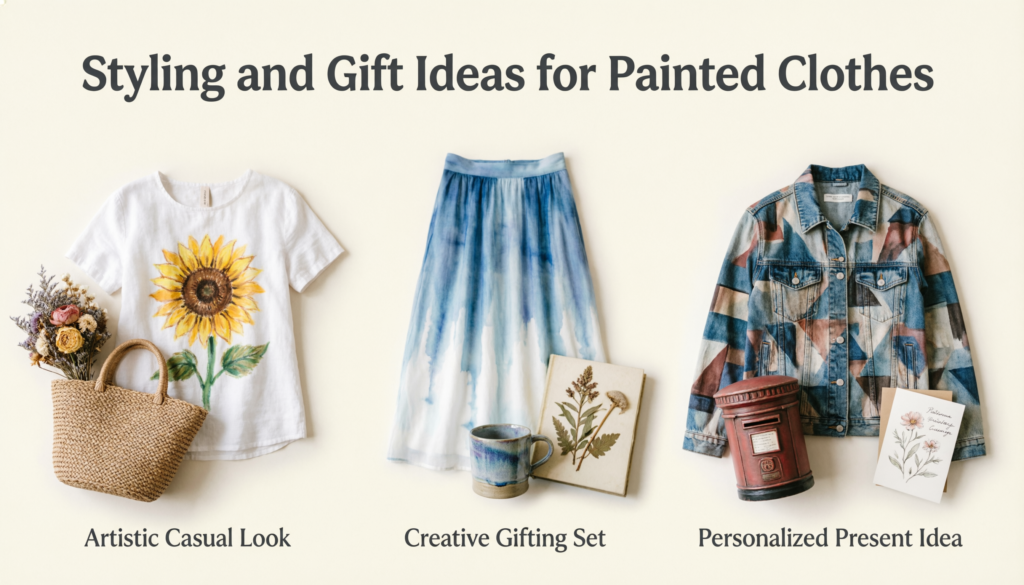
Fabric painting can turn basic clothing into thoughtful gifts. A custom illustration shirt can celebrate a birthday, graduation, friendship, fandom, school event, family memory, or small business brand. A hand painted tote bag can make a useful and personal gift without feeling generic.
For everyday styling, keep the rest of the outfit simple when the painted piece looks bold. A splatter shirt design pairs well with plain jeans. A metallic fabric paint shirt looks good with black trousers or denim. A mandala shirt art design can look stylish with neutral bottoms and simple accessories.
Gift ideas
- Name painted T shirts
- Matching friend shirts
- Couple hoodies with small icons
- Eid or birthday kurtis with painted borders
- Custom denim jackets
- Teacher gift tote bags
- Kids art aprons
- Painted canvas shoes
Small handmade details can make the clothing feel more meaningful than mass printed pieces.
Buying Tips for Fabric Paint and Clothes
When buying fabric paint, check three things first: washability, flexibility, and fabric compatibility. Some paints work best on cotton, while others suit synthetic blends. If you want to paint dark fabric, choose opaque paint because light transparent paint may not show clearly.
For clothes, choose smooth fabric when you want fine details. Choose denim or canvas when you want texture, splatter, or bold shapes. Avoid very stretchy fabric at the start because paint can crack if the cloth expands too much.
Smart buying checklist
- Pick cotton for beginner projects
- Choose opaque colors for dark fabric
- Buy fine brushes for outlines
- Buy sponge brushes for stencils
- Choose flexible paint for wearable clothing
- Test metallic paint on scrap fabric
- Use quality cardboard or plastic sheets inside clothing
- Keep a small practice cloth for every new paint
In Pakistan, you can often find cotton shirts, lawn fabric, denim pieces, and craft paints in local markets or online stores. In the United States, craft stores, fabric stores, and online shops offer wider fabric paint ranges, including puff, metallic, spray, and dimensional options.
Conclusion
Fabric painting techniques for clothes give you a practical way to create personal, stylish, and meaningful fashion. You can start with dot painting, stencil painting, or simple splatter designs, then move toward freehand painting, blending, layering, and dimensional textile paint as your confidence grows.
The best results come from good preparation, the right fabric paint, thin layers, proper drying, and gentle care. Whether you want a mandala shirt, custom illustration shirt, metallic fabric paint design, or splash paint clothes for casual wear, fabric painting lets you turn ordinary clothing into wearable art.
FAQs
What is the easiest fabric painting technique for beginners?
Stencil painting and dot painting are the easiest techniques for beginners. They give better control and do not require advanced drawing skills.
Can I use acrylic paint on clothes?
Yes, you can use acrylic paint on clothes, but mix it with fabric medium. This keeps the paint more flexible and helps reduce cracking.
Which fabric works best for fabric painting?
Cotton works best for most beginners because it absorbs paint well and feels easy to handle. Denim and canvas also work well for bold designs.
How do I stop fabric paint from bleeding?
Use less paint, keep the brush slightly dry, place cardboard inside the clothing, and tape stencils firmly. Thick wet paint can spread under edges.
Does fabric paint wash off clothes?
Good fabric paint should not wash off after proper drying and heat setting. Always follow the instructions on the paint label.
How long should fabric paint dry before washing?
Most fabric paints need at least 24 hours to dry and around 72 hours before washing. Some brands need more time, so check the label.
Can I paint on black clothes?
Yes, you can paint on black clothes. Use opaque fabric paint, metallic fabric paint, or light colors made for dark fabric.
How do I make painted clothes last longer?
Turn the clothing inside out, wash with cold water, use mild detergent, avoid bleach, and air dry when possible.
Is puff paint good for clothing?
Puff paint works well for clothing accents, names, outlines, dots, and decorative borders. Use it lightly so the fabric does not become too stiff.
Can I sell hand painted clothes?
Yes, you can sell hand painted clothes if you create original designs and use durable fabric paint. Custom artwork, names, jackets, tote bags, and festive pieces often attract buyers.