
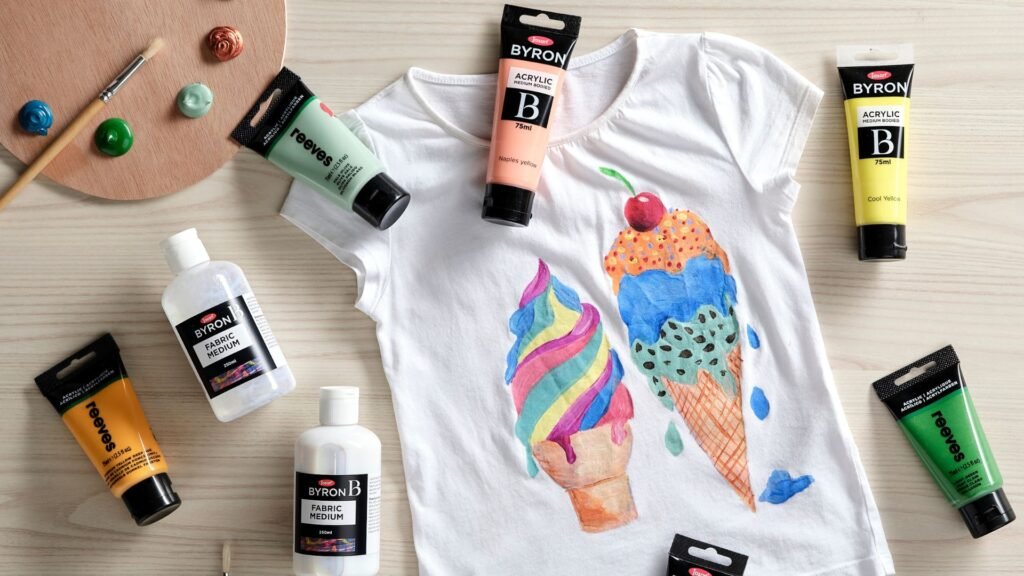
Painting on clothes has become a popular way to create unique fashion pieces that reflect personal style. From hand painted shirts in Pakistan’s local markets to custom streetwear trends in the United States, fabric painting gives you full creative control. The key to success lies in choosing the best paint for clothes that looks great and lasts through regular wear and washing.
Different fabrics, finishes, and painting techniques require different types of paint. If you use the wrong one, your design may crack, fade, or feel stiff. This guide explains everything in a simple and practical way so you can choose the right paint and get professional looking results at home.
Quick Answer
The best paint for clothes is fabric paint or acrylic paint mixed with a fabric medium. Fabric paint works best for beginners because it stays soft and flexible. Acrylic paint can work on clothing if you add a fabric medium to prevent cracking. Always choose paint based on fabric type, desired finish, and durability needs.
Can You Use Acrylic Paint on Clothes?
Yes, you can use acrylic paint on clothes, but you need to use it correctly. Regular acrylic paint dries hard and can crack on fabric. To make it suitable for clothing, you must mix it with a fabric medium. This makes the paint flexible and more durable.
When people try acrylic on fabric without preparation, they often notice stiffness after drying. This happens because acrylic paint forms a plastic like layer. A fabric medium solves this issue and allows the paint to move with the fabric.
When acrylic paint works well
- On cotton shirts and canvas fabrics
- For bold and artistic designs
- When mixed with a proper fabric medium
When to avoid it
- On stretchy fabrics like leggings
- On delicate fabrics like silk
- When you want a very soft feel
If you want a budget friendly option in Pakistan or the US, acrylic paint with fabric medium works well for DIY projects.
Fabric Paint vs Textile Paint vs Fabric Markers
Choosing between fabric paint, textile paint, and fabric markers depends on your design style and skill level. All three options serve different purposes.
Fabric paint is thick, easy to apply, and ideal for beginners. Textile paint is more professional and often used for detailed and long lasting designs. Fabric markers work best for outlines, lettering, and small details.
Key differences
| Feature | Fabric Paint | Textile Paint | Fabric Markers |
|---|---|---|---|
| Ease of use | Very easy | Moderate | Very easy |
| Finish | Soft | Professional | Smooth lines |
| Durability | Good | Excellent | Medium |
| Best use | T shirts, DIY projects | Detailed art, fashion pieces | Writing, outlines |
Practical use cases
- Use fabric paint for casual designs on shirts
- Use textile paint for detailed artwork or business products
- Use fabric markers for calligraphy or fine line designs
If you are starting a small custom clothing business, textile paint gives better long term results.
How Fabric Medium Changes Acrylic Paint Performance
A fabric medium transforms acrylic paint into a flexible paint for clothes. Without it, acrylic paint becomes stiff and cracks after washing. With it, the paint blends into the fabric and feels softer.
Fabric medium works by reducing the thickness of acrylic paint and improving its elasticity. This allows the paint to stretch with the fabric instead of breaking.
Benefits of using fabric medium
- Makes acrylic paint soft and flexible
- Improves wash durability
- Reduces cracking and peeling
- Enhances color absorption
Simple mixing ratio
- 2 parts acrylic paint
- 1 part fabric medium
This ratio works well for most clothing projects. Always test on a small fabric piece before starting your final design.
How to Choose Paint Based on Fabric Type and Finish
Not all paints work on all fabrics. Choosing the best paint for cotton shirt, silk, or denim depends on how the fabric behaves.
Cotton absorbs paint easily, so most paints work well. Silk requires special silk fabric paint because it is delicate. Denim needs durable clothing paint that can handle thick material.
Fabric based recommendations
| Fabric Type | Best Paint | Why |
|---|---|---|
| Cotton | Fabric paint or acrylic with medium | Absorbs paint well |
| Silk | Silk fabric paint | Prevents damage and bleeding |
| Denim | Textile paint | Strong and long lasting |
| Polyester | Specialized fabric paint | Better adhesion |
Finish based choices
- Matte finish for everyday clothing
- Glossy finish for bold fashion pieces
- Soft finish for comfort wear
In hot climates like Pakistan, breathable and soft paint matters more. In colder regions of the US, durability for layering pieces like hoodies becomes important.
Soft, Opaque, Metallic and Puff Paint Options
Different paint finishes create different visual effects. Choosing the right one depends on your design goal.
Soft fabric paint feels natural and blends into the fabric. Opaque textile paint gives strong color coverage even on dark fabrics. Metallic paint adds shine, while puff paint creates raised designs.
Types explained
- Soft fabric paint
Gives a natural feel and works best for casual wear - Opaque textile paint
Covers dark fabrics without needing multiple layers - Metallic paint on clothes
Adds shine and works well for festive designs - Puff paint shirt designs
Creates 3D effects and textured patterns
When to use each
- Use soft paint for comfort based clothing
- Use opaque paint for black or dark fabrics
- Use metallic paint for party or event outfits
- Use puff paint for creative and playful designs
When to Use Fabric Paint for T Shirts, Denim and Hoodies
Different clothing items need different painting approaches. The best fabric paint for t shirts is usually soft and flexible. Denim jackets need thicker paint that stays visible. Hoodies require paint that handles stretch and warmth.
T shirts
- Use soft fabric paint
- Ideal for daily wear
- Works well for light designs
Denim jackets
- Use textile paint
- Strong color visibility
- Perfect for bold artwork
Hoodies
- Use flexible paint with fabric medium
- Prevent cracking during movement
- Choose durable clothing paint
Practical tips
- Always pre wash fabric before painting
- Place cardboard inside to prevent bleed through
- Heat set the paint after drying
Tools and Materials for Painting Clothes
To get professional results, you need the right tools along with the best paint for clothes.
Essential materials
- Fabric paint or acrylic paint with fabric medium
- Paint brushes of different sizes
- Fabric markers for detailing
- Palette for mixing colors
- Water container and cloth
Additional helpful tools
- Stencils for clean designs
- Masking tape for sharp edges
- Sponge for texture effects
- Iron for heat setting
Using proper tools improves both the look and durability of your design.
Comparison Table for Paint Selection
| Purpose | Recommended Paint | Skill Level | Result |
|---|---|---|---|
| Beginner DIY | Fabric paint | Beginner | Soft and simple |
| Professional design | Textile paint | Intermediate | Long lasting |
| Budget option | Acrylic with medium | Beginner to intermediate | Affordable and flexible |
| Fine detailing | Fabric markers | Beginner | Clean lines |
Comparison Table for Finish Types
| Finish Type | Look | Best For | Feel |
|---|---|---|---|
| Soft | Natural | T shirts | Smooth |
| Opaque | Bold | Dark fabrics | Slightly thick |
| Metallic | Shiny | Festive wear | Slight texture |
| Puff | Raised | Creative designs | 3D texture |
Text Based Diagram for Paint Selection
Fabric Type → Paint Choice → ResultCotton → Fabric Paint → Soft and breathable
Denim → Textile Paint → Strong and durable
Silk → Silk Paint → Smooth and delicate
Polyester → Specialized Paint → Better adhesion
Text Based Diagram for Acrylic Conversion
Acrylic Paint + Fabric Medium → Flexible Paint → Suitable for ClothesWithout Medium → Hard Texture → Cracks After Washing
With Medium → Soft Finish → Long Lasting Design
Common Mistakes to Avoid
Many beginners ruin their designs by making simple mistakes.
- Skipping fabric pre wash
- Using thick paint layers
- Not using fabric medium with acrylic
- Forgetting heat setting
- Choosing wrong paint for fabric
Avoiding these mistakes helps your design last longer and look professional.
Conclusion
Choosing the best paint for clothes depends on your fabric, design style, and durability needs. Fabric paint works best for beginners, while textile paint suits professional designs. Acrylic paint can work well when you mix it with a fabric medium.
Take time to test your materials and understand your fabric before starting. With the right approach, you can create clothing that looks stylish, feels comfortable, and lasts through regular use.
FAQs
1. Can I use normal acrylic paint on clothes without medium?
No, it will dry hard and crack. Always mix it with fabric medium.
2. What is the best paint for cotton shirts?
Fabric paint or acrylic with fabric medium works best for cotton.
3. Does fabric paint wash off easily?
No, if you heat set it properly, it becomes long lasting.
4. What paint works best on denim jackets?
Textile paint gives strong and durable results on denim.
5. Can I paint on hoodies?
Yes, use flexible paint to avoid cracking on thicker fabric.
6. Is fabric paint better than acrylic paint?
Fabric paint is easier to use, but acrylic with medium gives similar results.
7. How do I make paint last longer on clothes?
Pre wash fabric, apply thin layers, and heat set after drying.
8. Can I use metallic paint on clothes?
Yes, metallic paint works great for decorative and festive designs.
9. What is puff paint used for?
It creates raised 3D designs on clothing.
10. Do I need special brushes for fabric painting?
Regular brushes work, but soft brushes give smoother results.